

Dating for clinical researchers works best when it reflects the realities of the job, not an idealized schedule. Set aside a recurring window for connection, while staying flexible when study demands shift. Consistency matters more than having a perfectly predictable week.
Research can be absorbing, and an unpredictable calendar can make dating feel like one more commitment to manage. That doesn’t mean a relationship has to wait until life gets quieter. It means making room in a way that respects both your responsibilities and your need for connection.
This article explains how time pressure affects dating, how to create realistic opportunities to meet someone, and how to communicate when plans change. You’ll learn to date with intention, set expectations that fit clinical research, and focus on connections that can accommodate a demanding professional life.
Key Takeaways
- Build dating into your real schedule with flexible plans and a consistent window for connection.
- Choose an app based on the kind of relationship and communication style you want, not popularity alone.
- Consider professional communities where shared healthcare experience can make career demands easier to understand.
- Explore ways to meet people through recurring activities and social settings that fit your interests and availability.
Time scarcity and unpredictable work schedules
Clinical research rarely follows a perfectly predictable calendar. A participant visit may run late, a protocol question may need attention, or a study deadline may reshape the day. For physician-researchers, clinical work adds another layer: doctors work 10 more hours a week than most workers. AAMC research states that doctors spend 27% of their day with patients. Those figures describe doctors, not every clinical researcher, but they show how patient-facing duties can compete with research responsibilities.
Work can also continue after leaving the workplace. Doctors average 86 minutes of nightly charting time at home, described as “pajama time.” An AMA study on physician burnout found that a third of doctors work over 60 hours a week. For someone balancing research and clinical duties, a late data review or unexpected patient need can displace dinner plans. The emotional strain isn’t only a cancelled date. It can be the sense that personal life always comes second.
Protecting time for connection works best when plans allow for change. Choose a recurring window that usually fits, such as a quiet evening after a regular workday. Keep a second option, like a brief video call, for weeks when a study visit or deadline shifts your schedule. These are examples, not fixed rules. The key is agreeing in advance how to adapt when plans change.
Communication makes flexibility feel considerate rather than uncertain. If a visit runs late, send a brief update and suggest a specific alternative, such as coffee on Saturday. Explain your schedule early, including periods when trial milestones may need more attention. Dating for clinical researchers is easier when both people can distinguish genuine unpredictability from a lack of effort. Clear expectations protect time, trust, and the emotional space a new relationship needs.
The same consideration applies when explaining demanding work to a partner. Clinical trials can also build patient trust by clearly explaining study goals, risks, time commitments, and potential outcomes. Clear explanations help people understand why plans may shift and what those commitments involve.
What dating apps are popular among clinical researchers in the US?
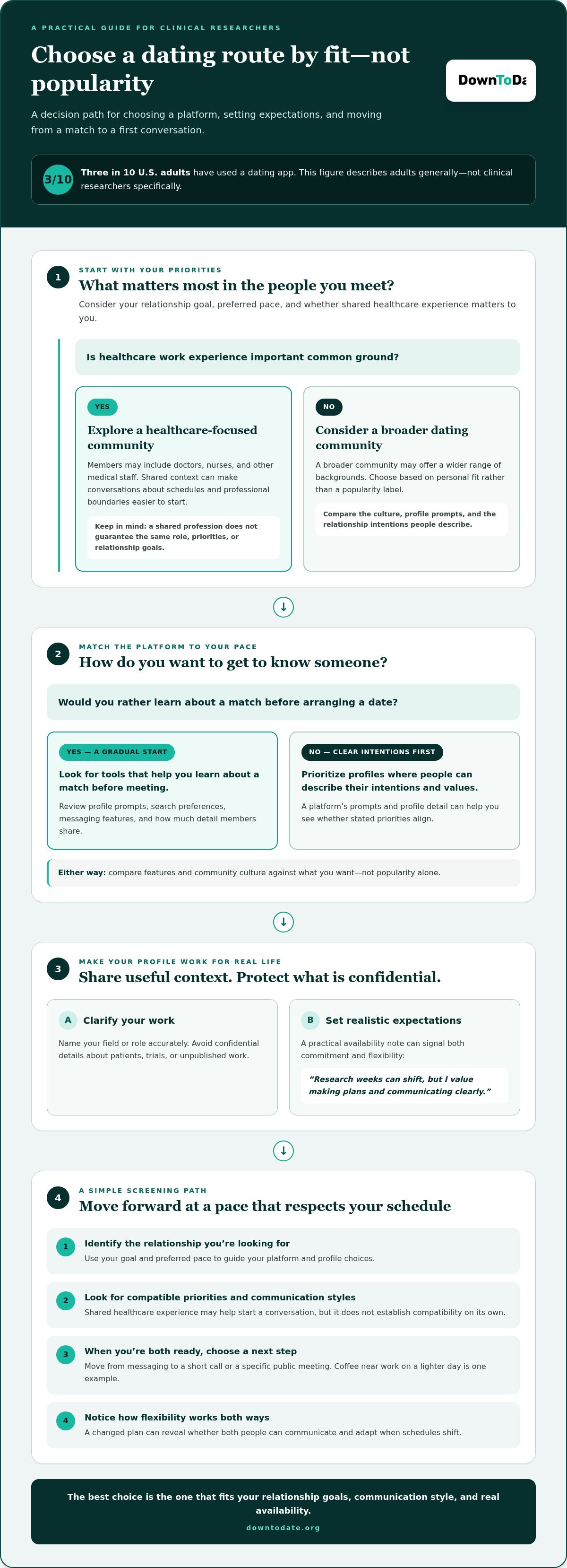
There isn’t one app that suits every clinical researcher. A useful starting point is your dating goal, preferred pace, and willingness to meet people outside healthcare. Three in 10 U.S. adults have used a dating app, so online dating is a familiar way to make introductions. That figure describes adults generally, not clinical researchers specifically.
Instead of treating popularity as a ranking, compare how each app meets your needs. Look at profile prompts, search preferences, messaging features, and how much detail members share. If you want a serious relationship, for example, choose a platform where people can describe their intentions and values. If you prefer a gradual start, look for tools that help you learn about a match before arranging a date.
You can make a broad dating app more relevant by tailoring your profile. Name your field accurately, but protect confidential details about patients, trials, and unpublished work. Add a practical note about your availability, such as, “Research weeks can shift, but I value making plans and communicating clearly.” This signals both commitment and realistic expectations.
Use a simple screening process. First, identify the relationship you’re looking for. Then review profiles for compatible priorities and communication styles. When you’re both ready, move from messaging to a short call or a specific public meeting. A researcher with irregular clinic hours might suggest coffee near work on a lighter day. How a match responds to a changed plan can also show whether flexibility is mutual.
Online dating has evolved over three decades, but the strongest choice remains personal fit, not a popularity label. For dating for clinical researchers, consider a platform centered on healthcare professionals if shared work context matters to you. A specialized dating platform for healthcare professionals can make that community easier to find.
When choosing a dating app, personal wellbeing may be worth considering alongside professional common ground. Depression and suicidal ideation among female clinicians were around 40% before the COVID-19 pandemic and reached as high as 75% in some places during the COVID-19 pandemic.
Separately, clinical research teams can use mobile apps, AI-driven chatbots, and digital health tracking tools to integrate participation into patients’ daily lives.
Are there dating apps or communities specifically for doctors and clinical researchers?
Yes. Healthcare-focused dating communities bring medical professionals together around shared work experiences. Members may include doctors, nurses, and other medical staff. Clinical researchers can meet people familiar with healthcare’s demands, which can make conversations about schedules or professional boundaries easier to start. Shared context doesn’t guarantee that two people have the same research role, priorities, or relationship goals.
That distinction matters. A physician conducting trials and a research coordinator may experience clinical settings differently. A laboratory researcher may have little patient-facing work. Use your profile to clarify your role without revealing confidential study details. For example, “I coordinate clinical studies and value thoughtful conversation outside work” gives useful context without disclosing participant information or unpublished findings.
Before joining a professional community, consider the kind of connection you want. A healthcare-focused space may suit you if understanding medical work is important. A broader dating community may offer a wider range of backgrounds. Compare the culture, profile prompts, and stated relationship intentions. Look for opportunities to describe your values, interests, and expectations, not just your occupation. A shared profession can start a conversation, but compatibility depends on more than job titles.
Keep professional boundaries clear in any setting. Don’t share identifiable patient information, confidential protocols, or details that could expose a study. If a match asks about your work, explain your role in general terms. For instance, you might discuss improving how research reaches participants without naming a trial or describing a specific case. This protects privacy while allowing meaningful conversation.
Dating for clinical researchers can involve both healthcare-focused communities and broader platforms. Choose the setting that reflects your priorities, then consider each connection individually. Professional familiarity can reduce the need to explain basic career pressures, but it cannot replace curiosity, respect, or shared intentions.
Healthcare-focused dating communities give medical professionals, including clinical researchers, a way to meet people who understand healthcare work. A shared profession can help start a conversation, but compatibility still depends on individual priorities and intentions.
How can clinical researchers meet potential partners outside of dating apps?
Start with recurring activities that already fit your interests. A weekly running group, cooking class, book club, or community choir creates natural opportunities to talk without adding a separate dating routine. Regular attendance lets familiarity grow gradually. Choose something you’d enjoy even if you don’t meet anyone there. For dating for clinical researchers, a setting that fits your real life is more sustainable than another obligation.
Professional events can broaden your circle, but keep networking and dating intentions distinct. At a University of Central Florida research networking event, about 60 scientists and clinicians attended. About 40 researchers gave presentations, each lasting five minutes. The event focused on collaboration, not dating, yet interdisciplinary gatherings can introduce you to people beyond your immediate team. Treat professional connections respectfully and avoid pursuing anyone where workplace policies or power dynamics make that inappropriate.
Friends and trusted colleagues can also make thoughtful introductions. Be specific about what you’re open to, such as meeting someone who respects demanding work and values time together. A friend who knows both of you can offer context before a first coffee. Keep that meeting simple and public, with a clear end time that fits your schedule. This gives both people room to decide whether they want to meet again.
Volunteering offers another way to meet people. Choose a recurring activity, such as a neighborhood cleanup or food-bank shift, where conversation can grow through shared work. Outside healthcare settings, you may meet people with different professions and perspectives. Those differences can bring balance when both people respect each other’s priorities and commitments.
Dating for clinical researchers can begin with a manageable offline step: choose one activity, tell a trusted friend you’re open to an introduction, or accept an invitation that genuinely interests you. If meeting people who understand healthcare work is also important, explore a healthcare-focused dating community. A combination of social settings can help you meet people in ways that suit your preferences.
DownToDate: Premium Membership
DownToDate+ offers Premium Membership for healthcare professionals seeking connection with peers who understand the demands of medical work. For clinical researchers, a healthcare-focused dating space makes shared career context part of the introduction. That can help when explaining study deadlines, patient-facing responsibilities, or why plans sometimes need to change.
Consider Premium Membership if you’re ready to meet potential partners who understand the healthcare environment. Bring the same clarity you’d use offline: describe your relationship intentions, share interests beyond work, and protect confidential research and patient information. A shared profession can open a conversation; mutual values and communication help it grow.
For dating that recognizes the realities of a medical career, explore DownToDate. Visit downtodate.org to learn more about Premium Membership.
Make a deliberate place for connection
A relationship doesn’t need to compete with your professional purpose. It needs a place in the life you already have. Choose one sustainable next step, such as setting aside time to meet someone or telling a trusted friend you’re open to an introduction. A modest, intentional step can turn a general hope into something you make room for.
Dating for clinical researchers isn’t about finding a perfectly calm season. It’s about looking for someone whose intentions and communication style fit yours, while being clear about what you can offer. Give new connections a chance to develop beyond job titles. Shared values, respect, and curiosity matter in everyday life, too.
If a healthcare-centered community feels right for your next step, explore DownToDate’s Premium Membership and contact DownToDate about dating. You can move toward a meaningful connection with purpose, at a pace that respects your life.
Frequently Asked Questions
How can researchers balance clinical or lab schedules with dating?
Set boundaries around demanding work periods, then choose dates that match your energy. After an overnight call or a long laboratory day, for example, plan a relaxed video conversation instead of a late dinner. Share schedule changes as soon as you know about them, and suggest a new time when plans shift. This shows consideration without requiring you to disclose confidential patient, trial, or research details.


