

A promising career partnership needs more than shared ambition. Finding understanding partners for medical careers means weighing practice ownership, working demands, finances, and personal priorities together. A private-practice partnership track commonly takes between two and five years, so its requirements and timeline matter as much as the title.
Medical work can shape schedules, stress, relocation choices, and family plans. It’s reasonable to want a partner who understands those realities, not simply tolerates them. This guide explains how to assess a private practice opportunity, understand how ownership may affect compensation and decision-making, and discuss career goals alongside the life you want to build. You’ll also learn what to clarify about a track’s milestones and financial commitment, and how shared professional context can make the search for meaningful connection more focused and grounded.
Key Takeaways
- Map how training demands, call, and work schedules affect the time and support you can offer each other.
- Identify the relationship pressures that can arise at different stages of medical training, and make room for direct conversations about them.
- Set individual career dealbreakers before comparing locations, then weigh both partners’ opportunities alongside family support and life outside medicine.
- Discuss finances and family planning as shared decisions, so neither partner carries the full weight of a major career compromise.
How do medical training and work schedules affect relationships and family life?
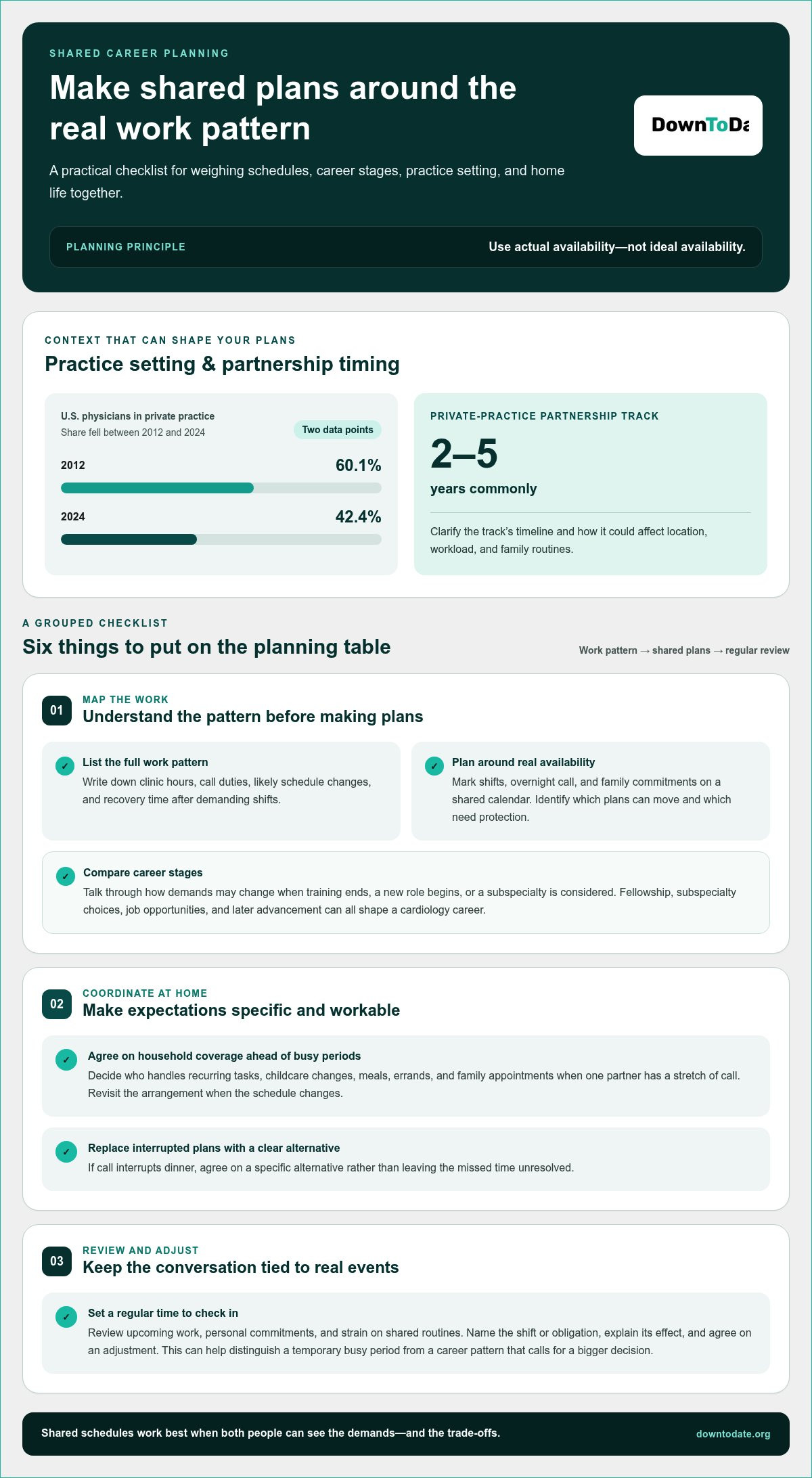
- Map your work pattern before making shared plans. Write down clinic hours, call duties, likely schedule changes, and recovery time after demanding shifts. A cardiologist’s work-life balance can depend on practice setting, hours, call, schedule, and stress. Discuss each factor separately. A calendar showing only scheduled appointments may miss the impact of call and fatigue.
- Build plans around real availability, not ideal availability. Mark shifts, overnight call, and important family commitments on a shared calendar. Then identify which plans can move and which need protection, such as a child’s school event or a partner’s exam. If call interrupts dinner, agree on a specific alternative rather than leaving the missed time unresolved.
- Compare career stages before assuming a schedule will stay fixed. Medical training, fellowship, and a first attending role can bring different demands and priorities. Talk through what may change when training ends, a new role begins, or you consider a subspecialty. For example, a cardiology career can involve fellowship, subspecialty choices, job opportunities, and later advancement.
- Include practice setting in relationship decisions. The share of U.S. physicians working in private practice fell from 60.1% in 2012 to 42.4% in 2024. That shift makes it useful to discuss whether employment or ownership better fits both partners’ plans. A private practice partnership track commonly takes between two and five years, so clarify how its timeline could affect location, workload, and family routines.
- Make household expectations clear before a demanding period begins. Decide who handles recurring tasks, how you’ll cover childcare changes, and what support each person can offer during a busy rotation. For example, if one partner has a stretch of call, agree beforehand on meals, errands, and family appointments. Revisit the arrangement when the schedule changes.
- Set a regular time to talk about the schedule and its effects. Review upcoming work, personal commitments, and any strain on shared routines. Keep the discussion specific: name the shift or obligation, explain its effect, and agree on an adjustment. This helps you distinguish a temporary busy period from a career pattern that calls for a bigger decision.
What relationship challenges are common during medical school, residency, and fellowship?
- Name the competing priorities. Medical school can put exams, coursework, and clinical experience alongside a partner’s needs. Rather than treating each missed plan as a lack of care, explain the specific pressure behind it. For example, say that an upcoming exam is taking your attention, then agree on one realistic way to stay connected that week. Specific context can prevent assumptions from turning into conflict.
- Separate limited time from limited commitment. During residency, a demanding work period can leave less energy for conversation or shared activities. Tell your partner what you can offer, such as a brief check-in after a shift, and ask what helps them feel included. A small, dependable gesture can be more useful than plans you may struggle to keep. Revisit the arrangement when the rotation changes.
- Make room for uneven workloads. Partners may be in different fields or training stages, so their demands can peak at different times. One person may face clinical responsibilities while the other prepares for an exam or major project. Compare what each person is carrying, then divide household tasks for that period. Finding understanding partners for medical careers also means recognizing that support may need to shift as each person’s workload changes.
- Discuss decisions before they become conflicts. Fellowship can raise questions about specialty, location, and future work. Raise these subjects before either partner feels a decision has already been made. Each person can name priorities, concerns, and areas of flexibility. For example, discuss how a training opportunity might affect the other partner’s work, support network, or sense of belonging in a new place.
- Keep conversations from becoming status updates. A quick exchange about rotations or cases may not address how each person feels. Set aside time to discuss an issue beyond logistics, such as uncertainty about a career choice or feeling disconnected. Listen without immediately trying to solve it. Then ask what would help: practical support, time together, or simply being heard.
- Build connection beyond the hospital or campus. Training can make professional life feel all-consuming. Choose a recurring activity unrelated to medicine, such as a shared meal, a walk, or a hobby you can enjoy separately when schedules clash. For some clinicians, finding understanding partners for medical careers includes meeting people who already recognize the pressures of healthcare work. Connect with healthcare peers who understand the demands of medical training.
Career decisions can also affect a relationship when one person’s next step changes shared plans. When evaluating a first nursing job, discuss nurse residency programs, staffing, compensation, burnout, and long-term growth together. Naming these considerations helps both partners understand what matters in the decision and where they may need to make room for each other’s priorities.
Physicians searching for jobs should identify the qualities they want in an employer and pay attention to signs of a good workplace during interviews. Sharing those priorities with a partner can make career conversations clearer: compare what matters, discuss acceptable trade-offs, and revisit the conversation before a choice affects shared plans.
How can partners discuss relocation, career priorities, finances, and family planning
- Compare locations against both careers. List places where each partner could pursue meaningful work, then identify overlap. For a dual-physician couple, a city with strong prospects for one person may offer limited options for the other. Compare career opportunities with family support and access to interests outside medicine. A location is a shared decision, not a default choice.
- Name individual dealbreakers early. Each partner should identify job-search conditions they cannot accept. These might include a particular specialty, a minimum level of schedule predictability, or staying near family support. Write down priorities separately, then compare them. This helps distinguish firm requirements from preferences that could shift for the right opportunity.
- Stay involved in each other’s job searches. Review openings together, including positions found through job boards, LinkedIn, and professional networks. Explore employers in the area you’re considering, not only the first appealing practice. One partner’s introduction or application should not determine the other’s career path without discussion. Share interview updates and compare how each role fits your agreed priorities.
- Discuss family planning as a practical timeline. Talk about how possible moves, training, and work demands could affect plans for children or caregiving. Identify what support would be available in each location. For example, a nearby relative may make a demanding work period more manageable. Revisit the conversation as job options and family needs change, rather than treating one discussion as final.
- Make compromises visible and mutual. Write down what each person would gain and give up under a proposed move. An overly unequal career compromise can create resentment, or lead one partner to quit. That may force both to restart a search in another city, especially when noncompete issues affect options. Compare alternatives before either person accepts a role.
- Review partnership finances as carefully as salary. Ask how compensation may shift from primarily salary-based pay to profit sharing tied to practice performance and assets. Request two to three years of financial statements, then consider how ownership costs and income structure could affect shared plans.
- Understand the authority that comes with ownership. Partnership can involve decisions about hiring, expansion, equipment investments, and strategic direction. Review the partnership or operating agreement with an attorney, including dispute procedures, partner removal, and voting thresholds for major decisions. Discuss how those responsibilities could affect time, risk tolerance, and household finances before treating partnership as purely financial.
- Choose the next conversation together. Set aside time to compare priorities, relocation options, and financial assumptions without deciding everything at once. If shared professional context matters as you build a personal life, connect with healthcare professionals who understand the demands of medical careers.
DownToDate: Premium Membership
DownToDate offers Premium Membership for healthcare professionals seeking connection with people who understand the demands of medical work. Shared professional context can make it easier to discuss unpredictable schedules, training commitments, and career decisions with someone who recognizes their significance. Use the considerations in this guide to clarify what you value in a partner, then look for a connection grounded in mutual understanding and serious intent. DownToDate provides a dedicated space for doctors, nurses, and other medical staff to build meaningful relationships beyond their busy work environments. It’s a natural next step if you’re ready to meet peers who understand the realities behind your career. To explore Premium Membership, visit DownToDate.
Make Your Next Step Intentional
A strong relationship is built through clear choices, not assumptions. As your career evolves, make space for conversations about what matters to you both. Be direct about your priorities, curious about your partner’s perspective, and willing to revisit decisions as circumstances change. Finding understanding partners for medical careers also means looking beyond shared credentials: seek mutual respect, emotional availability, and a serious interest in building a life together.
You don’t need every future decision settled before you begin. Start by identifying the qualities that help you feel supported and understood, then take a practical step toward meeting people who share your professional context. DownToDate offers Premium Membership for healthcare professionals seeking meaningful connections with peers.
Contact DownToDate to explore your options. A thoughtful next step can open the door to a connection that fits both your work and the life you want to build.
Frequently Asked Questions
What does an understanding partner need to know about the demands of a medical career?
An understanding partner should recognize that medical work can carry emotional weight beyond work hours. A difficult patient outcome, for example, may leave a clinician quiet or mentally occupied afterward. Agree on respectful ways to reconnect, such as asking whether you want to talk or prefer some space. Keep patient details private, and explain what kind of support helps without expecting your partner to solve work problems.
How can healthcare professionals find partners who understand irregular hours and on-call duties?
Look for connection through healthcare-focused social circles or dating spaces, then discuss work expectations early. Shared professional experience can offer useful context, but it doesn’t automatically mean your needs or relationship goals align. Ask how each person handles cancelled plans, quiet periods, and last-minute changes. Notice whether the conversation shows flexibility and mutual respect, rather than treating your schedule as a problem one person must absorb.


