

Dating apps for doctors can make it easier to meet people who understand the demands of medical work. An exclusive dating platform for the medical community brings healthcare professionals together, lets you browse profiles at your own pace, and helps you explore connections around a demanding schedule. The platform creates opportunities to connect; building a relationship still takes mutual interest and time.
Long shifts, changing schedules, and the intensity of patient care can leave little time for dating. A focused pool of people and the flexibility to explore connections on your own schedule can make the search feel more relevant.
This article explains what specialized dating platforms offer, how to browse profiles with intention, and what to consider when planning a first date around work. It also looks at how a healthcare-focused community can align with your professional life and personal priorities.
Key Takeaways
- Assess a dating platform by whether its community and approach fit your relationship goals, not just its professional focus.
- Build a profile around interests and everyday compatibility as well as your medical career.
- Browse prospects with your schedule and personal priorities in mind, then make your availability clear when starting a conversation.
- Plan dates with flexibility: agree on a workable time and have a simple alternative if work changes your plans.
- Consider whether DownToDate Premium Membership suits your next step toward meeting healthcare professionals.
Dating Apps for Doctors (2026): Do They Work?
Dating apps can help doctors meet people beyond the workplace, where shifts and responsibilities often limit social time. An exclusive dating platform for the medical community offers a focused way to meet people who understand healthcare careers. Its value depends on relevant connections, thoughtful conversations, and realistic expectations.
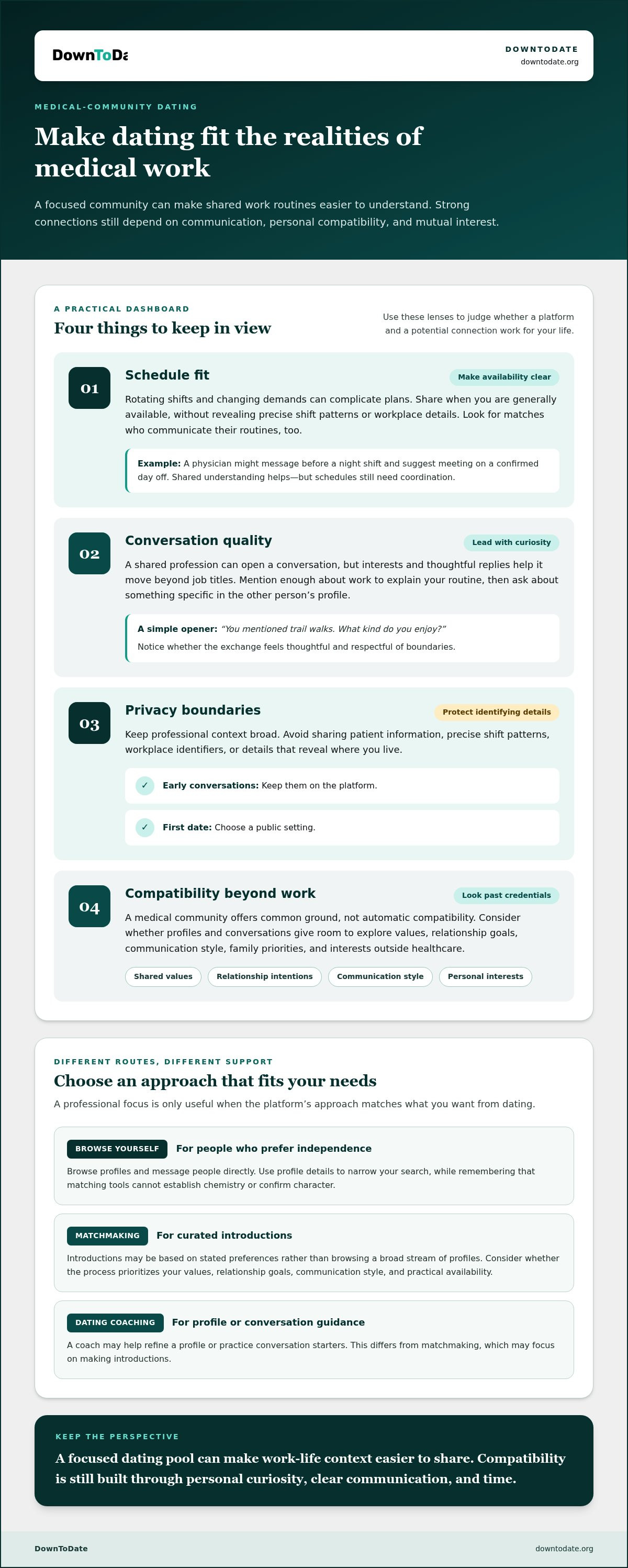
Start with your schedule. A physician working rotating shifts might message before a night shift and suggest meeting on a confirmed day off. Describe your availability in your profile without sharing workplace details. Look for matches who communicate their routines, too. Shared understanding can make planning easier, but compatible schedules still take coordination.
Make your opening message specific. If someone mentions hiking or cooking, ask about that interest rather than leading with credentials. A short note such as, “You mentioned trail walks. What kind do you enjoy?” gives them an easy way to respond. Share enough about work to explain your routine, but keep patient information and private workplace matters out of the conversation.
Professional Doctor Matchmaking
Professional matchmaking for doctors can involve curated introductions based on stated preferences, rather than browsing a broad stream of profiles. Before choosing this approach, consider what it prioritizes: shared values, relationship goals, communication style, and practical availability. An exclusive dating platform for the medical community offers a focused setting, but a shared profession alone doesn’t establish compatibility. Someone seeking a serious relationship, for example, may value aligned intentions more than matching job titles.
Messaging and Matching Limits
Matching tools can narrow your search by profile details, but they can’t establish chemistry or confirm someone’s character. Messaging features may also affect how conversations develop, so consider whether the platform’s approach suits your preferred pace. If messaging is limited, use each opportunity to show genuine interest. Notice whether a match responds thoughtfully and respects your boundaries.
Privacy, Safety, and Regional Access
Medical professionals should avoid sharing patient details, precise shift patterns, workplace identifiers, or information that reveals where they live. Keep early conversations on the platform and choose a public setting for an initial date. What privacy and safety risks should medical professionals consider on dating apps? Protect identifying work details, use platform messaging at first, and meet in public. Are medical dating platforms available in your U.S. city or region? Access and the local pool of prospects depend on each platform and member activity in your area.
Matchmaking and dating coaching offer different kinds of support. A matchmaker may focus on introductions, while a coach may help refine a profile or practice conversation starters. These approaches suit different needs. If you prefer independence, browse and message people yourself; if you want guidance, consider whether that support addresses your dating goals. Treat each match as a starting point, not proof of compatibility.
Connecting healthcare professionals for romance and social wellbeing
A dedicated dating community can help healthcare professionals connect around shared work realities. A nurse and a physician, for example, may both value clear communication when shifts affect plans.
Dedicated Healthcare Dating Apps
Dating apps for doctors and healthcare professionals focus on meeting people within a work community. That shared context can make it easier to explain a rotating schedule or the emotional demands of patient care, but it doesn’t replace personal compatibility. Review who the platform serves, what members can include in their profiles, and whether its approach supports meaningful connections beyond professional credentials.
Use your profile to show more than your role. A pharmacist who enjoys weekend cycling, for instance, gives potential matches a personal topic to start with. A focused app can help connect people with a familiar career context, while individual interests show whether a conversation has room to grow.
Membership Eligibility
Female medical professionals should read eligibility criteria carefully before creating a profile. Check whether the platform welcomes their specific role, such as nursing, clinical practice, or another healthcare profession. Clear criteria help you understand who can join and whether the community aligns with your expectations. Don’t assume that “medical” means doctors only, or that every healthcare role is included.
Complete your profile with accurate, relevant details. A resident might describe their training broadly without naming a hospital or sharing a precise rota. This communicates professional context while preserving personal boundaries. Compare the platform’s membership focus with your relationship goals before investing time in browsing.
Healthcare Dating Community
A dating community can offer common ground, not automatic compatibility. Members may understand why a planned evening could change after an unexpected work demand. Still, meaningful connections depend on values, communication, and mutual interest. Consider whether profiles make it possible to discuss life beyond healthcare, including family priorities, hobbies, and the kind of relationship each person wants.
Use early conversations to learn about the person, not just their profession. Ask how they like to spend a free afternoon, for example, then share your own answer. Respectful, reciprocal exchanges help show whether the connection feels balanced. A shared career can open the conversation; personal curiosity helps carry it forward.
Profession-Tailored Dating
Dating tailored to healthcare professionals should account for practical realities without reducing members to their jobs. Look for ways to describe your availability, communication preferences, and relationship intentions. A clinician who prefers advance planning can say so, while someone with changing shifts can explain that flexibility matters. Specific preferences help potential matches understand how dating might fit.
Set your own boundaries before browsing. Decide what work details stay private, what qualities matter in a partner, and what pace feels comfortable. Then assess matches against those priorities rather than professional status alone. To explore a healthcare-focused dating community, begin with the profiles and preferences that reflect the kind of connection you want.
Planning dates around work schedules
For healthcare professionals, a workable date plan starts with realistic availability. A nurse working rotating shifts, for example, can suggest a free afternoon instead of promising a fixed evening.
Before signing up, think about what schedule details you’re comfortable sharing. Your profile could say, “My shifts vary, so I appreciate planning ahead.” This gives matches useful context without exposing a precise rota, workplace, or personal routine. Focus on how you prefer to make plans, not confidential work details.
After profiles are created, use interests to identify low-pressure date ideas. Someone who enjoys coffee, bookstores, or walking can suggest a short meeting that’s easier to fit around work. A first date doesn’t need an elaborate itinerary. Choose a public place, agree on a start time, and leave room for each person’s other commitments.
- Offer a clear window: Suggest “Saturday afternoon” rather than an open-ended “sometime soon.”
- Give a second option: Add another day or time so your match can respond with a workable alternative.
- Choose a flexible setting: A cafe allows a brief conversation without requiring a long evening.
- Confirm the plan: Restate the place and time in your messages before heading out.
If a shift changes, communicate promptly and suggest a new plan. Explain that a work commitment changed, then offer a time you can genuinely keep. Avoid sharing patient information or details about a specific clinical event. A direct update respects the other person’s time and keeps the conversation focused on the date.
Match your planning style to the other person’s preferences. If someone prefers advance notice, avoid last-minute invitations. If both schedules shift, agree on a flexible plan, such as meeting near a transit stop after work. Discuss travel time and location before confirming, especially if either of you has a long commute.
Use conversations to learn what “available” means to each person. One match may prefer a planned weekend outing; another may enjoy a brief weekday coffee. Ask, “Do you prefer setting a date ahead or deciding closer to the day?” Then share your own preference clearly.
Treat scheduling as part of compatibility, not a test of interest. A delayed reply during a demanding shift may need context, while repeated cancellations without an alternative can signal mismatched priorities. Set a pace that protects rest, leaves room for meaningful conversation, and works for both of you.
Challenges of niche medical dating apps
A specialized dating app can make shared work context easier to find, but a narrow focus has tradeoffs. A doctor in a smaller city, for example, may see fewer local prospects than someone browsing a broader dating pool. Treat professional common ground as a useful filter, not proof of compatibility.
Start by deciding what you want the niche to help you find. You might want someone who understands call shifts, or simply a partner who respects your commitment to healthcare. Those preferences differ. If a shared profession is essential, prioritize it. If not, keep your search open to people with compatible values and interests outside medicine.
A limited local pool can make repeated profiles more noticeable. If the same prospects appear often, don’t treat visibility as a sign of mutual interest. Review each profile on its own merits, then consider whether the person’s relationship goals, communication style, and priorities fit yours. Widening your distance preferences can expand possibilities, but also adds travel time to date planning.
Privacy needs careful attention in a profession where workplace details can identify you. Before downloading an app, review what profile information is visible and how messaging works. Don’t list a hospital, exact shift pattern, or patient details. “I work variable clinical hours,” for example, shares context without revealing a precise rota or employer.
Another challenge is letting your medical identity dominate the conversation. A profile centered only on training, credentials, and professional passion may leave little for a match to respond to personally. Add a concrete interest, such as cooking or live music, and mention what kind of relationship you hope to build. This gives prospects more than a job title to connect with.
Platform features can shape the experience, too. Some dating apps may limit who can start a conversation or how members discover profiles. Read the app’s descriptions before creating an account, then consider whether its matching and messaging flow suits your preferred pace. If a feature makes thoughtful conversation difficult, a large number of visible profiles won’t solve the problem.
Use a simple review process before committing time: assess the community focus, profile controls, messaging approach, and range of potential matches. Then compare the app with your priorities. A niche platform can help you find people who understand healthcare work, while broad interests and clear boundaries keep the search grounded in individual compatibility.
Dating preferences and prospect browsing
Effective browsing starts with clear priorities, not endless profile review. Before opening an app, decide what a serious relationship means to you. You might prioritize shared family goals, emotional availability, or respect for demanding work. Separating essentials from preferences helps you assess potential matches consistently.
Write down the qualities you want to recognize in a profile. A doctor might value curiosity, kindness, and interest in life beyond healthcare. Someone else may prioritize compatible views on commitment or lifestyle. Keep your list focused on behaviors and values. A professional title alone can’t show how someone communicates or treats a partner.
Read profiles for specific details. “I enjoy spending time outdoors” gives you less to discuss than “I take weekend walks by the water.” Look for interests, routines, and relationship intentions that invite a natural question. Profiles that mention only achievements can make it harder to picture a shared life. Include your own hobbies and personal priorities, too.
Browse with intention. Open a profile, read it fully, and compare it with your priorities before responding. If someone mentions volunteering, ask what drew them to it. If their profile says they want a serious relationship and you share that goal, say so clearly. A thoughtful message refers to one detail and ends with an easy question.
Some platforms ask members to include personal details that may affect compatibility, such as vaccination status. Consider how you want to answer personal questions and what matters to you in a potential relationship. Discuss sensitive topics respectfully, without treating one profile response as a complete picture of someone’s character.
Keep device access in perspective. Whether you use an Android phone or another device, the screen doesn’t change what makes a strong prospect. Read profiles carefully, avoid rushed decisions between work tasks, and return to conversations when you can give them your attention. A saved profile or brief note can help you remember why someone stood out.
When several prospects seem promising, compare them against the same criteria rather than relying on the newest profile or a polished photograph. Ask whether conversation feels reciprocal, intentions align, and each person respects your boundaries. A match’s profession may provide common ground, but shared interests and compatible expectations matter just as much.
Ready to browse with relationship goals in mind? Explore dating prospects in a medical community and focus on the qualities that support the connection you want.
DownToDate: Premium Membership
DownToDate offers Premium Membership for healthcare professionals seeking connections beyond work. Its dating platform is designed for doctors, nurses, and other medical staff who want to explore meaningful relationships with people who understand the demands of healthcare careers.
Consider Premium Membership if you’re ready to browse within a medical community and approach dating with your personal priorities in mind. Shared professional context can give conversations a natural starting point, while your interests, relationship goals, and communication help reveal compatibility. Keep your profile focused on who you are beyond your role, and protect private workplace details as you connect.
Visit downtodate.org to explore DownToDate Premium Membership.
Make Space for the Connection You Want
Your next step doesn’t need to compete with your medical career. Start by deciding what kind of relationship you want, which boundaries matter to you, and how much time you’re ready to give dating. An exclusive dating platform for the medical community offers a focused place to explore connections with peers who understand healthcare work.
Approach each conversation with intention. Be open about what you’re seeking, stay curious about the person behind the profile, and let trust develop through consistent, respectful communication. DownToDate offers Premium Membership for healthcare professionals ready to explore a dedicated dating community.
If you’d like to take that step, contact DownToDate to explore the platform. Your work matters, and so does making room for a personal life that reflects your values. Start at a pace that feels right, and give meaningful connection the attention it deserves.
Frequently Asked Questions
What’s the dating pool like?
The dating pool centers on people who identify with healthcare work, but its size and mix depend on member activity and location. You may see physicians, nurses, and other medical professionals with different schedules, specialties, and relationship goals. To assess the pool, review the variety of profiles rather than focusing only on the number of visible prospects. A smaller, relevant pool may still offer meaningful options.
Who Can Join?
Eligibility depends on each platform’s membership criteria. DownToDate is designed for doctors, nurses, and other healthcare professionals, making it relevant to people across medical roles. Before creating a profile, consider how you describe your work and what personal information you want to share. For instance, stating your profession broadly can communicate the context of your life without revealing your employer or work location.
What exclusive dating platforms are available for doctors and other medical professionals in the United States?
DownToDate is a dating platform for healthcare professionals across the United States, including doctors and nurses. As you assess whether a specialized platform suits you, consider the community it serves, its profile tools, and whether its approach matches your dating priorities. The right fit is one that supports how you want to meet and communicate.
Which medical professionals are eligible to join physician dating apps?
Eligibility varies by platform, and a physician-focused label doesn’t always mean membership is limited to physicians. DownToDate is designed for doctors, nurses, and other healthcare professionals. If your role falls outside those examples, read the platform’s eligibility criteria closely before signing up. Describe your role accurately so potential matches understand your professional context without mistaking your work for another healthcare position.
How do medical dating platforms verify members' credentials?
Credential verification methods differ between platforms, so don’t assume a professional label alone proves someone’s identity or role. Look for a clear description of how membership eligibility is assessed, and keep early conversations focused on information someone can comfortably share. Don’t request sensitive documents from a match. A respectful approach protects privacy and gives both people space to build trust through consistent communication.
What are the membership prices and subscription plans for medical professional dating sites?
Plans and prices vary by platform, so compare what each subscription includes before deciding. DownToDate offers Premium Membership, a subscription that includes advanced search filters, unlimited messaging, enhanced profile visibility, and community features. Consider which tools matter to your dating approach. Someone who wants to message prospects directly, for example, may value messaging access, while another member may prioritize search filters.
How do physician dating apps compare in membership size, features, and geographic coverage?
Compare apps by their community focus, available tools, and national reach rather than assuming a large membership guarantees better matches. DownToDate serves users across the United States and is designed for healthcare professionals. Membership size can change as people join or leave, so assess the profiles and features you can access. Consider whether the platform’s focus aligns with your preferences and relationship goals.
Are there dating platforms specifically for doctors, nurses, and other healthcare workers?
Yes. DownToDate is designed specifically for healthcare professionals, including doctors, nurses, and other medical staff. Its focus gives members a shared professional context for meeting potential partners. That context can help start conversations, but it doesn’t determine personal compatibility. As you browse, consider each person’s interests, communication, and relationship intentions alongside their healthcare role.


