

The hardest part of dating in healthcare can be making room for a relationship around the work. Tailored matching for healthcare singles can bring career realities, relationship goals, and practical availability into the search, helping professionals focus on connections that fit their lives. Thousands of single doctors across the United States are looking for love, but shared intent still needs time and understanding to grow.
Changing schedules, limited energy after a demanding shift, and work that can be hard to explain outside healthcare are real challenges. You don’t need more pressure to make dating work. You need an approach that respects both your professional commitments and personal priorities.
This article explains how tailored matching can help healthcare professionals meet peers, make dating more manageable, and build a foundation for a lasting relationship. You’ll also learn how to plan quality time flexibly and choose a dating approach that fits your life.
Key Takeaways
- Build toward lasting connection by being clear about your relationship intentions and making space for honest conversations.
- Recognize how demanding shifts and limited energy can affect dating, then set expectations that respect both people’s work and personal lives.
- Plan around availability, prioritize quality time over quantity, and stay flexible when schedules change.
- Look for potential partners who understand healthcare work and share your values, priorities, and hopes for a relationship.
- DownToDate’s Premium Membership offers a way for healthcare professionals to connect with peers who understand the demands of a medical career.
Building meaningful, long-term relationships
A lasting relationship starts with compatible intentions, not simply shared professional credentials. A recent survey found that 58 percent of never-married people wanted to marry, compared with 23 percent of previously married people. Those figures show why it helps to discuss what commitment means to you, rather than assume you and a date want the same future. Ask about partnership goals early, with enough room for a direct, thoughtful answer.
Make career expectations part of the conversation. A demanding medical role may shape your availability, energy, and plans, but it doesn’t define you. Share practical details that affect a relationship, such as rotating shifts or a preference for protected time off. Ask how the other person handles changing plans and shared responsibilities. Specific examples make compatibility easier to understand.
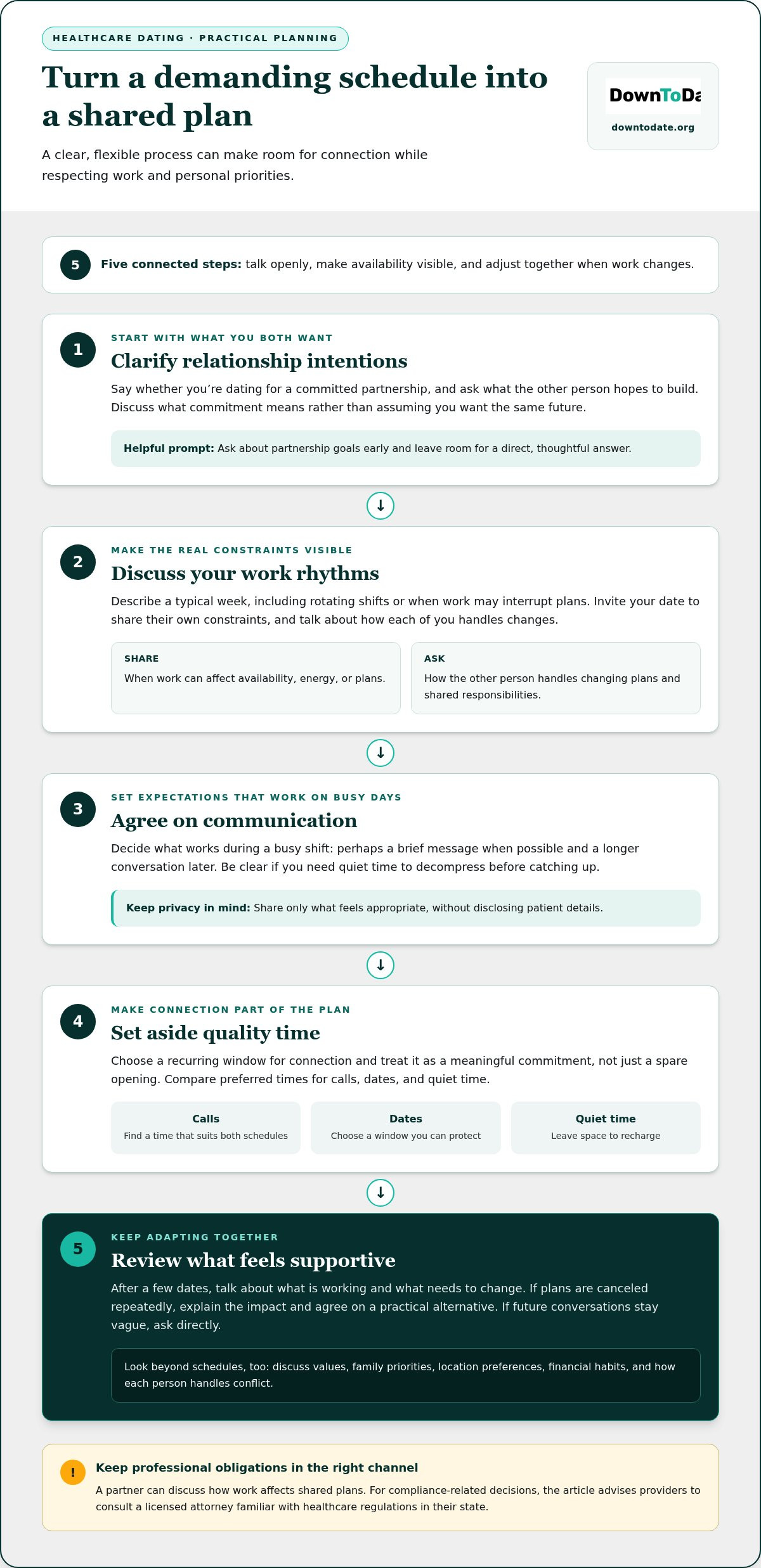
- Clarify intentions. Explain whether you’re dating for a committed partnership, and ask what the other person hopes to build.
- Discuss work rhythms. Describe a typical week, including when work can interrupt plans. Invite your date to share their own constraints.
- Agree on communication. Decide what works during a busy shift, such as a brief message when possible and a longer conversation later.
- Make time visible. Choose a recurring window for connection, then treat it as a meaningful commitment rather than a spare opening.
These conversations can build trust without requiring identical schedules. One person might work nights while the other keeps standard daytime hours. Compare preferred times for calls, dates, and quiet time before frustration builds. Clear communication turns scheduling into a shared planning task and shows whether both people are willing to adapt.
Long-term compatibility includes values beyond work. Talk about family priorities, location preferences, financial habits, and how each person handles conflict. More than 110 million adults in the United States are unmarried, close to half the adult population. That broad range of life experiences makes personal priorities more useful than assumptions based on marital history or profession.
Be deliberate. After a few dates, talk about what feels supportive and what needs to change. If canceled plans become a pattern, explain the impact and agree on a practical alternative. If conversations about the future stay vague, ask a direct question. Relationships grow through consistent choices: honest expectations, respectful communication, and time set aside intentionally.
Separate relationship planning from decisions about professional obligations. Explain how work affects the time and flexibility you can offer, while keeping compliance questions in the appropriate professional channel. Single Aim advises providers to consult a licensed attorney familiar with healthcare regulations in their state before making compliance-related decisions.
This distinction keeps conversations clear: a partner can discuss the practical effects of work on shared plans, while qualified counsel addresses legal questions. Be honest about uncertainty instead of promising a work arrangement before you know what is appropriate. That keeps future planning grounded and helps both people distinguish personal choices from matters requiring professional advice.
Dating challenges for busy healthcare professionals
A healthcare schedule can change after a date is planned. A nurse called in to cover a colleague’s shift may need to cancel dinner, while a physician finishing late may have little energy to socialize. Someone unfamiliar with medical work might mistake these disruptions for disinterest. Briefly explain the practical reason, then suggest a realistic alternative when you’re ready.
Fatigue can also affect how present you feel. After a demanding shift, a crowded restaurant may feel harder than a quiet walk or short call. That doesn’t put a serious relationship out of reach; it makes timing and setting important. For an early date, choose something that allows conversation without requiring a full evening of energy.
Healthcare work can involve emotionally intense situations. You may need time to decompress before discussing your day, and a new partner may not know how to respond. Set a clear boundary, such as, “I need a little quiet first, then I’d like to catch up.” Share only what feels appropriate, without disclosing patient details. Respect for privacy matters at work and in a relationship.
- When plans change: Send a concise update and offer a new option, such as coffee on your next available afternoon.
- When energy is low: Choose a shorter, calmer date instead of forcing a late night after work.
- When work feels personal: Decide what you’re comfortable sharing before the conversation begins.
- When dating feels like another task: Limit the time you spend browsing and focus on conversations with genuine potential.
Another challenge is meeting people who understand healthcare demands without reducing you to your job. A date may admire your profession yet underestimate its effect on holidays, weekends, or spontaneous plans. Give a concrete example: a holiday shift may affect your availability, or your schedule may change with little notice. Notice whether the other person responds with curiosity and respect.
Thousands of single doctors across the United States are looking for love, but shared occupation alone doesn’t create compatibility. Consider values, communication style, and relationship goals alongside professional understanding. If connecting with healthcare peers is a priority, explore dating for healthcare professionals as one way to focus your search. The strongest fit recognizes your work and makes room for the person beyond it.
Planning dates around demanding schedules
A good date plan can be flexible without feeling uncertain. Share the availability you can realistically offer. If your shifts change weekly, for example, suggest two possible windows rather than promising one fixed evening. Your date can choose what works, and both of you know when to revisit the plan if work intervenes.
Prioritize quality time over quantity. A focused coffee before an afternoon shift may lead to better conversation than a long evening when one person is exhausted. A short walk after work may suit a pair looking for a relaxed first meeting. Choose an activity that allows attention and conversation, rather than treating the length of a date as proof of interest.
Use a simple planning routine to reduce avoidable friction:
- Share availability clearly. Offer realistic options, such as a free morning or an evening after a day off.
- Keep a backup. If an urgent shift change cancels dinner, suggest a brief call or another specific opening.
- Confirm the plan. Send a concise message before leaving work, especially if your finish time may shift.
- Choose a suitable setting. A quiet café may work better than a crowded event after a demanding shift.
Flexibility should be mutual. If a clinician has to cancel because of an unexpected work demand, the other person can acknowledge the situation while expressing their own needs. A useful response might be, “I understand your shift changed. I’d still like to see you, so let’s find another time.” It keeps the conversation warm and makes the next step clear.
Protect time together once a plan is set. If an appointment keeps getting moved, discuss a more workable format, such as a shorter date near one person’s workplace or a call during a shared break. On a dating platform, describe your preferred communication rhythm in your profile, then explain it in conversation. This helps prevent a delayed reply during a shift from seeming like a lack of interest.
After each date, notice what made the plan work. A daytime meeting may have suited both schedules, or a nearby location may have reduced travel pressure. Use those observations to make finding time easier next time. If schedules remain unpredictable, agree on a flexible window and confirm closer to the day. Consistent communication, realistic options, and thoughtful time together make dating more sustainable than rigid plans.
Matching busy healthcare singles
Healthcare-focused dating can narrow the search, but the right approach depends on how much guidance you want. Before sharing personal details, consider how the platform works, what privacy practices it describes, and whether its features suit your priorities.
Personalized Matchmaking and Dating Apps
Dating apps let you browse profiles and start conversations directly, giving you control over pace and selection. A more structured matchmaking process may add guided discussions about preferences and potential compatibility. Consider which approach fits your available time, the guidance you want, and your comfort with browsing profiles yourself.
Thousands of single doctors across the United States are looking for love. A broad network can offer more profiles, while a focused process may help clarify what matters most beyond occupation. Neither format guarantees compatibility. Consider whether you prefer independent browsing or a more guided introduction process.
Tailored Matchmaking Services
Tailored matchmaking for healthcare professionals can center on career context, relationship intentions, communication preferences, and lifestyle compatibility. Before choosing a local matchmaker, ask how they learn about your priorities and how they decide which introductions fit. Look for clear explanations of the process, realistic expectations, and respectful communication.
Red flags include pressure to commit immediately, vague descriptions of matching criteria, or promises of a guaranteed relationship. Ask what happens if an introduction doesn’t feel suitable and how feedback informs later matches. A reputable service should explain its terms plainly and give you room to make an informed decision.
Privacy and Confidentiality Protections
Privacy practices matter. Before sharing personal details, understand how your profile is shared and who can access your information. Check whether your workplace, full name, or contact details are visible to other members. Review how the platform handles stored information, requests to update or remove it, and confidentiality.
For example, you may want to avoid being recognized by colleagues while dating. Consider whether profile visibility can be limited and how the platform connects members. Read the privacy terms before submitting sensitive details, and share only what’s needed to describe your goals and preferences.
Personalized Matchmaking Sign-Up Steps
A typical sign-up process begins with reviewing the service’s terms and completing a profile. You then describe your relationship goals, lifestyle, and preferences, including how your work schedule affects dating. The next step is discussing how introductions are selected, what information is shared, and how to provide feedback after a meeting.
Before proceeding, make sure you understand the commitment, communication process, and privacy choices. List your priorities, such as shared values, compatible routines, and serious relationship intentions. Clear answers help you decide whether the platform suits your needs and what information you’re comfortable sharing.
What does tailored matchmaking for healthcare professionals include?
A tailored approach starts by turning relationship priorities into practical criteria. A physician seeking a committed partner, for example, may value compatible routines, shared family goals, and respect for clinical responsibilities. Your profession provides relevant context, but it doesn’t replace personality or values. Consider both when deciding whether a connection fits your real life.
Expect to clarify the details that shape compatibility, such as:
- Relationship intentions: Describe whether you’re seeking a serious partnership and what commitment means to you.
- Lifestyle and schedule: Explain how shifts, on-call responsibilities, or recovery time affect your availability.
- Personal priorities: Identify values, interests, and future plans that matter beyond your medical career.
- Communication preferences: Share how you prefer to stay in touch when work limits your response time.
These details help separate essential needs from flexible preferences. One person may need a partner who understands weekend work, while another may prioritize shared plans for family life. Be clear about the difference. A match based only on job title can miss these distinctions, while a profile centered on your goals gives conversations more substance.
A thoughtful introduction gives both people enough context to start well. That may mean sharing compatible interests or relationship intentions, rather than disclosing personal details without permission. Understand what information is shared before connecting, and decide how you’ll respond if the fit feels wrong. After meeting, specific feedback is more useful than a general “yes” or “no.” Note what felt aligned, such as communication style, and what you’d reconsider.
Set realistic expectations about the process. Understand how your preferences and schedule constraints shape your search, and what role you have in deciding whom to meet. If you work rotating shifts, for instance, look for tools that let you account for changing availability rather than assuming your calendar is fixed. Keep your criteria current as your priorities change, and communicate updates clearly.
Use these questions to assess whether a matchmaking approach suits you: Does it make room for goals beyond your profession? Can you explain your schedule and relationship priorities? Is the introduction process clear, including privacy and feedback? Answering them helps you choose a more intentional path than relying on job titles alone. To connect with healthcare peers, explore dating for healthcare professionals.
This approach can make early dating more manageable. A meaningful conversation or shared activity may be more useful than trying to fit frequent plans into every demanding week. Agree on a realistic way to keep in touch, and discuss changes in availability rather than treating them as evidence of weak interest. Flexibility doesn’t mean abandoning core needs; it means finding ways to honor them as schedules shift. For couples dating healthcare professionals, prioritize quality time over quantity and remain flexible. Broader healthcare policy changes and modern wellness initiatives continue to evolve across the nation. Wider developments can provide context for the work healthcare professionals do, but compatibility still depends on personal priorities and honest communication.
DownToDate: Premium Membership
DownToDate offers Premium Membership for healthcare professionals seeking connection with peers who understand the demands of medical careers. If you value shared professional context alongside personal compatibility, it provides a focused way to explore dating within a healthcare community. Keep your priorities clear: the kind of relationship you want, the work realities a partner should understand, and the values you hope to share. These guide a more intentional approach to meeting people beyond your workplace. Premium Membership is the next step for healthcare singles ready to make room for connection while honoring demanding schedules and serious intentions. Visit DownToDate.org to learn more.
Make Space for the Connection You Want
Your next step can be small and deliberate. Before you begin, write down what you want a relationship to make room for, whether that’s shared downtime, family plans, or a partner who understands healthcare work. Let those priorities guide your choices, rather than an idealized schedule that doesn’t reflect your life. Tailored matching for healthcare singles works best when your intentions are clear and you can communicate them honestly.
DownToDate offers Premium Membership for healthcare professionals looking to connect with peers who understand the demands of a medical career. Consider whether its healthcare-focused dating community fits your priorities, then explore Premium Membership at your own pace.
Contact DownToDate to discuss matching and decide what kind of connection you want to pursue. A thoughtful first step can help you build a relationship that respects both your work and the life you’re creating beyond it.
Frequently Asked Questions
Which matchmaking services specialize in singles who work in healthcare?
Healthcare-focused dating platforms connect doctors, nurses, and other medical professionals with peers. DownToDate is a dating app designed specifically for healthcare professionals, with Premium Membership available. When comparing options, consider whether the community reflects your profession and whether the tools support your priorities. You might prefer to browse profiles independently, communicate directly, or meet people who understand medical careers.
How do healthcare-focused matchmaking services screen and match clients?
Healthcare-focused platforms can use profile details and matching tools to help members find relevant connections. DownToDate describes its community as a verified medical community, and Premium Membership includes advanced search filters, unlimited messaging, enhanced profile visibility, and community features. Use profile information as a starting point for conversation. Ask about relationship intentions, career context, and shared interests before deciding whether a connection aligns with your goals.
How can healthcare professionals find compatible partners with demanding or irregular schedules?
Use search filters to focus on relevant preferences, then describe your availability in practical terms. For example, explain that your work calendar changes and suggest a way to stay connected between shifts, such as messaging before arranging a call. Look for partners who respect your boundaries and express their own needs. That exchange can help you assess compatibility before making plans.


