

What if a meaningful dating life during residency doesn’t require a perfect schedule? Learning how to balance residency and dating starts with accepting that shifts can run long, plans may change, and your energy after work isn’t limitless. That isn’t a personal failing. It’s part of training.
You may want a relationship and still hesitate to make plans you can’t guarantee. You may also worry that someone outside medicine won’t understand why a shift or call schedule can disrupt a date. Those concerns are understandable, but they don’t mean connection has to wait until residency ends.
This guide offers a practical way to make room for dating without turning it into another performance target. You’ll learn how to set expectations early, choose flexible ways to connect, and protect time for rest as well as relationships. The aim isn’t to minimize residency or promise effortless dating. It’s to find an approach that respects your training, helps potential partners understand your life, and leaves space for meaningful connection.
Key Takeaways
- Learn how to balance residency and dating by planning around realistic availability, not an idealized weekly schedule.
- Choose flexible ways to connect, from a short call to a low-key date, that can adapt when work changes.
- Use a simple weekly check-in to identify a realistic opening, communicate clearly, and adjust when needed.
- Set honest expectations about training while making room to understand a potential partner’s priorities.
- Explore healthcare-aware ways to meet people, including DownToDate+, created by physicians for healthcare professionals.
Why balancing residency and dating feels unusually difficult
Residency can demand your attention, adaptability, and energy, while your desire for companionship remains real. Those needs can be difficult to hold at the same time. You might be interested in someone but find that your next free evening depends on how a shift unfolds, whether call changes your plans, or how much energy you have after work.
That uncertainty can make early dating feel especially delicate. Before trust has had time to build, a changed plan may be easy to misread. A cancellation can reflect training demands, not a lack of interest. Fatigue is real, too: sometimes choosing rest over a date is what helps you preserve energy for work and life beyond it.
Dating doesn’t need to become another standard you judge yourself against. You don’t need a flawless routine, constant availability, or a full calendar to show that connection matters. A workable approach starts with honest expectations and room to adjust.
How residency schedules affect early dating
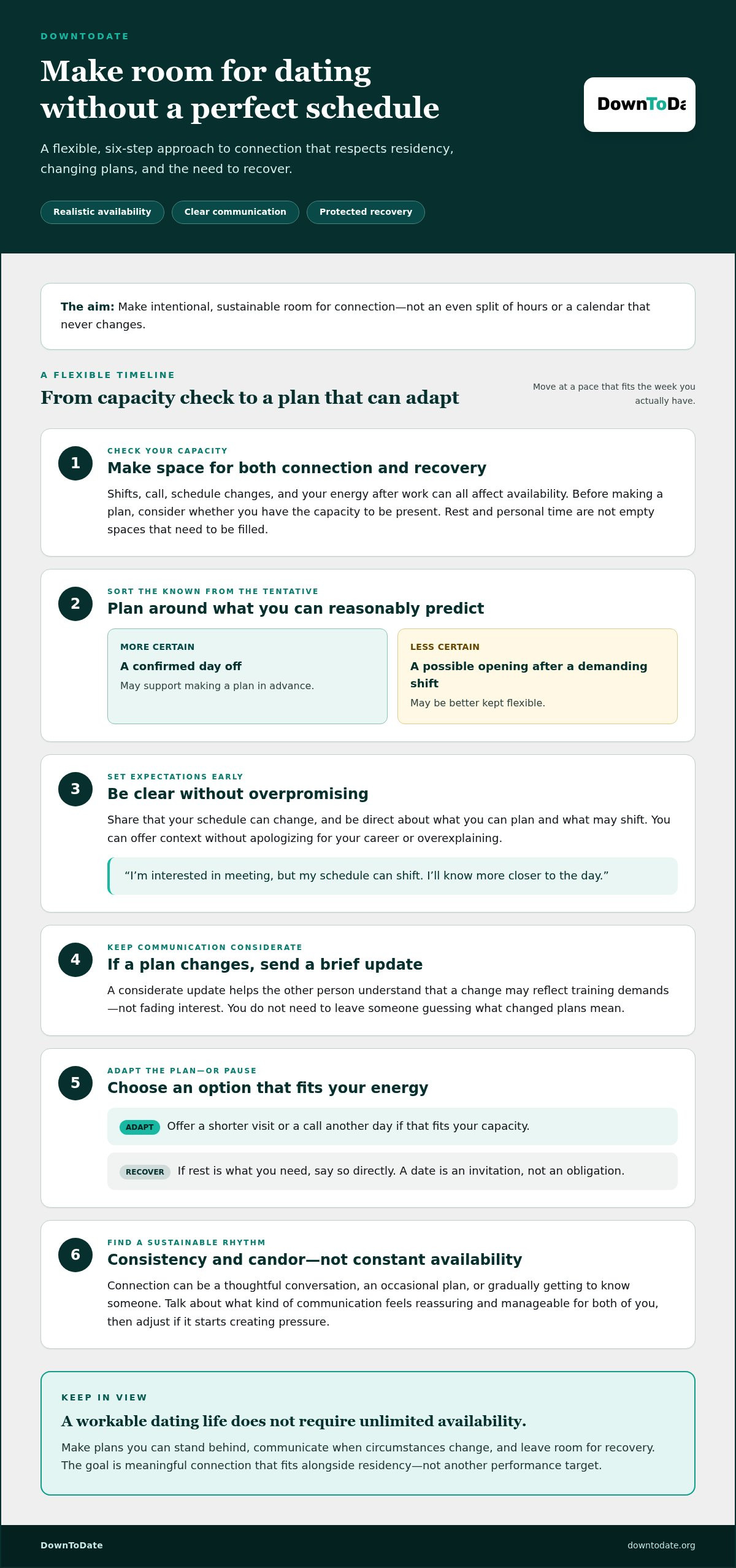
Shifts, call, and schedule changes can shape your availability, but programs and rotations differ. Rather than promising a specific evening before you know your workload, share what you can reasonably predict. For example: “I’m interested in meeting, but my schedule can shift. I’ll know more closer to the day.” Clear communication gives the other person context without requiring you to overexplain.
If a plan changes, a brief, considerate update helps distinguish a work disruption from fading interest. When you’re depleted, offer an alternative that fits your capacity, such as a shorter visit or a call another day. If recovery is what you need, say so directly. A date should be an invitation, not an obligation you force yourself to fulfill.
Why wanting a relationship is compatible with medical training
Wanting companionship doesn’t mean you’re taking training or patient care less seriously. It means connection is one part of a full life. Dating can stay modest and flexible: a thoughtful conversation, an occasional plan, or the gradual process of getting to know someone. It doesn’t have to compete with residency for equal time or become a daily commitment.
A relationship doesn’t need to justify itself by improving your work or solving exhaustion. Its value can simply be the connection you choose to build. Protecting professional responsibilities and recovery remains essential; so does recognizing that personal hopes don’t disappear because your schedule is demanding. The question isn’t whether you can offer unlimited availability, but whether you can communicate honestly about the time you do have.
In brief: Residency complicates dating logistics, but honest expectations can make connection workable. That’s a more realistic foundation for how to balance residency and dating than trying to follow a perfect routine.
What balance between residency and dating actually looks like
Balance isn’t an even split of hours between residency, dating, sleep, and everything else. Training may occupy much of your week, and recovery needs protected space, too. A more useful definition is intentional, sustainable connection that fits alongside professional responsibilities rather than competing with them.
That distinction matters because an idealized picture of balance can make a demanding season feel like a personal failure. Your availability may change from week to week. You can still make room for a developing relationship by being clear about what you can offer and choosing a pace that works for both people.
You don’t have to postpone dating until training ends. Residency is a substantial chapter, not a reason to put every personal hope on hold. A relationship can develop gradually, with meaningful conversations and plans that fit your circumstances. It doesn’t need constant contact or a packed calendar to be real.
Sustainable balance depends on consistency and candor, not a perfectly predictable calendar. Consistency means showing interest in ways you can maintain. Candor means sharing when your availability changes instead of leaving someone to guess what it means.
Set realistic expectations instead of promising constant availability
Describe schedule variability early, without apologizing for having a medical career. You might say, “I’d like to keep getting to know you. My schedule can change, so I’ll be direct about what I can plan and what may shift.” This leaves room for both certainty and uncertainty. Discuss what kind of communication feels reassuring to each of you instead of assuming one rule suits everyone.
Separate what’s known from what’s tentative. A confirmed day off may support a plan in advance; a possible opening after a demanding shift may be better kept flexible. Neither approach measures commitment. The goal is to make plans you can stand behind and update the other person when circumstances change.
Communication is a shared preference, not a test. One person may value a brief check-in; another may prefer to reconnect when both can focus. Talk about what feels thoughtful and manageable, then revisit the arrangement if it starts creating pressure. A supportive rhythm should help you feel connected, not monitored or obliged to respond during clinical responsibilities.
Protect recovery time as part of a sustainable dating life
Rest and personal time aren’t empty spaces waiting to be filled with dates. Before making a plan, consider whether you have the capacity to be present. Afterward, notice whether the interaction felt restorative, neutral, or like another demand. That simple check can guide your pace without turning dating into a scorecard.
If fatigue or stress makes connection harder, adjust rather than forcing momentum. You might choose a shorter, lower-pressure plan or reschedule with a clear message. A person who respects your limits can help dating fit your real life. If you’d value meeting people who understand healthcare work, explore a healthcare-focused dating app created by physicians for doctors, nurses, and other healthcare professionals.
For how to balance residency and dating, think in terms of sustainable choices: protect recovery, communicate what’s realistic, and let the relationship find its own pace. Balance can change with rotations and personal needs. The measure is whether your approach leaves room for both your responsibilities and the connection you genuinely want.
Choose dating plans that can adapt to residency
A dating plan should fit the availability you actually have, not the schedule you wish you had. A confirmed day off can support a plan made in advance. If your shifts or call may change, keep the commitment lighter or agree to confirm closer to the time. Both approaches can work. The key is to match the plan to how certain your availability is.
Rigid plans aren’t inherently a problem. They can be enjoyable when your free time is predictable and you have the energy to follow through. Flexible plans are useful when a shift might run long or your capacity is hard to gauge. A short call, low-key coffee, or thoughtful message can sustain a connection without making every interaction a major event. There’s no universal schedule or ideal frequency. Choose what feels genuine and manageable for both people.
Match the plan to the kind of availability you have
Start with confirmed availability. If you have a reliable open block, make a specific plan. If you’re working around possible changes, avoid building expectations on an optimistic guess. Instead, suggest a flexible option, such as checking in after your shift or meeting for a brief date if you’re both free. On a low-energy day, a call or message may feel more appropriate than going out. A smaller plan can still make room for real conversation.
It can help to think in terms of different plan types rather than one fixed dating routine:
- Confirmed time: Make a straightforward plan when your availability is established and you feel up to it.
- Uncertain time: Agree to check in later or keep the plan easy to move.
- Limited energy: Suggest a shorter, quieter way to connect, or be honest that you need to rest.
These are options, not obligations. If even a brief interaction feels like too much, it’s reasonable to pause and reconnect when you have more capacity.
Communicate changes without leaving the other person guessing
If work disrupts a plan, send a prompt, direct update as soon as you can. A concise explanation is enough: “My shift is running longer than expected, so I can’t make it tonight. I’d still like to see you. Are you free another day?” You don’t need to share confidential workplace details to show consideration. If you don’t yet know when you’ll be free, say so clearly instead of proposing an alternative you can’t confidently keep.
When possible, agree on a backup before the day arrives. You might choose a second time to try, or decide that either person can suggest a shorter call if plans change. A backup isn’t a promise that the original plan will work; it’s a considerate way to keep communication open. For more ideas on dating with an unpredictable schedule, set expectations that reflect your real availability.
This practical flexibility is central to how to balance residency and dating. Make plans around what’s known, leave room for what may change, and communicate with care. That approach protects your time without leaving a potential partner to interpret silence or uncertainty alone.
Build a practical weekly approach to residency and dating
A weekly check-in can help you make room for dating without turning it into another performance measure. Treat it as a flexible planning tool, not a rulebook. Clinical responsibilities come first, and your plan should change whenever your schedule or energy does.
Use this four-step routine as a starting point:
- Review availability. Look at the duties you know about and note when you might realistically have time and energy.
- Choose a realistic opening. Identify a preferred window and, if useful, a backup. Leave some time unplanned for rest or unexpected demands.
- Communicate. Share what you can offer and what remains uncertain. Invite the other person to talk about what works for them, too.
- Reassess. After the plan or conversation, consider whether the pace felt manageable and mutual. Adjust the next plan accordingly.
This routine doesn’t need a fixed day or a prescribed number of dates or messages. A demanding week may leave little room; another may offer a clearer opening. The point is to make deliberate choices without letting a dating plan override clinical responsibilities, recovery, or your own limits.
Plan around confirmed time, energy, and changing duties
Before proposing a date, consider both your likely availability and how you may feel during that opening. Set a preferred window based on what’s reasonably firm, then decide whether a backup is practical. For example, you might suggest a quiet meal on a day off and offer a short call as an alternative if the day changes. Keep some time unscheduled rather than filling every gap.
Review what is working with the person you are dating
A calm check-in can clarify whether communication and pace feel good to both of you. You might say, “I’m enjoying getting to know you. Does our way of staying in touch feel comfortable, or should we adjust it?” Name friction early, including disappointment about a changed plan, rather than assuming every disruption signals rejection. A shared conversation gives you better information than guesswork.
For example, one person may want a quick update when plans shift, while the other may need to reconnect after a busy stretch. Talk about what feels considerate and realistic; preferences can change as training demands do. This is a practical way to apply how to balance residency and dating without treating connection like a rigid schedule to optimize. DownToDate+ is a dating app created by physicians for doctors, nurses, and other healthcare professionals.
If meeting people who understand medical work matters to you, explore DownToDate+. With Premium Membership, healthcare professionals can use advanced search filters and unlimited messaging, along with enhanced profile visibility and community features designed to foster romantic connections. The aim isn’t to find a perfect weekly formula. It’s to make thoughtful plans, keep communication open, and adjust when real life calls for it.
Find healthcare-aware connection while continuing residency
A compatible partner doesn’t need the same free hours you do. What matters is whether you can talk openly about availability, respect each other’s responsibilities, and find a pace that feels considerate to both of you. Someone outside healthcare may understand your schedule through empathy and curiosity. Someone in healthcare may recognize the context quickly. Neither a shared profession nor matching calendars guarantees compatibility.
As you get to know someone, share what residency can mean for your plans without making work the only subject between you. You might explain that some weeks are more predictable than others, or that you sometimes need to rest after a demanding stretch. Then make space for their priorities, too. Ask what helps them feel connected, what they’re looking for in dating, and how they approach changes to plans. Their responses can reveal whether your expectations fit together.
Recognize compatibility beyond a shared profession
Notice how the person responds when your availability is limited. Do they communicate directly? Can you discuss a change without blame? Are both of you making an effort that feels reasonable? These everyday interactions can offer more insight than a shared job title. Talk about values, intentions, and what each of you hopes to build, not only how your work schedules might align.
Healthcare experience can provide useful context, but it doesn’t replace communication. Two people in medicine may still have different boundaries, priorities, or expectations for a relationship. A partner outside the field may also be thoughtful and flexible without knowing the details of training. Look for mutual respect, not an assumption that someone should automatically understand everything.
Take a low-pressure next step toward dating
You don’t need to overhaul your routine to move forward. Choose one manageable action: clarify what you’re looking for, start a conversation, or suggest a plan that fits your confirmed availability. Keep the invitation honest and simple. For example: “I’d like to get to know you. My schedule varies, but I can make time for a short coffee on my next day off.” It communicates interest without promising more than you can offer.
If connecting with people familiar with medical work appeals to you, DownToDate+ is a dating app created by physicians for doctors, nurses, and other healthcare professionals. Its healthcare focus offers one way to meet people with context for demanding careers, while compatibility still depends on the conversation and connection you build.
For how to balance residency and dating, keep your next step small enough to feel sustainable and meaningful enough to reflect genuine interest. You can explore DownToDate+ as one option, or begin by reaching out to someone you’d like to know better. There’s no need to solve your entire dating life at once. Start with one clear, realistic step, then see how it feels.
Make room for connection on your terms
You don’t need to wait for a quieter season to decide what you want from dating. Start with a choice that reflects your priorities now: be clear about your intentions, stay open to adjusting your pace, and look for someone who respects your responsibilities and personal time.
That’s the heart of how to balance residency and dating: making space for connection without asking yourself to become endlessly available. The next step can be small. It might be starting a conversation, setting a realistic plan, or exploring a community where demanding healthcare careers are understood. DownToDate+ is a dating app created by physicians for doctors, nurses, and other healthcare professionals.
If a healthcare-focused approach feels relevant to what you’re looking for, explore DownToDate+. Take dating one thoughtful step at a time, with room for both your professional commitments and the kind of connection you hope to build.
Frequently Asked Questions
Can you date during residency without hurting your training?
Yes, dating can fit alongside residency when it remains compatible with your clinical responsibilities and wellbeing. Be selective about commitments during demanding rotations, and avoid making plans that depend on stepping away from duties or working while distracted. For example, choose a date during confirmed personal time rather than trying to squeeze one into a busy workday. If dating starts affecting your focus or recovery, reassess the pace and make changes.
How do medical residents make time for dating?
Residents can make time by deciding what kind of connection fits their current capacity, rather than waiting for an empty calendar. You might set aside a brief period on a day off to answer messages, then consider meeting someone when you have a confirmed opening. Keep dating tasks separate from patient care and use personal time intentionally. A full dating schedule isn’t necessary; a thoughtful conversation can be a reasonable place to begin.
What should I tell someone I am dating about my residency schedule?
Explain the parts that affect dating: your schedule can vary, some shifts may run longer, and your available time may change. You can keep it simple: “I’m interested in getting to know you. My schedule shifts, so I’ll be clear about what I can commit to.” Share relevant context without discussing confidential patient or workplace information. Then ask what communication helps the other person feel considered, so expectations aren’t based on guesswork.
How often should a medical resident go on dates?
There’s no ideal number of dates that applies to every resident. Consider how much time and energy you can offer while maintaining rest, responsibilities, and other priorities. During an intense rotation, you may choose fewer in-person plans; during a more manageable stretch, you may have room for more. Discuss the pace with the person you’re seeing and notice whether it feels mutual. The goal is a rhythm you can sustain, not a quota.
What should I do if residency keeps disrupting our plans?
Address the pattern directly rather than treating each change as an isolated misunderstanding. Acknowledge the impact, explain what you can about the scheduling demands, and discuss an alternative that’s genuinely realistic. For example: “I know we’ve had to change plans more than once. I want to keep seeing you, and I’d like us to find a way that works for both of us.” If flexibility feels one-sided, talk about that, too.
Is it easier to date another healthcare professional during residency?
It can be helpful to date someone who already understands the demands of healthcare work, but a shared profession doesn’t automatically make a relationship compatible. People in the same field may still have different schedules, communication preferences, and relationship goals. A partner outside healthcare may also be understanding if you talk openly and listen to each other. DownToDate+ is a dating app created by physicians for doctors, nurses, and other healthcare professionals.
Should I wait until residency is over to start dating?
No, you don’t have to postpone dating until training ends. You can begin at a pace that fits your present circumstances, then reassess as rotations and personal priorities change. If a particularly demanding period leaves little capacity, taking a pause is also a valid choice. The decision doesn’t have to be permanent: you can stay open to meeting someone without promising constant availability or treating a relationship as another obligation.


