

Finding time for dating in healthcare starts with treating personal time as something to plan, not something left over after a shift. Protect a realistic window for connection, stay flexible when work changes, and be clear about your schedule from the start. Dating needn’t compete with your commitment to patient care.
Balancing work and dating can feel difficult when shifts run long, recovery matters, and plans may change. It’s reasonable to want a relationship that fits the realities of your work without compromising your professional responsibilities or personal wellbeing.
Demanding hours and unpredictable shifts can affect dating, but practical choices can make room for connection. Plan around your schedule, communicate your availability, and meet people in ways that respect both your career and your life outside work.
Key Takeaways
- Protect personal time in your schedule instead of waiting for a quiet stretch at work to appear.
- Build flexibility into plans and communicate early when a shift change affects your availability.
- Use dating profiles and filters to highlight your interests and seek people whose values and lifestyles align with yours.
- Keep dating separate from workplace relationships by setting clear professional boundaries and connecting outside work.
Challenges of dating with demanding healthcare schedules
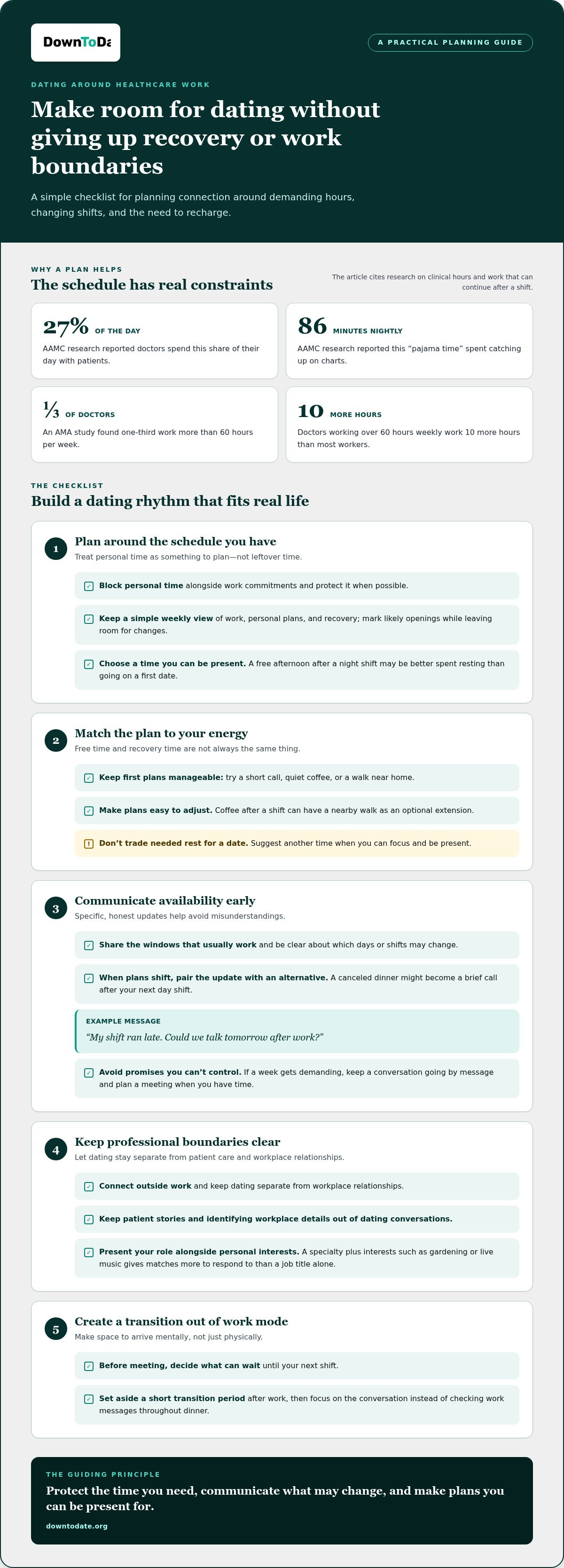
Dating plans compete with work that can extend beyond scheduled shifts. AAMC research reported that doctors spend 27% of their day with patients. Patient care is only part of the workload. After a shift, charting and administrative tasks can continue at home. AAMC research also reported 86 minutes of nightly pajama time catching up on charts. That time can displace a planned call, dinner, or chance to rest before work.
Rotating shifts make routines harder to predict. An evening date may conflict with a last-minute schedule change or a shift that runs late. Even when plans hold, a night worker’s free hours may not match a potential partner’s evenings. Someone finishing an overnight shift may need to recover just as the other person is starting the day. That means less shared time, not necessarily less interest.
Women physicians may face added dating challenges when prospective partners assume their availability or career priorities should fit conventional expectations. A physician balances clinical work, recovery, and personal commitments, while a date may interpret a declined evening as a lack of interest. Clear communication can prevent that misunderstanding. Suggesting a specific alternative, such as a call after a scheduled shift, shows interest without promising time you may not have.
It can also be hard to shift mentally into personal life. A difficult patient interaction or unfinished chart may follow you into a date, even when you’re off duty. Before meeting, decide what can wait until your next shift. Set aside a short transition period after work, then focus on the conversation instead of checking work messages throughout dinner.
Finding time for dating in healthcare means working with real constraints, not waiting for a perfect schedule. Identify reliable openings, communicate changes promptly, and choose plans that can adapt when a shift changes.
How long work hours and unpredictable shifts affect dating
An AMA study found one-third of doctors work more than 60 hours per week. Doctors over 60 hours per week work 10 more hours than most workers. Those hours can reduce overlap between a clinician’s free time and a date’s routine. Someone finishing a late shift may be awake during a partner’s workday. A weekend plan may compete with recovery or additional coverage. The challenge isn’t merely finding an open evening. It’s finding time when both people can be present.
Emotional exhaustion can change what feels manageable after work. A nurse who has supported a distressed family may not have the energy for an elaborate first date. That doesn’t mean a lack of interest; it may mean time to decompress is needed. Match plans to your energy: try a short call, quiet coffee, or walk near home. Save longer outings for a day off when you feel rested, rather than treating every free block as a social obligation.
Connecting with someone who understands healthcare can reduce the need to explain every schedule disruption. Shared experience may help partners discuss missed calls, fatigue, and boundaries directly. Still, working in the same field doesn’t guarantee compatible values or routines. Look for respect for rest and genuine flexibility. Try a dating-app conversation or an activity based on a personal interest. Start with a short exchange, then decide whether you feel comfortable meeting for longer.
Make availability specific. Share the windows that usually work, and suggest an alternative when plans shift. For example, replace a canceled dinner with a brief call after your next day shift, rather than leaving the conversation hanging. Avoid promising a schedule you can’t control. If shared professional realities matter, a dating community for healthcare professionals can help you meet people who recognize the demands. Keep the first step manageable, then let the connection develop at a sustainable pace.
Balancing dating with professional commitments
Start with the schedule you have, not the one you wish you had. Block personal time alongside work commitments, then protect it when possible. A free afternoon after a night shift may be better spent resting than going on a first date. Choose a time when you can be present, and tell your date which days or shifts are likely to change.
Good date ideas when free time is unpredictable include a short coffee, a walk near home, or a phone call. Choose plans that can be shortened or rescheduled without losing their meaning. For example, suggest coffee after a shift, with a nearby walk as an optional extension.
Balance dating with sleep and stress by treating recovery time as a real commitment. Don’t sacrifice needed rest for a date. Instead, suggest another time when you can focus and be present.
Professional commitments still matter. Value your personal time and use dating apps to look for meaningful connections without compromising work responsibilities. Set realistic expectations for your availability instead of disappearing during a demanding stretch or agreeing to plans you can’t keep. A brief message explaining a schedule change, paired with a new suggestion, keeps communication clear. For example: “My shift ran late. Could we talk tomorrow after work?”
Keep a simple weekly view of work, personal plans, and recovery. Mark likely openings but leave room for schedule changes. If a week gets demanding, scale dating back rather than abandoning it: keep a conversation going by message, then plan a meeting when you have time. Be direct about what works. A potential partner can understand your availability and decide whether the rhythm suits them, while you preserve space for work and personal life.
How can healthcare workers meet people outside work without risking workplace professionalism?
Build a profile that presents your clinical role alongside personal interests. For example, mention your nursing specialty and weekend gardening or live music. A balanced profile gives matches more to respond to than a job title. Keep patient stories and identifying workplace details out of dating conversations. That boundary protects privacy and separates professional life from personal connection.
Use dating-app filters to narrow matches by values and lifestyle, such as faith or an active routine. Adjust the age range and search radius to reduce the chance of matching with clients. Treat those settings as screening tools, not substitutes for good judgment. If a profile suggests a connection to your workplace, keep the interaction outside clinical settings and maintain professional boundaries.
Meet people beyond the hospital by choosing an activity based on an existing interest. A book discussion, community run, or cooking class offers a shared starting point. If faith guides your personal choices, a faith-based dating app can help you seek people who share that value. With rotating shifts, online conversations also make it easier to connect at a suitable time.
Keep your profile candid but discreet. Describe your role broadly, such as “emergency nurse,” rather than naming your unit or sharing workplace details. Pair professional achievements with interests outside work, then ask questions that show genuine curiosity. If a match is a patient or client, don’t turn a care interaction into a personal one. Keep introductions and messages on personal channels, never work systems. For example, arrange a first meeting in a neutral setting at a time that respects both schedules. These steps help preserve boundaries while making room for connection outside work.
DownToDate: Premium Membership
DownToDate offers Premium Membership for healthcare professionals seeking connection with peers who understand medical careers. After setting boundaries and making room for dating, it can be a natural next step if you want to meet people who recognize the demands of healthcare work.
A shared professional context can make it easier to start conversations about shift patterns and changing availability. It doesn’t replace clear communication or guarantee compatibility, but it can connect you with a community focused on healthcare professionals. Consider whether that approach fits your priorities and schedule.
Visit DownToDate to explore Premium Membership.
Make space for connection on your terms
Finding time for dating in healthcare doesn’t require a perfectly predictable calendar. Start by choosing a pace that respects your energy and leaves room for genuine interest. A small, consistent step can be more sustainable than waiting for an ideal stretch of time. Decide what kind of connection you want, then make choices that support it without treating your personal life as another shift to manage.
If meeting people who understand healthcare matters to you, DownToDate+ offers Premium Membership to help you pursue that shared context. Consider whether it suits the connection you’re seeking and the time you can comfortably give to dating.
Contact DownToDate to learn more, and take the next step when it feels right. Your work deserves commitment. So does the life you’re building beyond it.
Frequently Asked Questions
What are realistic ways for healthcare workers to find time for dating with shift work?
Choose low-effort ways to connect that suit your energy. A brief phone call, a message exchange during a break, or a short coffee before an evening shift can keep dating manageable. Identify personal windows you can rely on, then use them for conversations or first meetings. If your workday changes, suggest a specific alternative rather than leaving plans uncertain.
How can nurses and doctors schedule dates around rotating shifts and on-call duties?
Plan around confirmed availability, and don’t treat on-call time as completely free. Share the dates or periods when you’re least likely to be interrupted, then choose a flexible plan near home. For example, meet for coffee after a shift, with the option to keep it brief. If work intervenes, let your date know promptly and suggest a practical alternative.
Are there dating apps or events specifically for healthcare professionals?
Yes. Healthcare-focused dating apps are one option, while interest-based gatherings offer another way to meet people. DownToDate+ is designed for healthcare professionals, and its Premium Membership includes advanced search filters, including by profession. For in-person connections, consider an activity based on an interest you already enjoy. Shared work experience can help, but compatibility still depends on values and communication.
How can couples maintain a relationship when one partner works nights or long shifts?
Agree on communication that fits both routines rather than expecting constant contact. You might choose a short check-in before a night shift and a longer conversation on a shared day off. Protect time together from work interruptions when possible, and discuss how each of you prefers to reconnect after demanding shifts. Small, dependable rituals can help you stay connected across different schedules.
What dating challenges are common for healthcare workers, and how can partners discuss them?
Changing availability, fatigue, and work stress can lead to misunderstandings. Discuss these patterns outside a tense moment, using a specific example: “I may be slow to reply during a shift, but I’ll message when I’m free.” Ask what helps your partner feel considered, too. A practical conversation about expectations can distinguish a scheduling constraint from a lack of interest.
Are there dating events or social groups for healthcare workers in major U.S. cities?
Healthcare-focused events and social groups can bring people together, though opportunities vary by community. Look for professional-network gatherings, alumni activities, or interest-based events that welcome people from different workplaces. You can also ask colleagues about public social activities without sharing patient information or turning work interactions into dates. Choose settings where it’s easy to meet people while keeping professional boundaries clear.


