

A profile badge means an account has completed the platform’s stated verification steps, not that every profile detail is true. Profile verification on medical dating apps may start with an email or phone confirmation, then include checks such as a real-time selfie or liveness test. These steps can make it harder to use a false identity, but they still call for sound judgment.
For healthcare professionals, trust matters before a conversation moves beyond the app. A demanding schedule makes efficient ways to assess authenticity useful, but no badge can tell you whether someone is a good match or guarantee their intentions. Knowing what each check establishes, and what it does not, helps you assess profiles with realistic expectations.
This guide covers why identity checks matter, how email, phone and platform verification work, and what a badge may indicate. You’ll learn how to weigh verification alongside the rest of a profile, so you can approach new connections with confidence and sound judgment.
Key Takeaways
- Identity checks can help distinguish a more accountable profile from an unverified one, but they don’t establish someone’s character or intentions.
- Government ID checks may add an identity signal; understand what the platform checks and what information it uses.
- Email and phone confirmations connect an account to contact details, while platform checks may add further steps before a badge appears.
- Read a verification badge as one useful signal, not a substitute for thoughtful conversations and judgment.
Why should you take online dating identity verification seriously?
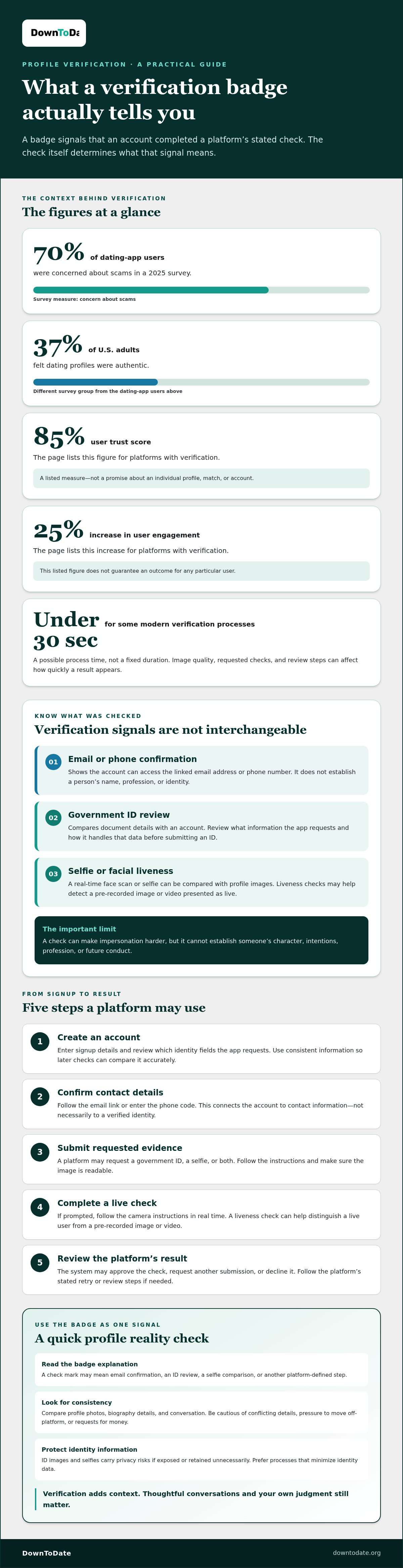
Identity checks give you more context before a conversation moves forward. In a 2025 survey, 70% of dating-app users were concerned about scams, while only 37% of U.S. adults felt profiles were authentic. Profile verification on medical dating apps can help you assess what an account has actually checked.
Government ID and Facial Liveness Checks
A government ID check compares document details with an account, while facial liveness asks for a real-time face scan or selfie. These checks can make impersonation harder by linking an account to a person and document. For example, liveness checks may help detect a pre-recorded video presented as a live selfie. Profile verification on medical dating apps still cannot establish someone’s character or intentions.
Verification Fees and Credential Privacy
Verification fees vary by app. Check the signup or verification screen for any separate charge. Before submitting an ID, review what information the app requests and how it handles that data. Document images and selfies carry privacy risks if exposed or retained unnecessarily, so prefer processes that minimize identity data and keep only what verification requires.
Spotting Fake or Misleading Profiles
Look for inconsistencies in profile photos, biography details and conversation. For example, someone may claim a medical role but avoid reasonable questions about their stated work. Be cautious if a match quickly asks for money, pushes you off-platform or gives conflicting details. If verification is rejected, retake the photo in clear lighting, check that the document details match and follow the app’s retry or appeal instructions.
Verified Profile Check Marks
A check mark means an account completed the platform’s stated verification process. Its significance depends on the check: email confirmation establishes less than an ID review or facial liveness check. Read the badge explanation before treating it as proof of identity. Consider it one signal alongside profile photos, consistency and your own judgment.
Verification steps from signup to profile badge
Verification links an account to evidence submitted by its owner. Each platform chooses its own methods, so badges may represent different checks.
- Create an account. Enter the signup details and review which identity fields the app requests. Use consistent information so later checks can compare it accurately.
- Confirm contact details. Follow the email link or enter the phone code sent during signup. This action connects the account to contact information, not necessarily to a verified identity.
- Submit any requested evidence. A platform may ask for a government ID, a selfie, or both. Follow the on-screen instructions and make sure the image is readable.
- Complete a live check. If prompted, follow the camera instructions in real time. Liveness checks can help distinguish a live user from a pre-recorded image or video.
- Wait for the platform’s result. The system may approve the check, request another submission, or decline it. Follow the stated retry or review steps if the result needs attention.
Some modern dating-app verification processes can take under 30 seconds. That describes a possible process, not a fixed duration for every user; image quality, requested checks, and review steps can affect how quickly a result appears.
Badges vary across medical dating apps because each platform decides which actions count. One check mark may indicate a confirmed email, while another may follow an ID or selfie comparison. Read the badge explanation to understand what was checked before treating a profile as verified.
A badge can support trust by showing that an account completed a defined check. It offers limited assurance, not a guarantee about someone’s profession, intentions or conduct. For example, a badge cannot establish that a match will communicate honestly. Treat it as one piece of context, then assess the person’s statements and behavior over time.
The page lists a user trust score of 85% for platforms with verification and a 25% increase in user engagement for platforms with verification. These figures are listed measures, not a promise about an individual match or a particular account. Dating apps should explain what a verification badge does and does not prove, so users can interpret it without overstating its meaning.
Email and phone verification
Email and phone checks confirm that you can access contact details linked to an account. Often part of signup, they do not establish your name, profession or identity. Email verification generally helps confirm access to the email address associated with an account. A confirmed phone number means you entered a code sent to that number.
Follow the app’s prompts carefully. To confirm an email, open the message sent to your signup address and select its confirmation button. For a phone check, enter the code in the app’s verification screen. If a message doesn’t arrive, check the address or number you entered and your message filters, then request another code through the platform. Never share a verification code with another person.
These checks answer a narrow question: can this account receive messages at this address or number? They don’t show whether profile photos belong to the account holder or whether a stated medical role is accurate. For example, a phone-confirmed profile could still use someone else’s photos. Treat contact confirmation as one layer, not a substitute for broader identity verification.
Some platforms offer separate photo verification, asking you to submit a selfie for comparison with your profile images. Other services may include a document check or biometric comparison. These methods differ from email and phone confirmation, and their purpose depends on the platform’s process. A selfie match can support the link between a person and their photos, but it doesn’t confirm every claim in a biography.
For healthcare professionals with limited time, the distinction is practical: contact checks show that an account is reachable, while identity checks may examine other evidence. Read the explanation beside each badge or check before relying on it. If a profile is labeled “phone verified,” take that label literally. It describes the phone check, not confirmed identity or professional credentials.
Verification features in dating platforms
Dating platforms combine checks in different ways, so a badge’s meaning depends on the feature behind it. In the United States, verification labels are platform-specific, not part of a shared standard.
Healthcare Professional Profile Verification
Healthcare professional profile verification means a platform checks evidence linked to a medical role. Medical dating apps that explicitly offer credential review are the ones to look for; a general profile badge alone doesn’t show that a profession was checked. Before relying on a mark, read its description and identify whether it confirms account identity, healthcare employment, or only contact details. Those are different checks.
Credential and Specialty Checks
A credential check compares information a user submits with evidence the platform accepts. A specialty claim requires a check that specifically addresses specialty; an identity check alone cannot confirm it. The app should explain which documents or details to submit and what the result means. For example, checking an email address confirms access to that address, not a clinical role.
Verification for Students and Other Healthcare Workers
Verification may cover students and healthcare workers if a platform accepts evidence of their status. A student might submit an enrollment record, while a nurse or allied health professional might use a role-specific credential. These are examples, not universal app requirements. Check the feature description for eligible roles: a badge intended for licensed professionals may not cover every stage of a medical career.
Verified Profile Rates
There is no single verified-profile percentage that applies to medical dating apps. Across platforms using verification, more than 90% of profiles are listed as confirmed, but that figure shouldn’t be read as a medical-app-specific rate. Ask what the platform counts as “confirmed”: an email, a phone number, or a stronger identity check. A larger percentage alone doesn’t show what each badge proves.
DownToDate: Premium Membership
DownToDate offers Premium Membership for healthcare professionals seeking meaningful connections with peers who understand the demands of medical work. After learning how verification features work, you can use that knowledge to assess profiles with care and choose a dating community centered on healthcare professionals.
If you’re ready to build connections beyond your work environment, DownToDate+ offers Premium Membership, with advanced search filters and unlimited messaging. Keep the principles from this guide in mind: understand what a badge represents, look for consistency and make thoughtful decisions as conversations develop. Verification can inform your choices, but getting to know someone takes time.
Visit downtodate.org to explore DownToDate and its Premium Membership.
Make room for connection beyond your work
Healthcare work demands intense focus, and personal connection can compete with shifts, responsibilities and limited downtime. Let the standards you use for profile verification on medical dating apps guide a thoughtful start, not define the whole relationship. A badge can inform your first impression; the connection you build depends on shared conversation, respect and genuine interest.
Choose a pace that fits your life. Be clear about what you value, notice how a match communicates and give promising conversations room to develop beyond profile details. A meaningful partnership doesn’t require a perfect schedule. It begins with making space for someone who understands the realities of your profession and wants to know you beyond it.
If you’re ready to meet healthcare professionals with a shared understanding of medical life, contact DownToDate to learn more. Take the next step toward connection on your terms.
Frequently Asked Questions
What is profile verification?
Profile verification is a platform’s process for checking a particular account detail, such as access to an email address or a match between a person and their photos. The label’s meaning depends on what the app assessed. A confirmed email and a reviewed professional credential answer different questions, so read the badge description before relying on it.
What documents are required to verify a doctor or nurse profile?
Required documents depend on the app and the claim being checked. An identity check may request a government-issued ID, while a professional-status check may ask for evidence relevant to a doctor’s or nurse’s role. Follow the app’s document instructions, submit legible images and make sure the information matches your profile. Don’t send credential documents through a dating chat.


