

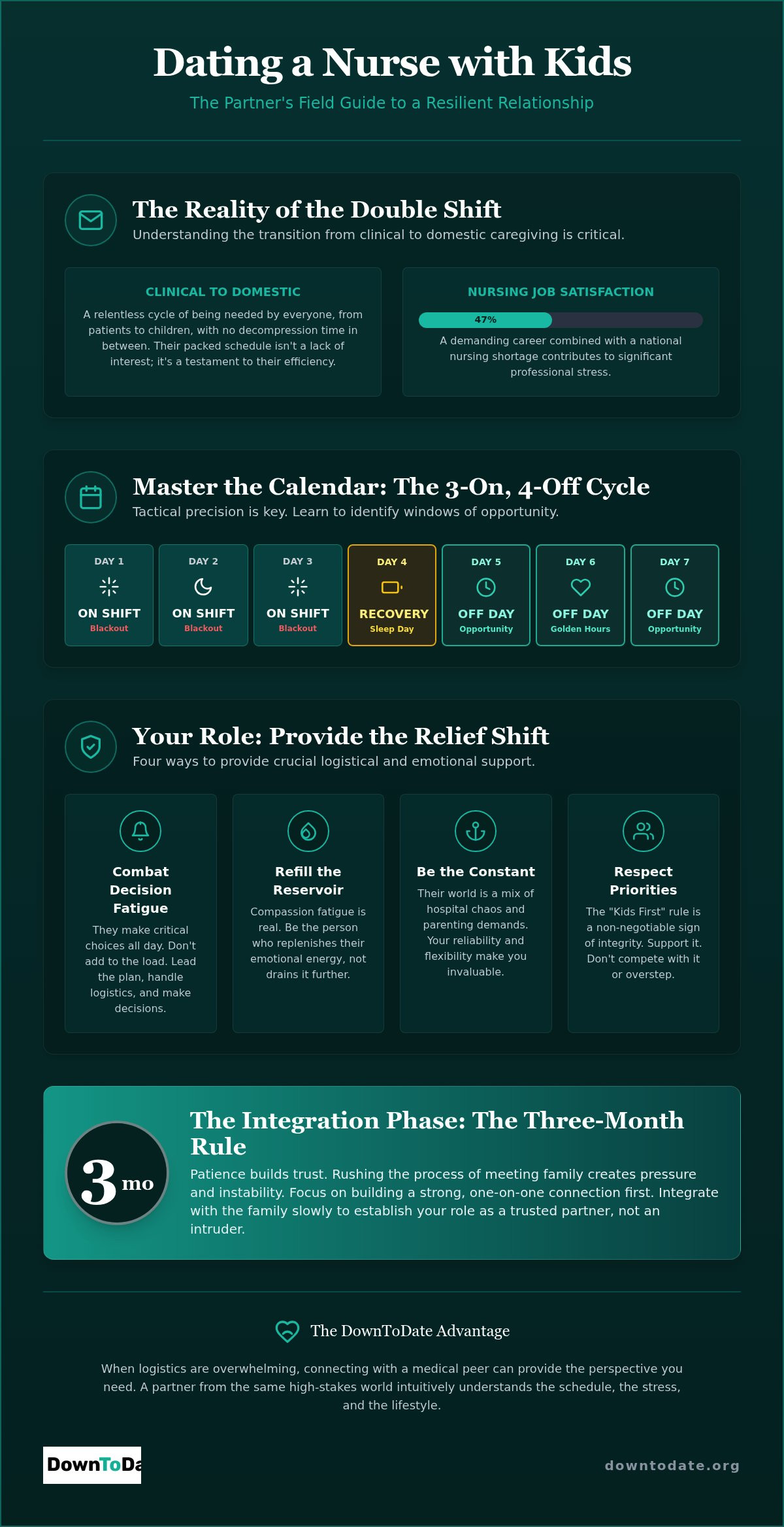
You aren't just dating a person. You're entering a high-stakes ecosystem defined by 12-hour shifts, school runs, and a national nursing shortage that has job satisfaction at a low 47 percent. Success in dating a nurse with kids isn't about fighting for their attention. It's about providing the logistical and emotional relief shift they actually need. You feel the frustration of last-minute cancellations. You feel the sting of being a lower priority than a code blue or a sick toddler. We know the pressure is real.
This guide will help you master the logistics of shift work and parenting while building a deep, resilient connection. You'll gain a clear framework for scheduling dates. You'll understand the emotional needs of a nurse-parent. We'll explore how to navigate the "kid reveal" and establish a path toward a stable, long-term partnership. It's time to move past the uncertainty. It's time to build a relationship that respects her time and your commitment. We're here to provide the structure for a partnership that lasts.
Key Takeaways
- Recognize the reality of the Double Shift. Understand how clinical caregiving transitions directly into domestic labor.
- Identify windows of opportunity. Master the 3-on, 4-off cycle to find quality time between hospital shifts and school runs.
- Develop the specific emotional intelligence needed when dating a nurse with kids. Learn to nurture the person who cares for everyone else.
- Respect the Three-Month Rule. Integrate with the family slowly to build long-term trust and establish your role as a partner.
- Leverage the DownToDate advantage. Connect with a medical peer who intuitively understands your high-stakes schedule and your lifestyle.
The Reality of the Double Shift: Nursing and Parenting
The double shift is a literal transition. It starts the moment they clock out of the ICU and continues until the last child is asleep. It's the movement from clinical caregiving to domestic caregiving. There's no buffer. There's no decompression. For those dating a nurse with kids, understanding this transition is the difference between a failed connection and a lasting partnership. It isn't just about time management. It's about the massive amount of emotional labor required to sustain both roles simultaneously. It's a relentless cycle of being needed by everyone, everywhere.
Don't mistake their packed schedule for a lack of interest. Nurses aren't just busy. They are highly efficient. They've spent twelve hours triaging patients, managing crises, and executing complex protocols. They view their time as a finite resource. If they've cleared space for you, it's a deliberate choice. Resilience is their baseline. It's a core trait forged in the fire of high-stakes environments and the demands of solo parenting. They don't need someone to fill their time. They need someone who respects the intensity of their life.
The Clinical Fatigue Factor
A 12-hour shift is a physical marathon. It involves miles of walking, heavy lifting, and constant vigilance. By the time they reach you, their body is spent. More importantly, their mind is exhausted. This is decision fatigue. They've spent all day making critical choices for others. When you ask them to pick the restaurant or choose the movie, you're adding to that load. Lead. Make the plan. Handle the logistics. Compassion fatigue in single parenting occurs when the emotional reservoir drained by patients isn't replenished before meeting a child's needs. Being the person who refills that reservoir makes you indispensable.
The Single Parent Priority
The "Kids First" rule is a non-negotiable boundary. It's a sign of integrity, not a rejection of your value. Nurses manage a heavy work-family conflict every single day. They balance erratic hospital rotations with school schedules and childcare costs that now consume 20 percent of the average household income. This is the mental load. They are tracking medication schedules at work and soccer practices at home. Show support by being the person who doesn't add to the chaos. Be reliable. Be flexible. When you're dating a nurse with kids, your value increases when you become the one constant in their ever-shifting world. Respect the boundaries. Don't overstep into a parental role too early. Focus on being the partner who understands the weight they carry.
Master the Calendar: Navigating 12-Hour Shifts and School Runs
Success in dating a nurse with kids requires more than just affection. It requires tactical precision. Most hospital systems operate on a 3-on, 4-off cycle. This rhythm creates distinct windows of opportunity. You must learn to identify these blocks before you can plan a future. The three days of clinical work are a total blackout. Energy is reserved for patients and children. The four days off are where the relationship lives, but even these are not created equal. Understanding the cadence of the hospital floor is your first step toward integration.
The "Golden Hours" are your most strategic asset. This is the period between the end of a shift or a school drop-off and the afternoon pickup. It is a quiet, high-value window for connection without the immediate pressure of domestic duties. Utilizing this time shows you respect the complexity of their routine. Flexibility is the primary currency here. If you cannot pivot when a patient crashes at shift change or a sitter cancels, the relationship will stall. You aren't just competing with a job. You are navigating the Impacts of Long Work Hours on Families, which often includes high levels of work-family conflict and physical exhaustion.
Decoding the Nurse Schedule
Day shifts and night shifts offer entirely different dating dynamics. Night shift dating is a lesson in reverse logic. You meet for breakfast when the world is starting work. You protect their sleep like a guardian. Most importantly, you must respect the recovery day. The first day off after a block of shifts is for physical and mental recalibration. It is not a date day. It is a sleep day. Expecting a high-energy outing during this window is a recipe for resentment. If you find these logistics overwhelming, joining a community of medical peers can provide the perspective you need to navigate these unique hurdles.
Childcare Contingencies
Childcare is the ultimate variable. With the average cost of center-based infant care reaching over $1,200 monthly in 2026, every date involves a financial and logistical calculation. A nurse with kids always has a backup for the backup. When mandatory overtime hits or a child falls ill, your reaction defines your potential as a long-term partner. Be the flexible party. Respect the school night boundaries. A 9:00 PM curfew for a 7:00 AM clinical start isn't a suggestion. It's a necessity for professional and parental survival. When you're dating a nurse with kids, your ability to plan ahead while remaining ready for the on-call reality is your greatest strength.
Emotional Intelligence: Supporting the Partner Who Cares for Everyone
The caregiver trope is a trap. It suggests that because a nurse cares for patients and children, they naturally want to care for you in the same way. This is a common misconception. In reality, the reverse is true. When you are dating a nurse with kids, you must be the one who nurtures the caregiver. Their emotional reservoir is drained by twelve hours of clinical empathy and the relentless demands of parenting. They don't need another dependent. They need a partner who provides a baseline of support and stability. They need to be the one who is looked after for a change. Providing that stability can extend to helping manage household overhead; for example, you might check out TELEFONETICA HEALTH RX to find affordable health plans that cover dental and vision for the whole family.
Communication in the medical field is direct. It is efficient. It is high-stakes. Nurses are trained to deliver critical information quickly and accurately. This style often carries over into their personal lives. Don't mistake this brevity for a lack of warmth. It is a professional habit born of necessity. To build a deep connection, match their efficiency. Be clear about your needs. Be reliable in your actions. Trust is built through consistency, especially for a person whose daily life is defined by hospital rotations and school schedule shifts. Consistency is the highest form of romance in a high-stress life.
The 'Post-Shift Decompression' Period
The transition from the hospital floor to the home environment requires a buffer. Many nurses need thirty minutes of absolute silence before they can engage with a partner or their children. This is not a rejection. It is a recalibration. During this time, your role is to protect that space. When they do speak, prioritize active listening. They don't always need you to solve the problems of the ward. They need a safe space where they don't have to be the strong one. They need to know that their fatigue is seen and respected without judgment.
Shared Values and Professional Respect
Understanding the weight of the medical profession is a significant advantage. It allows you to offer empathy that isn't hollow. This challenge is similar to the dynamics of dating for doctors, where the pressure of the role demands a partner who understands high-stress environments. Value their career as much as you value their role as a parent. Acknowledge the skill it takes to manage both. When you respect their professional identity, you validate the person behind the scrubs. This mutual respect creates the foundation for a resilient, long-term partnership that can withstand the pressures of the healthcare system.
The Integration Phase: Meeting the Kids and Building Trust
The first 90 days of dating a nurse with kids are a critical vetting period. It's a test of temperament. Rushing the introduction to children is a significant red flag. It suggests a lack of professional boundaries or a search for a logistical replacement. A medical parent values stability above all else. They manage life and death at the hospital; they don't want high stakes drama at home. Success in this phase requires patience. It requires a commitment to the long game. You are building a foundation, not just filling a vacancy.
Establish your role early. You are a partner. You are not immediately a replacement parent. Respect the co-parenting schedule. The "Ex" dynamic is a permanent fixture. It's a logistical reality as rigid as a surgical rotation. Your ability to navigate this without resentment proves your maturity. When dating a nurse with kids, your value is measured by your consistency. Be the one person who doesn't add chaos to their ecosystem. Be the one person who respects the existing family structure while building a new one with them.
The Slow Integration Strategy
Phase one is the "Friend" introduction. Keep it public. Keep it brief. A thirty minute meeting at a park is better than a four hour dinner. Phase two involves group activities. This allows the children to see you in a safe, low pressure environment. Phase three is one-on-one time. This happens much later. It only happens after trust is verified and the relationship has proven its resilience. This tiered approach protects the children and the partnership from unnecessary emotional turbulence.
Maintaining the Romantic Core
Don't become a logistical helper. It's easy to fall into the trap of running errands or managing school runs to "help out." This kills the romantic tension. You are a lover, not a service provider. Prioritize "Adults Only" dates. Protect your connection from the noise of domestic life. Balancing your needs with their household reality requires a partner who intuitively understands the medical lifestyle. If you're looking for a connection with someone who shares these high standards, join our verified community. We filter for serious intent so you can focus on building a deep, resilient partnership.
Why Medical Peers Navigate This Best: The DownToDate Advantage
Dating a nurse with kids requires a partner who doesn't just tolerate the schedule. It requires a partner who lives it. This is the intuitive understanding. A fellow clinician doesn't need a briefing on why a shift ran long or why a sick child upends a weekend. They know the reality. They understand the weight of the pager. They understand the physical fatigue of the ward. When two medical professionals connect, the friction of mismatched lifestyles disappears. The logistical hurdles we've discussed become shared challenges rather than points of resentment. You aren't just dating; you're building a partnership based on shared sacrifice and mutual respect.
The DownToDate community acts as a filter. It identifies serious intent. It verifies professional status. It ensures that your limited time is spent with people who share your values. This is how you build a medical power couple dynamic. You aren't just two people trying to find a window for coffee. You're two high-achievers building a resilient life together. It's about a mutual respect for high-stakes careers and the children who depend on you. When you're dating a nurse with kids, the 'Double Shift' is a shared reality, not a unique burden you have to carry alone.
Efficiency for the Busy Parent
Skip the explanation phase. You don't have to justify working late. You don't have to apologize for a school emergency. Your partner has the same clock. They move with the same urgency. For a single parent, this efficiency is vital. Our professional dating app is designed to facilitate these specific connections. It removes the guesswork. It prioritizes verification and security. This gives you the peace of mind necessary to focus on real connection. Efficiency is the goal. Connection is the result.
Finding Your Peer Match
Quality outweighs quantity. In a world of endless swiping, targeted searching is the only logical path. A Premium Membership allows you to filter for exactly what you need. You can find someone who understands the 3-on, 4-off cycle. You can find someone who respects the Three-Month Rule. This isn't just about dating; it's about community building. You deserve a partner who understands the high stakes of your professional and personal life. Join the DownToDate community today and find the partner who truly gets it.
Building a Partnership Built to Last
Success in dating a nurse with kids requires more than patience. It requires tactical precision. It requires emotional intelligence. By mastering the clinical calendar and respecting the slow integration of family, you move from being a bystander to becoming a foundational support. You provide the relief shift they need. You build a connection that outlasts the stress of the ward and the demands of the household. It's about creating a partnership that functions as a sanctuary for both of you.
You deserve a connection that respects your time and your professional identity. DownToDate is a verified community tailored for the healthcare lifestyle. Founded by doctors for the medical community, our platform offers secure, verified member profiles to ensure quality and shared values. Don't settle for mismatched expectations or the frustration of being a low priority. Start dating peers who understand your life. Join DownToDate.
The path to a stable, long-term partnership is clear. Take the first step toward a relationship that truly understands the weight of your world. Your future match is ready to meet you. We are here to help you build a resilient, deep connection that lasts.
Frequently Asked Questions
What is the best time to schedule a date with a nurse who has kids?
The optimal time to schedule a date is during the "Golden Hours" between school drop-off and the afternoon pickup, or on her second day off. This avoids the immediate clinical fatigue of the 12-hour shift and the physical recovery required on day one. Aim for mid-week windows when childcare is already established. Efficiency is the priority here. You want to maximize connection without adding to her logistical burden.
How long should I wait before meeting her children?
You should wait at least three months before meeting her children to ensure the relationship is stable. This period allows the partnership to establish its own resilience before introducing the complexity of family dynamics. Rushing this milestone is often a red flag for medical parents who value stability. Start with a brief, public encounter in a low-pressure environment. Patience in the early stages verifies your serious intent and respect for her parental boundaries.
Why does she seem so tired even on her days off?
Her exhaustion stems from the physical and mental toll of high-stakes caregiving compounded by the "Double Shift" of domestic responsibilities. A hospital shift involves constant vigilance and miles of walking. Even on days off, the mental load of managing a household continues. This is not a lack of interest in you. It is a biological requirement for recovery. Respecting this need for decompression is essential when dating a nurse with kids.
How can I support her after a particularly bad shift at the hospital?
Support her by facilitating thirty minutes of silence and handling immediate domestic tasks. Don't jump into problem-solving or demand emotional engagement right away. Offer a listening ear without judgment if she chooses to speak. Handling dinner or managing a school errand provides the practical relief she actually needs. Your role is to be the one constant in a day defined by hospital chaos and professional pressure.
Is it a red flag if she cancels dates frequently?
Frequent cancellations are often a result of mandatory overtime or childcare emergencies rather than a red flag. In the current healthcare environment, staffing shortages make last-minute schedule changes a professional reality. Watch for how she handles the rescheduling. A partner with serious intent will offer an alternative window immediately. Flexibility is the primary currency in this relationship. If the effort to reconnect is present, the interest is real.
What should I do if I feel like I'm second place to her kids and job?
Address your feelings through direct, efficient communication rather than withdrawal. A nurse's kids and career are high priorities, but a healthy partnership requires its own dedicated space. If the imbalance feels permanent, it may be a sign of lifestyle misalignment. This is why many find success dating within the medical community. Peers intuitively understand the hierarchy of needs without feeling neglected. Dating a nurse with kids requires a partner who is secure in their own value.
Do nurses prefer dating other medical professionals or 'civilians'?
Many nurses prefer dating other medical professionals because they share an intuitive understanding of the high-stakes lifestyle. Peers understand the exhaustion of a code blue or the rigidity of a holiday rotation. While dating people outside the field is common, the shared language of the hospital floor creates an immediate bond. This mutual respect for the profession often leads to more stable, long-term partnerships compared to those with partners who don't understand the clinical environment.
How do I handle her ex-partner or co-parenting situation?
Treat the co-parenting relationship as a professional logistical reality that requires your respect but not your interference. The ex-partner is a permanent fixture in the family ecosystem. Your role is to remain a stable, supportive presence for the nurse without overstepping into parental disputes. Focus on being the reliable partner who doesn't add drama to an already complex situation. Consistency and maturity are your best tools for navigating this dynamic successfully.


