

What if shared shifts and clinical shorthand aren’t enough to make a lasting match? A medical career can create common ground, but it doesn’t guarantee shared priorities or the time a relationship needs. How to find a partner in the medical field starts with looking beyond job titles and credentials to the values, expectations, and everyday habits that shape a life together.
Long or changing hours can make dating harder to sustain, and someone outside healthcare may not immediately understand the pressures you face. Those challenges are real, but they don’t make a compatible relationship out of reach. This guide offers practical ways to meet potential partners, assess compatibility beyond occupation, and set clear expectations for communication and time together.
We’ll explore where to meet people, what to discuss as you get to know them, and how a medical-focused dating community may help you connect with someone who understands the work. The goal isn’t to match on profession alone. It’s to build a connection grounded in shared values, mutual respect, and a schedule you can both navigate.
Key Takeaways
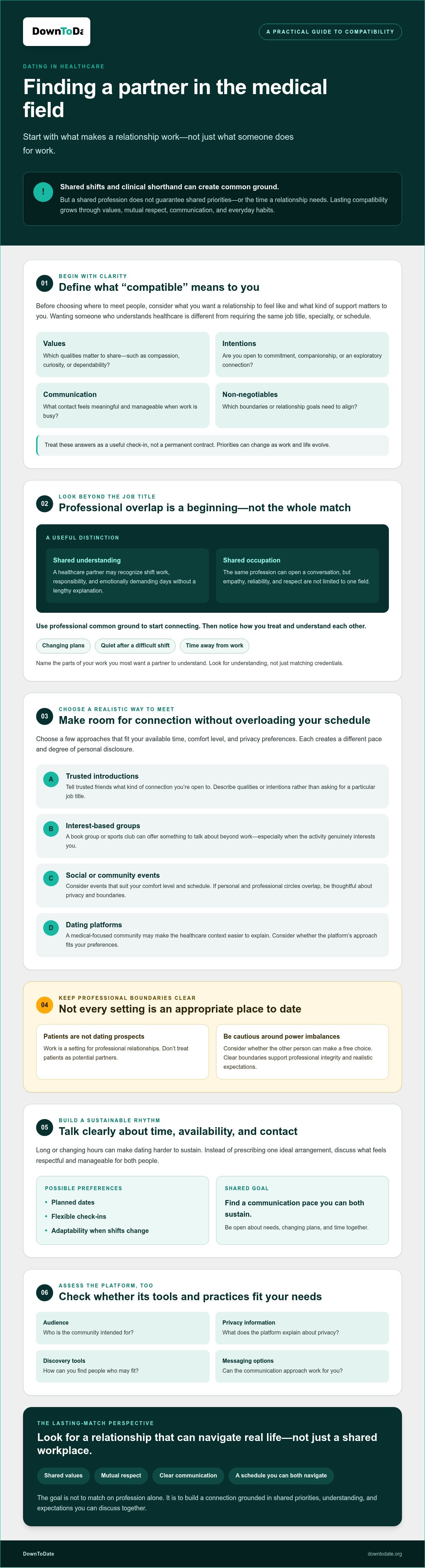
- Define the qualities and relationship goals that matter to you before deciding whether a partner needs to work in healthcare.
- Choose ways to meet people that fit your schedule, comfort level, and privacy preferences, from trusted introductions to dating platforms.
- Use professional overlap as a starting point, then assess personal values, communication, and relationship goals.
- Finding a partner in the medical field depends on more than where you meet. Set clear expectations about availability and choose a communication pace you can sustain.
- When evaluating a dating platform, consider its audience, privacy information, discovery tools, and messaging options.
How to find a partner in the medical field starts with defining compatibility
A demanding medical career can complicate dating. Shifts change, work can be emotionally intense, and free time may be limited. That can make planning harder, but it doesn’t make a healthy relationship unrealistic. Before deciding where to meet someone, clarify what you want a relationship to feel like and what kind of support matters to you.
Wanting a partner who understands healthcare is different from needing someone with the same job title, specialty, or schedule. Similar professional backgrounds can create an immediate point of connection. The concept of assortative mating describes how people may pair with others who share characteristics such as education or occupation. But common ground is only a starting point. Professional overlap can open a conversation. Long-term compatibility depends on how you treat and understand each other.
Separate shared understanding from shared occupation
A healthcare partner may recognize the realities of shift work, responsibility, and emotionally demanding days without a lengthy explanation. That understanding can be valuable, but empathy, reliability, and respect aren’t limited to one profession. Consider which parts of your work you most want a partner to understand: changing plans, needing quiet after a difficult shift, or protecting time away from work. Naming these needs helps you look for understanding, not just matching credentials.
Set relationship priorities before you start searching
Be honest about your intentions. Are you looking for a committed relationship, companionship, or an exploratory connection? There isn’t one correct answer, but clarity helps you communicate with care and notice when expectations differ. Priorities can change as your circumstances do, so treat this as a useful check-in, not a permanent contract.
Before you start looking for a partner in the medical field, take a moment to consider:
- Values: What qualities do you want to share, such as compassion, curiosity, or dependability?
- Intentions: What kind of connection are you open to right now?
- Communication: What contact feels meaningful and manageable when work is busy?
- Non-negotiables: Which boundaries or relationship goals need to align?
Then consider availability without prescribing an ideal arrangement. You may prefer planned dates, flexible check-ins, or a partner who can adapt when shifts change. The key is whether both people can discuss their needs openly and find an approach that feels respectful. Revisit your answers as work and life evolve. Knowing what matters to you makes it easier to recognize a promising fit, whether that person works in healthcare or not.
Choose realistic ways to meet potential partners in the medical field
Finding someone compatible doesn’t require adding a crowded social calendar to an already demanding schedule. Choose a few ways to meet people that fit your available time, comfort level, and privacy preferences. Trusted introductions, social events, interest-based groups, and dating platforms can all create opportunities, but each offers a different pace and degree of personal disclosure.
Use introductions and shared-interest settings thoughtfully
Tell trusted friends what kind of connection you’re open to. Be specific about qualities or intentions rather than asking them to find someone with a particular title. You might also join a book group, sports club, or community event because the activity genuinely interests you. Shared interests give you something to talk about beyond work. If personal and professional circles overlap, keep boundaries clear and be considerate about privacy.
Work is a setting for professional relationships, not an automatic dating pool. Don’t treat patients as potential partners, and be cautious about pursuing someone where a power imbalance could affect their ability to make a free choice. The American Medical Association discusses trust and boundaries in its guidance on patient-physician relationships. Keeping those distinctions clear supports professional integrity and realistic expectations about where dating is appropriate.
Decide whether a medical-focused dating platform fits
A specialized dating community can make the healthcare context easier to explain. You may spend less time clarifying why a shift changed or why your schedule needs flexibility. That shared context can help with discovery, but it doesn’t confirm someone’s identity, intentions, or compatibility. Treat profiles as introductions, then get to know people through thoughtful conversation.
Before joining any platform, review its privacy information, membership terms, and available profile controls. Consider whether its audience includes the kinds of healthcare professionals you hope to meet, and whether its discovery and messaging features suit the time you have. DownToDate serves doctors, nurses, and other medical staff. Its Premium Membership includes advanced search filters and unlimited messaging. These tools can support purposeful discovery, but they don’t replace your own judgment.
For more perspective on balancing professional demands with dating, read this guide to dating for doctors. As you consider how to find a partner in the medical field, choose a channel you can use consistently, not one that adds pressure. If a healthcare-focused community suits your preferences, you can explore DownToDate’s dating community as one possible way to meet people who understand the work.
Look beyond medical credentials when judging compatibility
A shared clinical background can make it easier to relate to long shifts, responsibility, or workplace pressures. But credentials tell you what someone does, not how they listen, handle disagreement, or imagine a relationship. When thinking about how to find a partner in the medical field, treat career similarity as a conversation starter, not a shortcut to trust or intimacy.
Shared values offer a stronger signal of compatibility than a shared job title. Use this framework to notice where you connect and where you may need an honest conversation:
| Area | What to notice |
|---|---|
| Professional overlap | Can you relate to each other’s work without making it the whole relationship? |
| Personal values | Do your views on respect, responsibility, and mutual support feel compatible? |
| Communication | Do you both listen, ask questions, and address misunderstandings constructively? |
| Relationship goals | Are your intentions and hopes for the relationship broadly aligned? |
Assess values, communication, and relationship intentions
Explore important topics naturally, one conversation at a time. Instead of asking a string of screening questions, share your own perspective and invite theirs: “What does feeling supported look like for you?” or “How do you like to stay connected during a busy week?” Notice whether curiosity goes both ways. Do they make room for your answer, and do you feel comfortable asking follow-up questions?
At an appropriate pace, discuss what respect and commitment mean to each of you, along with the kind of relationship you’re seeking. Early dates aren’t negotiations. They’re a chance to see whether you can be open and attentive together. Alignment doesn’t require identical preferences, but it does require honesty and a willingness to understand each other.
Recognize assumptions that can distort the search
Don’t assume that only a doctor can understand a doctor, or that every healthcare worker has the same schedule or outlook. A job title can’t reliably tell you someone’s character, availability, or readiness for commitment. Learn how the individual handles their actual circumstances instead of filling in the gaps with a professional stereotype.
Also notice whether work leaves space for other parts of a person’s identity. Someone may be deeply dedicated to medicine and still have interests, relationships, and priorities beyond the profession. Ask what they enjoy outside work, what they look forward to, or how they prefer to spend a free day. Their answers can reveal more about everyday compatibility than another discussion of credentials. Keep observing over time: trust and closeness grow through consistent actions, not occupational similarity alone.
Build momentum with clear communication and realistic expectations
A promising connection develops through dependable communication, not perfect timing. Medical work can change plans, so be clear about what you can offer and how you’ll handle disruptions. When figuring out how to find a partner in the medical field, remember that consistency doesn’t mean constant availability or instant replies. It means communicating honestly and following through where you can.
Use a simple sequence to turn interest into a manageable first plan:
- Share your availability: Explain what your schedule currently allows without promising more than you can manage.
- Choose a realistic plan: Agree on a first date that works for both of you and leaves room for genuine conversation.
- Communicate changes: If work intervenes, let the other person know as soon as you reasonably can.
- Check in: Ask whether the pace and communication style feel comfortable for both of you.
Talk about work without letting it define the relationship
You can describe your boundaries without giving a full account of your workday: “My schedule can shift, so I’ll let you know if plans need to change.” Then make space for the other person’s life, interests, and priorities beyond work. Keep patient information confidential. Avoid names, identifying details, or stories that could reveal who someone is, even when you’re trying to explain a difficult day.
Use small, dependable steps to build trust
Choose plans you can realistically keep rather than overcommitting to demonstrate interest. If something changes, acknowledge it promptly and suggest a concrete alternative: “I can’t make tonight, but would Thursday work?” That response communicates both a limit and a desire to reconnect. After a few conversations or dates, ask whether your pace feels right. Adjust together instead of expecting one person to guess.
Clear communication is especially useful when schedules are unpredictable. This guide to dating with an unpredictable schedule offers additional perspective. A strong connection makes room for work demands without letting them become the only subject or the only measure of interest.
If you’d like to meet people who understand healthcare work, explore DownToDate’s dating community as one possible starting point.
Choose a search approach that supports a meaningful connection
There’s no single best route for everyone. The right approach is one you can use comfortably and consistently, with enough room to learn who someone is beyond their profession. Before choosing where to search, bring together what you’ve clarified about your priorities, compatibility, and communication needs.
- Priorities: What kind of relationship are you seeking?
- Meeting channels: Do introductions, shared-interest settings, general dating services, or a medical-focused community feel right for you?
- Compatibility signals: Which values and relationship goals do you want to explore?
- Sustainable communication: What pace can you maintain alongside work and personal commitments?
Compare general and medical-focused ways to meet
General dating services may offer a wider range of people to discover. A medical-focused community can make professional context more familiar from the start. Neither guarantees a good match. Weigh audience fit, privacy information, ease of use, and your own comfort before deciding. Review available profile controls, how discovery works, and what messaging options the platform provides. For a closer look at what to consider, read this medical dating app evaluation guide.
DownToDate is a dating platform for healthcare professionals, including doctors, nurses, and other medical staff. Its Premium Membership includes advanced search filters and unlimited messaging, which can support purposeful discovery and conversation. Consider whether those features fit your needs, but assess people individually. A shared professional context is a starting point, not evidence of identity, intentions, or compatibility.
Take the next step at your own pace
If you choose to create a profile, make it accurate and personal. Describe your interests, the relationship you’re open to, and the role work plays in your life without letting your job title stand in for your whole identity. In conversation, try open questions such as “What do you value in a relationship?” or “What do you enjoy doing when you have time to yourself?” Their answers can reveal how they think about connection and everyday life.
How to find a partner in the medical field is ultimately about choosing a thoughtful path and staying open to the person behind the profile. A good match respects professional commitments and makes space for your identity beyond work. If a specialized community feels like the right fit, you can Explore DownToDate at your own pace.
Move forward with clarity and intention
How to find a partner in the medical field begins with knowing what compatibility means to you. Shared work experience can help someone understand your schedule, but lasting connection depends on values, relationship intentions, and communication. Choose ways to meet people that suit your life, then look beyond credentials to the person behind the profession.
Keep the next steps manageable. Be honest about your availability, follow through when you make plans, and speak up when work changes them. A relationship doesn’t require constant access to your time. It does benefit from mutual respect and dependable communication.
If a healthcare-focused dating community fits your preferences, DownToDate was founded and is operated by medical professionals Dr. Shadi Rezai and Dr. Sasan Rezai. The platform is designed for doctors, nurses, and other medical staff. Its Premium Membership includes advanced search filters and unlimited messaging to support discovery and conversation.
Explore DownToDate and connect with healthcare professionals. The right connection can make room for both your professional commitments and the life you’re building beyond work. Start with clarity, stay open, and take the next step at a pace that feels sustainable.
Frequently Asked Questions
How do I meet someone who works in the medical field?
Finding a partner in the medical field often starts with choosing more than one way to meet people. Ask trusted friends for introductions, join social groups connected to interests you already enjoy, or consider a dating platform designed for healthcare professionals. Pick options that fit your privacy preferences and routine. A shared occupation can make an introduction easier, but take time to learn about the person beyond their role.
Is it better to date someone in healthcare?
Not necessarily. A healthcare partner may understand certain workplace demands without much explanation, but people in other professions can also be compassionate, flexible, and supportive. Focus on how a person treats you, communicates, and approaches relationship goals. Consider professional similarity a possible benefit, not a requirement. A strong match is someone whose values and expectations fit yours, whether or not you share a clinical background.
Can a relationship work when both partners have demanding medical schedules?
Yes, if both people can discuss their schedules and make realistic plans. Compare upcoming work commitments, identify time you can protect together, and agree on how to handle changes. For example, you might plan a date around a confirmed day off rather than relying on a shift that could change. The arrangement doesn’t need to look conventional. It needs to feel considerate and workable for both partners.
How can I find a partner who understands shift work?
Meet people through healthcare-focused communities or ask potential partners how they feel about variable schedules and plans that sometimes need to change. Listen for curiosity and flexibility, not just familiarity with clinical work. Someone outside healthcare may still be understanding if they respect your commitments and communicate openly. A shared profession can provide context, but ask about expectations directly rather than assuming a person will automatically understand.
What should I look for in a medical professional dating platform?
Review the platform’s intended audience, privacy information, membership terms, profile controls, discovery tools, and messaging options. Check whether its features suit how you prefer to connect and how much time you can spend using it. DownToDate is designed for doctors, nurses, and other medical staff. Its Premium Membership includes advanced search filters and unlimited messaging. These features can support discovery, but they can’t establish whether a match is right for you.
How do I balance dating with a demanding healthcare career?
Make dating manageable rather than treating it as another obligation. Choose a pace you can sustain, such as setting aside time for a conversation or planning a simple date when your schedule allows. Be upfront if work limits your availability, and avoid making commitments you may struggle to keep. Leave room for rest, too. A compatible person should be able to discuss practical needs with you, not expect work to disappear.
Should I mention my medical job on a dating profile?
Yes, if you’re comfortable sharing it, but you decide how much detail to include. A brief description can give context for your schedule and help start a conversation. You might mention your profession and one interest outside work, rather than making your profile a résumé. Keep confidential or identifying patient information private. Your profile should reflect both the work you do and the person someone could get to know beyond it.


