

What if the person you’re looking for already understands why a free evening can be hard to plan? For healthcare professionals, a professional dating network can sound like a place to exchange résumés or build career connections. The real question is more personal: can it help you meet someone who understands the demands of medical work?
Long shifts, changing schedules, and the intensity of patient care can make dating on general platforms feel like one more task to manage. Explaining your work to someone outside healthcare can also take time and context. A dating-focused community shifts the emphasis from your résumé to shared understanding and romantic intent.
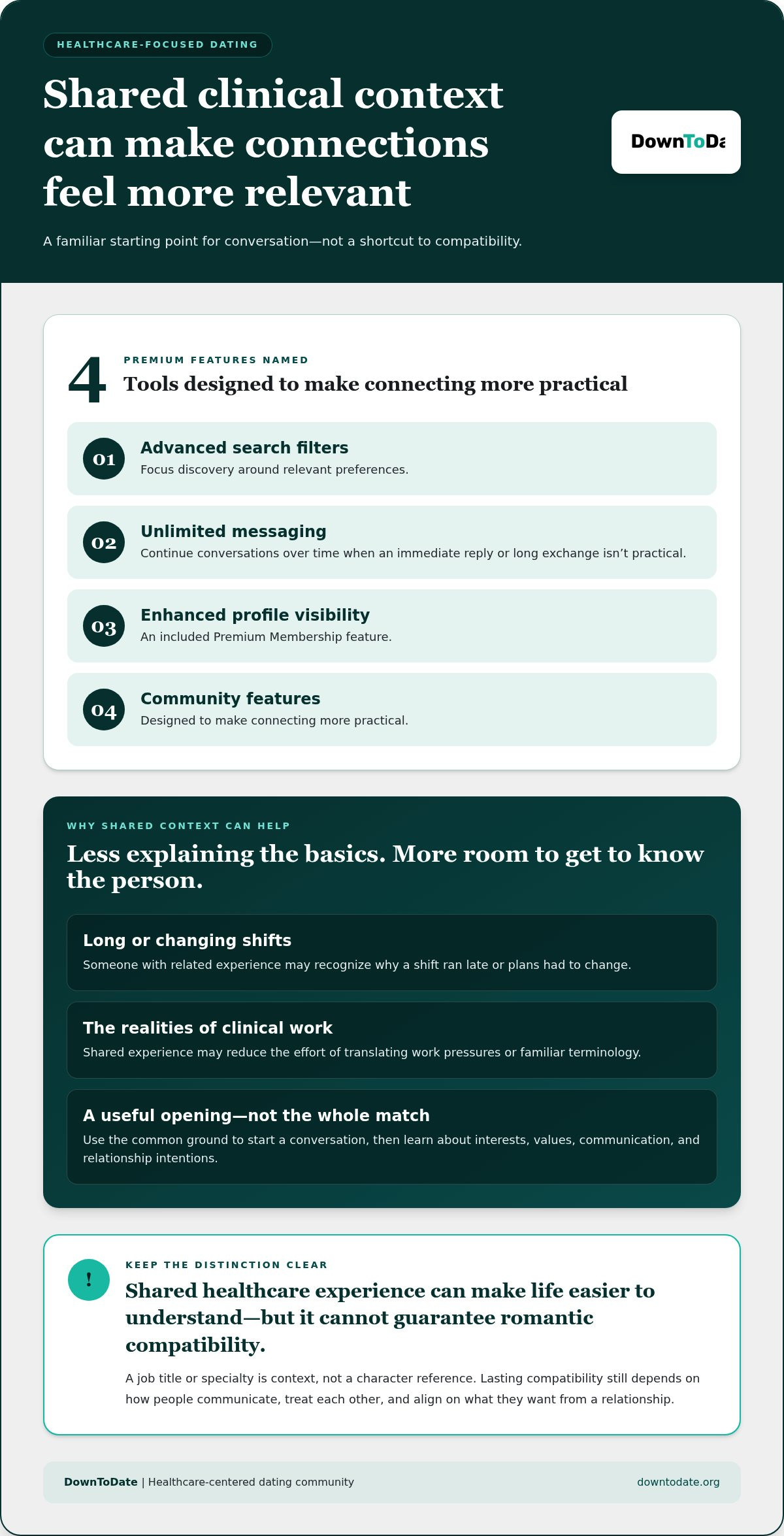
This article explains what a professional dating network offers, how it differs from career networking, and what to consider before deciding whether it fits your relationship goals. You’ll also find practical ways to connect around limited free time, with a closer look at DownToDate, a healthcare-centered platform founded and operated by medical professionals. Its Premium Membership includes advanced search filters, unlimited messaging, enhanced profile visibility, and community features designed to make connecting more practical.
Key Takeaways
- A professional dating network centers on romantic introductions within a shared professional context, not recruiting or career development.
- Shared experience of healthcare work can make conversations about schedules and clinical life easier, but lasting compatibility still depends on values and relationship goals.
- Compare niche and general dating apps by audience, shared context, discovery tools, and how focused you want your dating experience to be.
- Use a simple self-assessment of your intentions, schedule, and communication preferences to clarify what kind of community may suit you.
- DownToDate is designed for healthcare professionals, with Premium Membership features including advanced filters, unlimited messaging, and enhanced profile visibility.
Professional Dating vs. Career Networking
A professional dating network is a dating community organized around a shared professional context. Its purpose is romantic introductions, not career advancement. That distinction matters: a medical professional may want a partner who understands the demands of clinical work, not a referral, recruiter, or colleague for a case discussion.
Career networking has a different goal. Services such as LinkedIn help people build professional relationships, share expertise, or explore employment opportunities. The broader idea of a Professional Network Service is therefore distinct from a dating community, even if both bring people together around work. Recruitment connects candidates with roles. Clinical collaboration supports patient care and professional knowledge. Dating focuses on personal interest, mutual respect, and the possibility of a relationship.
A professional dating network uses occupation as shared context for romantic introductions, not as proof that two people are compatible.
What does professional mean in a dating context?
Here, “professional” describes the community someone is joining, not a ranking system for résumés. Credentials can help establish that members belong to a relevant community, but a job title alone says little about how someone communicates, what they value, or what kind of relationship they want.
Think of professional identity as one part of a person’s life. Outside the workplace, people bring their interests, priorities, humor, family hopes, and expectations for partnership. A shared occupation may give two people an easy starting point for conversation. It can’t replace curiosity, emotional availability, or alignment on the things that matter in a relationship.
Why might healthcare professionals value a shared context?
Clinical work can shape when someone is available, how plans need to adapt, and which parts of the day are difficult to explain. A shift may run long. A schedule may change. Work conversations may include terminology or pressures that are unfamiliar outside healthcare. Someone with related experience may recognize the context sooner, so both people spend less time explaining the basics.
That familiarity is a starting point, not an automatic advantage. Two healthcare professionals can have very different boundaries, communication styles, or relationship intentions. The useful question is whether shared context helps you understand each other, and whether personal compatibility grows from there.
Practical communication still matters. Be clear about your availability, suggest plans that fit your routine, and discuss how each person prefers to stay in touch when work is demanding. For more ideas on managing that reality, see this guide to dating with an unpredictable schedule.
How a Healthcare-Focused Dating Network Can Support More Relevant Connections
Shared medical context can make early conversations more grounded. You may not need to explain why a shift ran late, why your plans changed, or why a clinical term comes naturally into conversation. That familiarity can reduce the effort of translating everyday work realities. It doesn’t remove the need to communicate, but it can give two people a useful place to begin.
Shared healthcare experience can make life easier to understand, but it can’t guarantee romantic compatibility. People in the same field can have different temperaments, priorities, family plans, and expectations for dating. A specialty or job title is context, not a character reference. What matters is how each person treats others, expresses needs, handles differences, and approaches a relationship.
Shared work context is a starting point, not a complete match
Common ground can cross roles and specialties. A nurse and a physician, for example, may recognize some pressures of clinical work while bringing different responsibilities and perspectives to it. That can make a conversation feel familiar without making either person’s experience identical. Stay curious about the individual: ask what they enjoy outside work, what a supportive partnership looks like to them, and what pace of dating feels comfortable.
Compatibility takes more than recognizing the demands of healthcare. Notice whether your communication styles work well together, whether your values align, and whether your relationship intentions are compatible. Shared terminology may help someone understand a story, but listening and consideration show how they respond to you.
Making discovery more intentional
Search tools can help turn a broad pool of profiles into a more manageable set of possibilities. DownToDate’s Premium Membership includes advanced search filters, which can help members focus discovery around relevant preferences. Filters are a practical starting point, not a verdict: a profile that fits your search still deserves thoughtful attention, and someone outside a narrow initial preference may have qualities you value.
Premium Membership also includes unlimited messaging. That gives members room to continue a conversation over time, which can suit demanding schedules when an immediate reply or a long exchange isn’t practical. Use messages to learn about more than someone’s work: discuss communication preferences, interests, and what each of you hopes to find. Be clear about your own availability, too. A brief, honest explanation can prevent scheduling constraints from being mistaken for a lack of interest.
For a broader look at assessing platforms and their features, this professional dating app evaluation guide can help you compare what matters for your situation. If a healthcare-centered community feels relevant to your goals, you can explore DownToDate’s dating community and consider how its tools fit the way you prefer to connect.
Professional Dating Network vs. General Dating Apps: Benefits and Trade-Offs
Neither a focused community nor a general dating app is automatically the better choice. The difference is what you want your dating experience to prioritize: a shared professional context or a wider mix of backgrounds. Compare the practical trade-offs before deciding which approach fits your goals.
| Comparison point | Healthcare-focused dating network | General dating app |
|---|---|---|
| Audience focus | Organized around healthcare professionals and related work contexts. | May bring together people from a broad range of professions and communities. |
| Shared context | Members may have more familiarity with clinical schedules, terminology, and workplace pressures. | Occupational familiarity may vary, so members might need to explain more about their work. |
| Discovery tools | Some platforms offer filters relevant to professional context; available tools vary. | Search and discovery features differ by app and may focus on other preferences. |
| Potential trade-off | A focused community can feel more relevant, but its scope is narrower by design. | A broader pool offers more variety, but shared work context may be less central. |
When a focused community may suit your priorities
A healthcare-centered community may be worth considering if you want a potential partner to understand why a shift can affect plans, why your availability changes, or why parts of your work are difficult to summarize. That context can make early conversations more direct. The value is practical understanding, not professional status.
Still, a common occupation doesn’t tell you whether someone is considerate, communicates well, or wants the same kind of relationship. Treat shared context as one useful point of connection, then pay attention to how you relate as individuals. A focused setting can guide discovery, but it can’t decide who is right for you.
When a broader dating pool may feel more suitable
You may prefer meeting people across professions, lifestyles, and communities. A general app can offer that wider range, which may appeal if you’re open to different experiences or don’t need a partner to share your work context. The trade-off is that you may need to explain more about your schedule and the realities of healthcare work as you get to know someone.
To make the choice, ask yourself what you’d like a dating platform to make easier. Is shared understanding of clinical life a priority, or does professional background matter less than meeting people with varied perspectives? Consider both breadth and relevance, then choose the environment that supports how you want to connect. If a healthcare-focused option fits your priorities, explore DownToDate as a community designed for medical professionals.
How to Decide Whether a Professional Dating Network Fits Your Life
The right platform depends on what you want dating to feel like, not simply on your job title. Before joining a professional dating network, consider what you hope to find, how much shared work context matters, and what pace of communication fits your routine. This short self-assessment can help you define your priorities.
- Clarify your relationship intention. Decide whether you’re looking for a committed relationship, dating with the hope of building one, or meeting people without a fixed outcome. You don’t need every detail settled, but being honest about your intentions can help you recognize when someone’s goals align with yours.
- Separate essentials from preferences. List the values and lifestyle needs that matter most, such as mutual respect, similar ideas about family, or support for demanding work. Then identify preferences that are flexible. A healthcare background may feel important, but it shouldn’t replace qualities like kindness, communication, or shared relationship goals.
- Decide which work realities you want understood. Consider whether you want a partner who already understands shift changes, call, training demands, or the emotional weight of clinical work. You can also decide what you prefer to explain over time. Your occupation is part of your life, not the whole story you bring to dating.
- Assess your schedule and communication style. Think about how work hours, shift patterns, or training affect your time for messages and dates. Do you prefer brief check-ins, planned calls, or making plans when your schedule is clear? Set realistic expectations around reply timing, including shifts and recovery time, while respecting the other person’s availability and boundaries.
Clarify what you want from dating
Assess schedule and communication fit
Be realistic about the time and energy you can offer. A demanding rotation or a period of training may leave less room for spontaneous plans, while another season of life may allow more flexibility. The aim isn’t to apologize for work or promise a schedule you can’t maintain. It’s to communicate what’s workable and notice whether both people can find a respectful rhythm. For physician-specific considerations, this guide to dating for doctors offers additional context.
The best platform is the one that supports your priorities, not the one that matches your title. If a healthcare-centered setting fits what you’re looking for, explore DownToDate’s dating community.
How DownToDate Connects Healthcare Professionals Through a Dating Network
DownToDate is a dating platform designed for doctors, nurses, and other medical staff who want to meet with romantic connection in mind. It brings healthcare professionals together around a shared work context, while leaving the important parts of getting to know someone, such as values, communication, and relationship intentions, to the people themselves.
Founded and operated by medical professionals Dr. Shadi Rezai and Dr. Sasan Rezai, DownToDate was created with healthcare life in mind. Its focus is personal connection beyond work, not recruiting, career networking, or clinical collaboration. The platform brings together a verified medical community in a setting centered on healthcare professionals.
A community built around healthcare life
Shared context can help members start conversations with a little more understanding of the lives they lead. But a professional dating network is a meeting point, not a promise of compatibility. Members still need to discover what matters to one another, how they communicate, and whether they want similar things from a relationship. The community provides context; connection develops between individuals.
That distinction keeps the purpose clear. A profile is more than a role or credential, and a healthcare background is only one aspect of a person. Approach each introduction with curiosity. Ask about interests beyond work, talk openly about what you’re seeking, and consider whether the conversation feels respectful and reciprocal.
Tools that make connection more practical
Premium Membership includes advanced search filters, unlimited messaging, and enhanced profile visibility. Filters can help members focus discovery on relevant preferences rather than relying only on broad browsing. They can narrow where to direct attention, but they can’t assess chemistry or decide whether someone’s values align with yours.
Unlimited messaging gives Premium Members room to continue conversations without a message limit, while enhanced profile visibility helps members present themselves within the community. Use these tools with intention: choose preferences that reflect what matters, write a profile that shows more than your job, and make time for conversations that feel promising. A thoughtful message about a shared interest can reveal more than a list of credentials.
For a practical first step, consider what you want potential matches to understand about your life and what you hope to learn about them. Then decide whether DownToDate’s healthcare-centered setting and Premium Membership features fit your dating priorities. No platform can guarantee a meaningful relationship, but the right tools can support a more deliberate way to meet.
Explore DownToDate and see whether its dating community aligns with the kind of connection you’re looking for.
Make Space for Connection on Your Terms
Your work may shape your schedule, but it doesn’t have to define your personal life. Decide what you want a new connection to feel like: understood, unhurried, and aligned with the priorities that matter to you. Keep your expectations clear, make room for honest conversation, and let compatibility show itself through how you connect, not simply through shared credentials.
A professional dating network can offer a relevant place to begin, while the meaningful work of building a relationship happens one conversation at a time. You don’t need a perfect schedule or a polished script. You need an approach that respects your time and leaves room to meet someone as a person.
If you’re ready to take that step, Explore DownToDate and connect with healthcare professionals. Approach each introduction with curiosity and intention. The right connection can start with one thoughtful conversation.
Frequently Asked Questions
Is a professional dating network the same as LinkedIn?
No. A professional dating network is designed to help people meet potential romantic partners, while LinkedIn is centered on work identity and professional connections. For example, you might use LinkedIn to learn about someone’s career path, but a dating profile helps you consider whether you’d like to get to know that person personally. Shared work experience can open a conversation, but it doesn’t establish romantic interest or compatibility.
Can healthcare professionals from different specialties connect on a professional dating network?
Yes. Healthcare professionals don’t need to work in the same specialty to find common ground. One person may work in nursing and another in pharmacy, for example. Their day-to-day responsibilities will differ, so ask rather than assume what their schedule or workplace is like. Use the shared healthcare context as a conversation starter, then learn about their interests, communication style, and what they hope to find through dating.
Are professional dating networks only for people seeking marriage?
No. A professional focus describes the community, not a required relationship outcome. People may be open to meeting someone, exploring a developing connection, or seeking a long-term partnership. Before starting conversations, consider what you want right now and how firmly you feel about it. Then read profiles carefully and ask respectful questions, so you can identify whether your intentions align without treating assumptions as a substitute for an honest discussion.
Can a professional dating network work with a busy medical schedule?
It can provide a place to meet people who may recognize the demands of healthcare work, but it can’t create time or guarantee compatible schedules. Set expectations you can maintain: if you’re on call or recovering after a shift, say when you’re likely to be available rather than promising quick replies. For example, suggest arranging a date once your rota is clear, and make sure both people’s work and personal boundaries are respected.
Does joining a healthcare-focused dating network guarantee compatible matches?
No. A focused community can help you meet people with relevant work context, but it can’t ensure attraction, aligned values, or a shared vision for a relationship. Treat profile details and search filters as ways to decide whom you’d like to know better, not as proof of a match. As conversations develop, notice whether the other person listens, follows through, and communicates in a way that feels right to you.
Can I join DownToDate if I am not a doctor?
DownToDate is designed for healthcare professionals, including doctors, nurses, and other medical staff. A physician-only assumption would miss the platform’s broader medical community focus. If you work in healthcare, consider how you’d like that part of your life to be understood by someone you date. The platform’s purpose is romantic connection among healthcare professionals, so reflect on whether that shared context fits your personal relationship goals.


