

Residency is not a career choice. It is a lifestyle that consumes everyone in its orbit. When you are dating a medical resident, you are not just partnering with a person; you are partnering with a pager, a rigid 80-hour work week, and a constant state of post-call exhaustion. It is a world where plans are tentative and sleep is a luxury. You often feel like a secondary priority to the hospital. You feel the weight of cancelled dates. You feel the burnout leaking into your quiet moments together. We understand these pressures because we are an integral part of this community.
You deserve a relationship that feels like a partnership, not a sacrifice. This guide offers a practical, peer-led checklist to help you master the logistics of residency romance in 2026. We provide a streamlined path to maintaining intimacy while protecting your own identity. You will learn to navigate the reality of work compression and the financial strains of the modern PGY timeline. Our survival strategy shifts the focus from grand gestures to tactical empathy and logistical precision. We will show you how to build a sustainable connection that respects the demands of the medical field while ensuring your own needs are met.
Key Takeaways
- Understand the "Third Wheel" effect where clinical demands dictate your daily rhythm. Move from reactive emotions to proactive logistical planning.
- Master the logistics of dating a medical resident by utilizing a tactical framework designed for high-stakes schedules.
- Implement high-efficiency communication strategies, such as asynchronous voice notes, to maintain connection during 80-hour work weeks.
- Reframe the experience of your partner’s career demands as a shared marathon requiring mission-driven confidence and mutual support.
- Discover why finding a partner within a verified medical community provides the inherent understanding necessary for a sustainable relationship.
What Does Dating a Medical Resident Actually Look Like in 2026?
Residency is the crucible where clinical theory meets high-stakes practice. It is a demanding, high-pressure environment that rarely leaves room for the uninitiated. To understand What is medical residency? is to understand that medicine is more than a career; it is a primary commitment. When you are dating a medical resident, you are essentially inviting a third wheel into your relationship. The hospital dictates the rhythm of your mornings, the timing of your dinners, and the likelihood of your weekend plans remaining intact. It is a lifestyle defined by service and sacrifice.
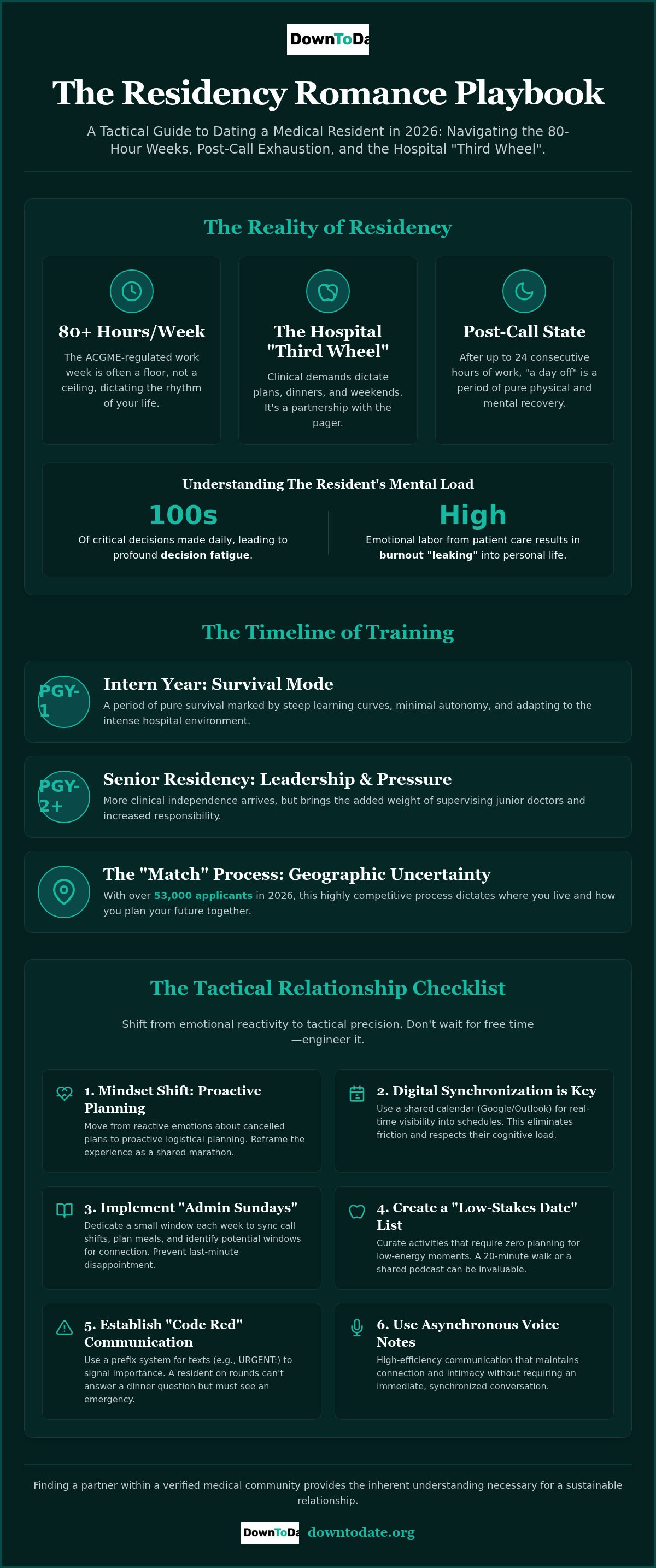
The ACGME regulates work hours to 80 per week, but this figure is often a floor rather than a ceiling. Within those hours, residents face intense "work compression." They manage more patients with less time. They navigate administrative hurdles while making life-altering decisions. The "post-call" state is not a simple day off; it is a recovery period where the body and mind attempt to reset after up to 24 consecutive hours of clinical work. Supporting a partner through this requires a sophisticated blend of empathy and logistical precision.
The Resident’s Mental Load
After a 12-hour shift, your partner may return home distant or quiet. This is rarely a sign of disinterest. It is the result of profound decision fatigue. Residents make hundreds of critical choices every day, from medication dosages to surgical interventions. By the time they reach your front door, their cognitive reserves are depleted. They need decompression, not interrogation. Understanding this distinction is vital for anyone dating a medical resident. The emotional labor involved in patient care means they are often "leaking" burnout into their personal life. They have witnessed the highest highs and the lowest lows of the human experience. They need a partner who provides a grounded, low-friction environment for recovery.
The Timeline of Training
The experience of the relationship changes as the resident progresses through their training. Intern Year (PGY-1) is typically a period of pure survival, marked by steep learning curves and minimal autonomy. Senior residency offers more clinical independence but brings the added weight of supervising junior doctors. The "Match" process in 2026 saw over 53,000 applicants, highlighting the extreme competition and geographic uncertainty inherent in this path. This timeline dictates where you live and how you plan your future together. For a broader perspective on these challenges, exploring the principles of dating for doctors can provide a necessary framework for long-term success. It is about building a life that accommodates the grind without being consumed by it.
The Essential Residency Relationship Checklist
Residency demands a shift from emotional reactivity to tactical precision. When you are dating a medical resident, waiting for 'free time' is a losing strategy. You must engineer it. This requires a transition from passive hope to active management. Establish non-negotiables early. These are the boundary lines that protect the relationship from the hospital's encroachment. Clear boundaries prevent the resentment that builds when your needs are consistently sidelined.
Digital synchronization is the first step. You cannot rely on verbal updates. Use Google or Outlook to create a shared calendar with real-time visibility. This provides an immediate answer to the question of availability. It eliminates the need for a text that your partner might not see for six hours. It is about reducing friction. It is about respecting the cognitive load of a clinician.
Logistical Alignment
Success is found in the details. The reality of dating a medical resident is that logistics often trump romance. Implement 'Admin Sundays' to review the upcoming week. Use this time to sync call shifts, manage meal plans, and identify potential windows for connection. Proactive planning reduces the likelihood of last-minute disappointments.
- Low-Stakes Date List: Curate activities that require zero planning. A 20-minute walk or a shared podcast episode works when energy is low but connection is needed.
- Code Red Communication: Establish a protocol for messaging. Use specific prefixes to denote urgency. A resident on rounds cannot answer a dinner question, but they must see an emergency alert.
Emotional Maintenance
Emotional health requires structure. The 15-minute decompression rule is essential. Give your partner space to transition from clinician to partner after a shift. They need to shed the hospital's weight before they can engage with you. This silence is not distance. It is recovery.
Practice 'parallel play.' Learn to be comfortable sharing a room while one person sleeps or studies. It offers proximity without the pressure of performance. Most importantly, build a robust civilian support system. Relying solely on a resident for emotional fulfillment is a recipe for mutual burnout. For those seeking a partnership where these logistics are already understood, a Premium Membership offers access to a community that speaks the same language and shares your high standards.
Managing the Objections: When Medicine Comes First
"I feel like I am dating the hospital, not a person." This is the primary objection for anyone dating a medical resident. It is a heavy, valid sentiment. But viewing the relationship through the lens of competition is a tactical error. It positions you against their calling. Instead, reframe the perspective. You are not coming second. You are co-managing a high-stakes career. Their sudden absence is a manifestation of professional responsibility. When a "Stat" page or a late admission interrupts your plans, it is a call to duty, not a lack of affection. Understanding this distinction is the difference between a sustainable partnership and a cycle of resentment.
Resentment often stems from the gap between expectations and reality. You expect a dinner date. They are stuck in a care transition. You expect a weekend away. They are called in for a shift. If you view these moments as personal slights, the relationship will fracture. If you view them as the logistical hurdles of a high-pressure environment, you can solve them together. It is about mission-driven confidence. It is about understanding that their commitment to their patients is a reflection of the integrity they bring to your partnership.
Handling Cancelled Plans
Cancelled plans are a logistical certainty. In 2026, the trend of work compression means residents are working more intensely within their 80-hour cap. This intensity leads to unexpected delays. You must be prepared to pivot. Maintain your autonomy by always having a "Backup Plan." This might be a book you are eager to read, a gym session, or a secondary social engagement. Never let your evening depend solely on their arrival. Avoid the guilt trip. Residents already feel the weight of missed birthdays and cold dinners. They don't need a reminder of their absence. Piling on guilt only accelerates burnout. Express your needs directly, but focus on the situation rather than the person.
The Financial Reality
The "Doctor" title often creates an illusion of immediate financial freedom. The reality of 2026 is far more grounded. Median resident salaries currently hover between $71,000 and $75,000. For those in their PGY-1 year, earnings are typically between $60,000 and $68,166. When paired with substantial student loan debt, the financial strain is real. Discuss these numbers openly. Do not let debt become a hidden friction point. Financial transparency is a key component of what doctors look for in a partner. It signals serious intent and a shared vision for the future. Aligning on these values early ensures that the financial grind of residency doesn't become a source of conflict later.
Tactical Communication: Connecting Between 80-Hour Weeks
Communication when dating a medical resident requires a strategy. It is not about the volume of messages. It is about the precision of the connection. Traditional relationship advice often fails here because it assumes a shared schedule that simply does not exist in the world of clinical training. You must master the "Asynchronous Date." This involves using voice notes, long-form emails, or shared playlists to bridge the gap when real-time conversation is impossible. These methods allow your partner to engage when they have the mental capacity, rather than forcing a response during a hectic shift. It creates a low-friction way to remain present in each other's lives.
Stop asking "How was your day?" For a resident, this question can be a trigger for decision fatigue or a reminder of a traumatic patient outcome. It demands a narrative they may be too exhausted to construct. Instead, ask specific, low-stakes questions. "What was the most interesting thing you saw today?" or "Did you get a chance to eat?" these allow for a shorter, more manageable response. It shows you understand their environment without demanding a performance. Maintaining intimacy when physical presence is limited means finding these small, meaningful tethers to the world outside the hospital walls.
Quality Over Quantity
The "Micro-Date" is your most powerful tool. Ten minutes of undivided, phone-free attention is exponentially more valuable than three hours of distracted television time. Logistical Empathy is the practice of simplifying your partner’s life to create space for love. It means handling the small frictions, such as the grocery list or the laundry, so that when you finally have ten minutes together, the focus is entirely on the relationship. Use technology to bridge the gap during 24-hour shifts. A quick text that requires no response provides a necessary sense of security. If you are seeking a partner who already understands these unique professional pressures, a Premium Membership can help you find a match with shared values and serious intent.
Navigating the Night Shift
Night shifts introduce a specific set of challenges. Sleep debt is not just a physical state; it is a psychological one. It impacts mood, patience, and libido. You must adjust your household rhythms to accommodate the nocturnal resident. This means creating a dark, quiet environment during the day and being flexible with your own social expectations. For more specific tactics on managing these transitions, consult our dating with an unpredictable schedule guide. It offers a strategic framework for maintaining a connection when your clocks are never in sync. Success in this phase requires a commitment to the mission and a respect for the recovery process.
Beyond the Hospital Walls: Finding Your Peer Match
The logistics of dating a medical resident are significantly simplified when the person across the table understands the weight of the pager. General dating apps often fail high-achieving medical professionals because they prioritize volume over verification. They lack the filters necessary for a high-stakes lifestyle. For those in the medical community, time is the most valuable currency. Spending it on someone who does not grasp the reality of a 24-hour shift is a tactical error. You need a partner who shares your vocabulary, your ambition, and your respect for the grind.
DownToDate was founded by doctors to address this specific gap. It is a platform designed for those who require serious intent and a shared professional background. By moving beyond the broad-market apps, you enter a curated space where the unique pressures of healthcare are the baseline, not a point of contention. This is the transition from merely surviving the residency timeline to thriving within a community that understands your world. It is about finding a match that respects your schedule because they live it too.
The Power of a Specialized Community
Specialization eliminates the "explanation phase." You no longer have to justify a late-night call or a cancelled Sunday brunch. When you are dating a medical resident who is also a peer, "on call" is a shared reality, not a source of friction. DownToDate filters for professional background to ensure that every connection starts with a foundation of mutual respect. This environment fosters a "Power Couple" dynamic where both partners are driven by high standards and shared professional ambition. It is a streamlined path to a partnership that values your time as much as you do.
Next Steps for the Medical Couple
Residency is a season, but the habits you build now will define the trajectory of your relationship. Whether you are transitioning from residency to fellowship or moving into life as an attending, the logistical precision you master today is the foundation of a successful future. The goal is to build a life that accommodates the career without being eclipsed by it. If you are entering this phase later in your professional journey, our guide on dating over 40 for doctors offers specific strategies for mid-career romance. Success in medical love is not about finding more time. It is about making the time you have count with someone who truly gets it.
Mastering the Residency Partnership
Residency is a shared marathon. It requires more than patience. It demands tactical empathy and logistical precision. Success depends on your ability to move from reactive emotional responses to proactive structural solutions. By implementing Admin Sundays, micro-dates, and asynchronous communication, you transform a high-pressure lifestyle into a sustainable partnership. These habits protect your connection from the hospital's encroachment. They ensure that your relationship remains a priority, even during the most demanding rotations.
Finding a partner who understands this specific grind shouldn't be another hurdle. Dating a medical resident is simpler when you are part of a community that shares your vocabulary and your ambition. DownToDate was founded by physicians who lived the residency grind. We offer a verified medical community that ensures high-quality, peer-level matches. Our platform is tailored specifically for the unique scheduling demands of healthcare professionals. Join DownToDate today to connect with medical professionals who understand your lifestyle. You now have the checklist to master this season. Build a partnership that thrives beyond the hospital walls and into a successful future.
Frequently Asked Questions
Is it possible to have a successful relationship while in medical residency?
Yes, success is entirely possible when both partners prioritize tactical empathy and logistical precision. It requires shifting from passive expectations to active management. Many couples thrive by viewing residency as a shared mission rather than a personal sacrifice. Success is not about finding more time; it is about maximizing the quality of the limited time you have together through intentional connection.
How often will I actually see my partner during their residency?
Availability varies by specialty, but expect significant limitations. With the ACGME mandating an 80-hour work week averaged over four weeks, your partner will be at the hospital for the majority of their waking hours. You might only see them for an hour of decompression before they sleep. Strategic scheduling and Admin Sundays are essential to identify these small windows for meaningful interaction.
What are the biggest challenges of dating a medical resident?
The primary hurdles include cancelled plans, emotional exhaustion, and the "Third Wheel" effect of the hospital. When dating a medical resident, you often feel like a secondary priority. Managing this resentment requires reframing the situation as co-managing a high-stakes career. The financial strain of a $71,000 median salary against high debt also adds a layer of practical stress to the relationship.
How can I support my resident partner during their busiest rotations?
Practice logistical empathy by simplifying their domestic life. Handling groceries, laundry, or administrative tasks creates mental space for them to focus on the relationship during their off-hours. Avoid adding to their guilt when they miss events. Your role is to provide a low-friction environment where they can recover from the intense work compression they experience daily at the hospital.
Should I move for my partner’s residency match?
This decision depends on your own professional goals and the strength of your support system. The 2026 Match process involved over 53,000 applicants, making geographic uncertainty a standard part of the journey. If you move, ensure you build a civilian support system immediately. Relying solely on a resident for social fulfillment leads to isolation and puts undue pressure on the partnership.
How do I handle the loneliness when my partner is on night shifts or 24-hour call?
Cultivate your own identity and independent social life. Use their time away to invest in your personal interests, hobbies, and friendships. Loneliness is often a byproduct of over-reliance. By maintaining a robust life outside the relationship, you protect yourself from the fluctuations of their schedule. Treat their 24-hour calls as opportunities for your own professional growth and necessary self-care.
Why do residents often seem distant or irritable after work?
This is usually the result of profound decision fatigue and emotional exhaustion. After making life-altering choices for 12 or 24 hours, their cognitive reserves are depleted. They aren't ignoring you; they're decompressing. Implementing a 15-minute decompression rule allows them to transition from clinician to partner without the pressure of immediate engagement. It's about respecting the recovery process required after high-stakes shifts.
What is the best way to communicate with a partner who is working 80 hours a week?
Adopt a high-efficiency, low-friction communication style. Use asynchronous dates like voice notes or shared playlists that they can access during moments of downtime. Establish a Code Red protocol for truly urgent matters to avoid unnecessary interruptions during rounds. When dating a medical resident, avoid open-ended questions that demand a narrative. Offer specific, low-demand updates that maintain your connection without adding cognitive load.


