

What if the debt you worry a date will judge could open a useful conversation about compatibility? Dating with medical school debt can raise real questions: when to share details, how much to explain, and whether repayment will affect future plans. Medical training already demands time and focus. You shouldn’t have to treat your financial history as a confession.
It’s reasonable to want a partner who understands the scale of your obligations. It’s also reasonable to protect your privacy while a relationship is new. Debt matters, but it doesn’t define your character, potential, or capacity to be a thoughtful partner.
This guide will help you choose when to talk, describe your debt clearly, and set boundaries without becoming defensive. You’ll also learn how to explore financial compatibility and discuss shared goals without assuming what either person should contribute. The aim isn’t to make every date a money conversation. It’s to build trust before your plans and finances become more closely connected.
Key Takeaways
- Medical school debt is part of your financial context, not a measure of your character or relationship potential.
- In dating with medical school debt, share the broad picture as trust develops, then discuss practical effects as commitment grows.
- Assess financial compatibility through shared values, communication, and goals, not assumptions based on a loan balance.
- Plan dates around your budget and training demands without treating either as a source of embarrassment.
- Set clear boundaries, revisit plans as circumstances change, and look for a partner who listens without taking over your financial decisions.
Dating With Medical School Debt: Why the Number Does Not Define You
A loan balance can feel like a verdict before a new relationship has had time to develop. It isn’t. Medical school debt is one part of your financial context, not a complete measure of your character, values, or capacity to build a partnership. It may affect your choices and future plans, but it doesn’t determine whether you’re compatible with someone.
That perspective matters in dating with medical school debt. You may worry about rejection, feel exposed discussing finances, or wonder whether repayment obligations will limit shared goals. Those concerns deserve attention, not shame. A conversation about debt can be significant without turning the relationship into a crisis. For background on the cost of medical education, you can review this overview of U.S. medical training and finances.
What dating with medical school debt can bring up
Debt may stir up fears about being judged, appearing unable to afford dates, or being expected to contribute more or less than a partner. Assumptions can go both ways: someone may think your future income will make repayment effortless, or assume your current balance means you can’t share in future plans. Neither conclusion follows from a number alone.
Training can also shape how much time or energy you have for dating, though schedules and priorities differ. Feeling uncomfortable about debt isn’t, by itself, proof of financial incompatibility. Pay attention to how you and a date communicate about uncertainty, respect boundaries, and respond to each other’s goals.
Why a loan balance is not the whole story
A balance doesn’t show the repayment terms, current income, career stage, or priorities guiding someone’s financial choices. Physician income doesn’t automatically make debt easy to manage; obligations and personal circumstances still matter. Debt amount describes what someone owes; financial behavior shows how they approach responsibilities and decisions.
You don’t need to disclose every account detail at the start of dating. As trust develops, share the context that’s relevant: that you have education debt, how repayment affects your current budget or plans, and what you’re still working through. You can be honest while keeping appropriate boundaries. The goal is understanding, not an immediate audit of your finances.
How to Talk About Medical School Debt While Dating
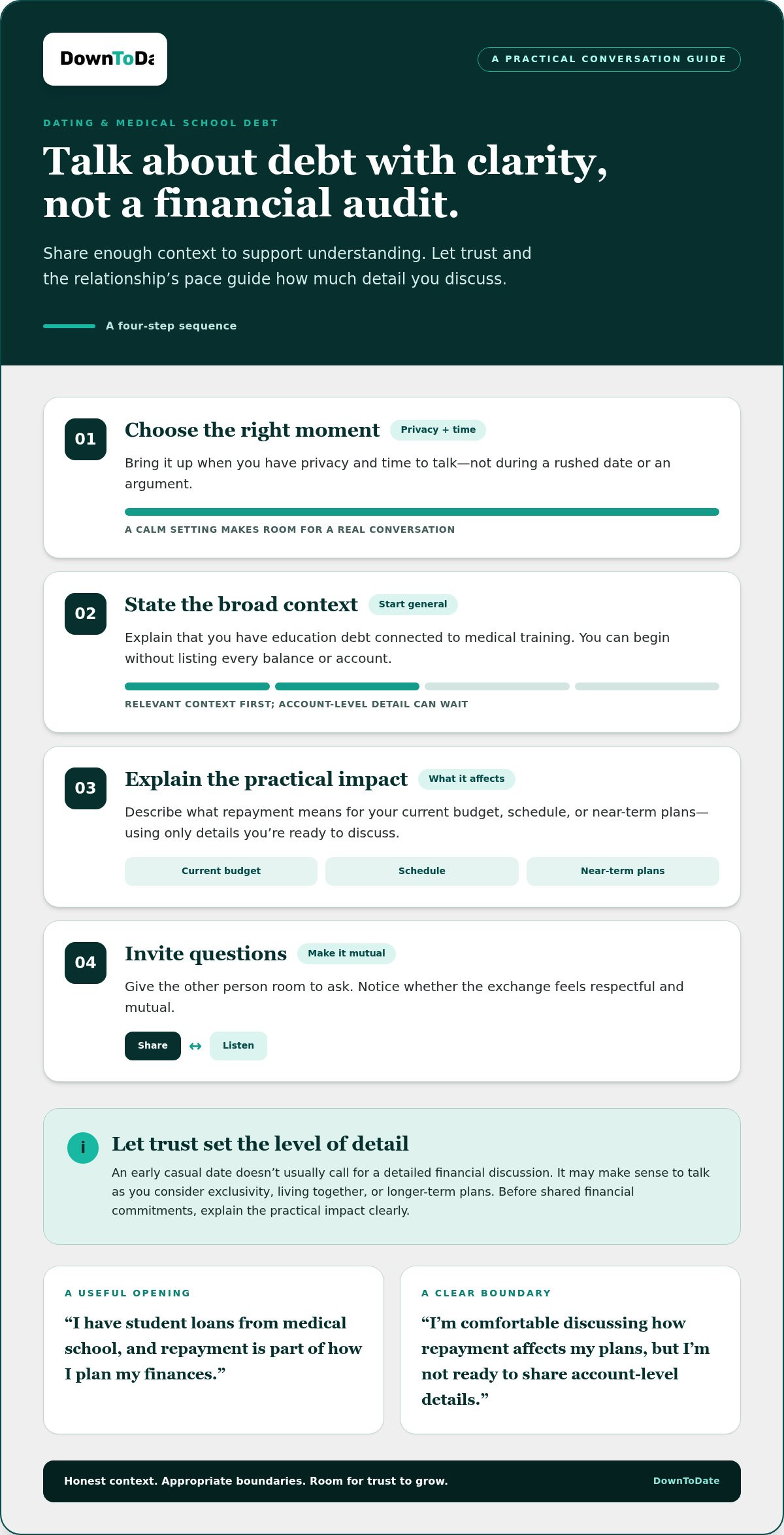
A clear conversation doesn’t require a dramatic announcement or a full financial inventory. In dating with medical school debt, share enough for the other person to understand what may affect your plans, then let the conversation deepen as trust grows.
Use this four-step sequence:
- Choose the right moment. Bring it up when you have privacy and time to talk, not during a rushed date or an argument.
- State the broad context. Explain that you have education debt connected to medical training. You can start with a general overview rather than every balance and account.
- Explain the practical impact. Describe what repayment means for your current budget, schedule, or near-term plans, using only details you’re ready to discuss.
- Invite questions. Give the other person room to ask, and notice whether the exchange feels respectful and mutual.
When should you bring up student loan debt?
An early casual date doesn’t usually call for a detailed financial discussion. It may make sense to talk as you consider exclusivity, living together, or longer-term plans. Before making shared financial commitments, explain the practical impact clearly. There’s no single schedule that suits every couple. Let trust, boundaries, and the pace of the relationship guide how much you share.
What can you say without oversharing?
Keep the opening direct and calm. For example: “I have student loans from medical school, and repayment is part of how I plan my finances. I’d like to talk about what that means for future plans as we get more serious.” No apology is needed. You’re sharing relevant context, not asking someone to approve your choices.
As commitment develops, explain whether payments shape your budget or affect a goal you’re discussing together. You can answer honestly without handing over account credentials, statements, or private documents. If a question feels too detailed for the stage you’re at, try: “I’m comfortable discussing how repayment affects my plans, but I’m not ready to share account-level details. We can revisit that if our financial decisions become connected.”
Share enough to support informed decisions, at a pace both people can respect. That means neither hiding practical realities nor treating early dating like a financial audit. A partner who understands medical training may recognize its demands more readily, though shared professional context isn’t a requirement for a thoughtful relationship. If you value meeting people who understand healthcare careers, explore a medical dating community.
How to Assess Financial Compatibility Without Judging Debt
Financial compatibility isn’t a pass-or-fail test based on a loan balance. In dating with medical school debt, look at how each person handles responsibilities, communicates about money, and makes decisions under uncertainty. A large balance may deserve practical discussion, but it doesn’t tell you whether someone is thoughtful, transparent, or aligned with your goals.
Which money conversations matter more than the balance?
Explore spending priorities, saving habits, financial independence, and comfort discussing plans that may change. Curiosity can help you understand a person’s approach; pressure to reveal private account details can undermine trust. Ask questions that invite a real answer rather than a defense.
| Judgmental assumption | Constructive question |
|---|---|
| “That balance means you’re irresponsible.” | “How do you approach repayment and other financial responsibilities?” |
| “Your future income will make this easy.” | “How might your current priorities shape the plans you’re making?” |
| “We should combine finances if we’re serious.” | “What does financial independence mean to each of us?” |
| “You should be ready to share every detail.” | “What level of financial transparency feels appropriate at this stage?” |
Notice not only the answers, but how the conversation feels. Can you discuss saving, spending, or uncertainty without blame? Can both of you express different priorities and listen? Those habits offer more insight than speculation about what a balance means.
How do you discuss future plans without making assumptions?
Talk about housing, family, career choices, and lifestyle as possibilities, not promises. For example, “If we eventually considered living together, how would we want to approach shared expenses?” keeps the conversation open without treating a hypothetical as a commitment. Revisit plans as circumstances and relationship intentions become clearer.
Dating doesn’t, by itself, mean one person should take responsibility for the other’s education debt. Avoid assuming a partner will pay, co-sign, combine finances, or change personal goals. Before signing anything, combining or refinancing obligations, or restructuring debt together, seek guidance from qualified financial, legal, or tax professionals. Those decisions can have implications that depend on individual circumstances; a dating conversation isn’t a substitute for professional advice.
Practical Ways to Date While Managing Student Loan Obligations
Dating with medical school debt doesn’t require putting your personal life on hold or spending beyond your comfort level. A good date is about time and connection, not the price tag. Suggest activities you both enjoy, such as taking a walk, visiting a free community event, or cooking together. Lower-cost plans aren’t lesser plans, and neither person needs to prove commitment by paying more.
How can you plan dates that respect your budget?
Set expectations before making plans. You might say, “I’d like to see you. I’m keeping my spending modest this week. Would you be interested in a walk or a relaxed dinner at home?” That’s clear, not apologetic. Choose together, and be open about what feels comfortable for you. A budget preference doesn’t mean you expect the other person to cover the difference.
For a conversation about present spending and longer-term goals, try: “I want to make room for dating while staying thoughtful about my finances. I’m comfortable with this plan, and I’d also like us to talk about bigger goals as they become relevant.” This keeps the focus on your choices and invites a shared discussion without assigning your partner responsibility for your loans.
How can you make room for changing training and repayment demands?
Availability and finances can shift with training stage, income, or repayment circumstances. There isn’t one path for every medical professional. Check in when something changes: explain what you can commit to now, ask what works for the other person, and adjust plans together. For more ideas on balancing dating with a demanding schedule, look for the article about dating with an unpredictable schedule.
Keep loan decisions separate from date planning. Repayment programs and eligibility rules can change, so verify current details through official sources before relying on a plan. Don’t treat forgiveness or savings as guaranteed, and don’t make relationship commitments based on an assumed loan outcome.
Small, honest conversations can make dating feel more sustainable. If you’re looking to meet people who may understand the demands of healthcare training, explore a dating community for healthcare professionals.
Building a Relationship When Medical School Debt Is Part of the Picture
A strong relationship doesn’t require identical finances. It does require respect, honest communication, and room for each person to make informed choices. Dating with medical school debt can feel more manageable when you know what you’re comfortable sharing, explain how repayment affects your plans, and discuss shared goals without assuming one partner must solve the other’s financial responsibilities.
Keep the approach practical:
- Know your boundaries. Decide what you’re ready to share at each stage.
- Communicate the impact. Explain how debt affects your current priorities or plans together.
- Assess shared values. Notice how you both approach money, independence, and uncertainty.
- Revisit plans. Circumstances can change as training, income, and your relationship evolve.
How do you know whether the conversation is going well?
Look for respectful listening, reciprocal discussion, and a willingness to reconsider assumptions. A supportive partner can ask thoughtful questions and listen without taking over your financial decisions. One awkward moment doesn’t tell the whole story; pay attention to patterns over time. Shaming, coercion, or repeated disregard for a clearly stated boundary are concerns worth taking seriously, without needing to label or diagnose the relationship.
Notice whether the conversation leaves room for both perspectives. Are you able to explain your priorities without being pressured to justify every detail? Can your partner express concerns without turning them into accusations? Those responses help you assess whether you can work through future decisions as a team while retaining individual agency.
Where can healthcare professionals find understanding peers?
Medical training and healthcare work can shape schedules, energy, and priorities. A partner with shared professional context may understand those pressures without lengthy explanation, though people outside medicine can also be empathetic and supportive. The right connection depends on mutual respect, not a matching job title.
If you’d like to meet people within a medical community, DownToDate is a dating platform for healthcare professionals, created by medical professionals. Its Premium Membership includes advanced search filters, unlimited messaging, enhanced profile visibility, and community features. For a low-pressure next step, Explore DownToDate.
Move Forward With Honesty and Confidence
Medical school debt is part of your financial picture, not a verdict on your value as a partner. In dating with medical school debt, share how repayment affects your plans as trust develops, and look for respect, openness, and compatible values rather than making assumptions based on a balance alone.
Keep your boundaries clear. Talk about practical impact before making shared financial commitments. Revisit goals as your training and circumstances change. A supportive partner can understand your priorities without taking responsibility for your financial decisions.
If shared professional context would make dating conversations feel easier, DownToDate is a dating community designed for healthcare professionals and founded and operated by medical professionals. Its Premium Membership includes advanced search filters and unlimited messaging. Explore DownToDate as one option for meeting people who understand the demands of healthcare careers.
Your debt doesn’t disqualify you from building a thoughtful, lasting relationship. Lead with honesty, keep your choices grounded in your values, and move forward at a pace that feels right.
Frequently Asked Questions
Should I tell someone I am dating about my medical school debt?
Yes, share relevant information as the relationship becomes serious, but you don’t need to disclose every detail on an early date. Explain that you have education debt and, when it matters to your plans, describe how repayment affects your budget or goals. In dating with medical school debt, honest context supports trust. You can be open while keeping account numbers, documents, and other private details to yourself.
When should you disclose student loan debt in a new relationship?
There’s no fixed deadline; consider talking about it as trust and commitment grow. A casual first date doesn’t usually require a detailed financial conversation. Disclosure becomes more relevant when you discuss exclusivity, living together, or long-term plans. Before making shared financial commitments, explain the practical impact of your loans so both people can make informed choices. Let the relationship’s pace and your boundaries guide how much you share.
Can medical school debt affect a relationship or future plans?
It can shape decisions about spending, housing, career options, or other shared goals, but it doesn’t automatically create a relationship problem. The effect depends on repayment obligations, income, priorities, and how partners communicate. Talk through specific plans rather than assuming debt will prevent them or be easy to manage. Revisit the conversation when circumstances change, and distinguish possibilities you’re discussing from commitments you’ve actually made together.
How do you talk about student loans without feeling ashamed?
Describe the debt as a financial responsibility, not a confession. You might say, “I have student loans from medical school, and I factor the payments into my plans.” Then explain what’s relevant and invite questions. You don’t need to apologize for the balance or defend your worth. If a question feels too personal for the stage of the relationship, calmly say what you’re comfortable discussing now and what you’d rather keep private.
Does dating someone mean you become responsible for their student loans?
Dating someone doesn’t mean you should assume responsibility for their loans. Legal responsibility can depend on applicable rules and any agreements someone signs, so don’t rely on a general dating conversation to answer a specific legal question. Before co-signing, combining, or otherwise taking on an obligation, understand the terms and seek qualified professional guidance. Partners can discuss shared goals while maintaining clarity about individual responsibilities.
How can couples discuss medical school debt and shared finances?
Start with the decisions you’re actually considering. Discuss each person’s priorities, existing obligations, saving habits, and comfort with shared expenses. For example, before planning a move, talk about what each can contribute and how loan payments affect individual budgets. Avoid assuming that one partner will repay or manage the other’s debt. Keep the conversation reciprocal, and seek qualified guidance before entering a shared financial arrangement.
Can you date on a limited budget while paying student loans?
Yes. Set a spending preference before making plans and choose activities based on shared interests, not price. You could suggest a walk, a free event, or cooking together. Try saying, “I’m keeping my spending modest this week. Would you like to choose something simple to do together?” A lower-cost date isn’t a lesser date, and being clear about your budget doesn’t mean expecting a partner to subsidize you.
What should couples verify before making decisions about medical school loans?
Before changing repayment arrangements or making joint financial decisions, verify the current plan rules, eligibility, payment terms, and relevant deadlines using official sources. Don’t treat forgiveness, lower payments, or savings as guaranteed. Loan programs and policies can change, so confirm details that apply to your circumstances. For decisions involving shared obligations, signing agreements, taxes, or legal responsibility, consult a qualified financial, tax, or legal professional.


