

What if a good date didn’t have to happen after work? Dating for night shift healthcare workers works better when connection follows your schedule, not the clock. Your free hours may overlap with someone else’s workday, sleep needs protecting, and a changing rota can make even well-meant plans hard to keep.
That doesn’t mean you’re not ready to date. It means your routine needs to account for the demands of healthcare work. When you’re tired or slow to reply, a potential partner may mistake limited availability for limited interest. Clear communication can set expectations without making you apologize for doing a demanding job.
This guide offers practical ways to create a dating routine that respects your rest, explain your schedule with confidence, and plan dates that can adapt when shifts change. You’ll also learn how to look for people who understand variable hours and value intentional time together. The goal is simple: make room for connection without asking your work or wellbeing to take second place.
Key Takeaways
- Dating for night shift healthcare workers can fit around nonstandard hours when you plan for work, recovery, and connection together.
- Use a flexible routine to identify realistic date windows without sacrificing protected sleep or promising fixed availability.
- Discuss communication, schedule changes, and expectations early so limited availability is less likely to be mistaken for low interest.
- Build consistency through small, repeatable plans rather than overbooking your free time.
- Compare general dating platforms with healthcare-focused communities, and look for tools that support your preferences without assuming shared work guarantees compatibility.
Why dating for night shift healthcare workers can feel out of sync
Your shift may end as other people are starting their day. A dinner invitation can arrive while you’re working, while a morning date may compete with the sleep you need to recover. That mismatch can make dating harder to coordinate, but it doesn’t mean you’re less interested in connection or less able to build a relationship.
Night-shift dating means building connection around nonstandard work hours and the recovery time those hours require. For dating for night shift healthcare workers, schedule alignment matters early. It helps both people understand when time together is realistic, rather than treating every conflict as a sign of disinterest.
Shift work can affect sleep timing and daily routines; the overview of the challenges of shift work provides useful context. Still, a scheduling conflict isn’t a verdict on compatibility. If someone can’t meet after a shift, they may need rest. If a partner hopes for more time together, that doesn’t automatically mean they’re being unreasonable. Ask, clarify, and avoid guessing at intent.
How night work changes the usual dating rhythm
Many familiar dating options follow an evening-and-weekend pattern: dinner after work, a Friday event, or a relaxed Saturday afternoon. Overnight shifts can overlap with those plans, and the time after work may be better spent sleeping than socializing. Fatigue is a practical limit, not a character flaw or lack of effort.
There’s no single healthcare schedule. A nurse’s rotation may differ from a physician’s call pattern, a technician’s hours, or another healthcare professional’s shifts. Even colleagues in the same setting may have different days off. Explain your own rhythm instead of assuming another person knows what your availability looks like.
What a compatible dating life needs
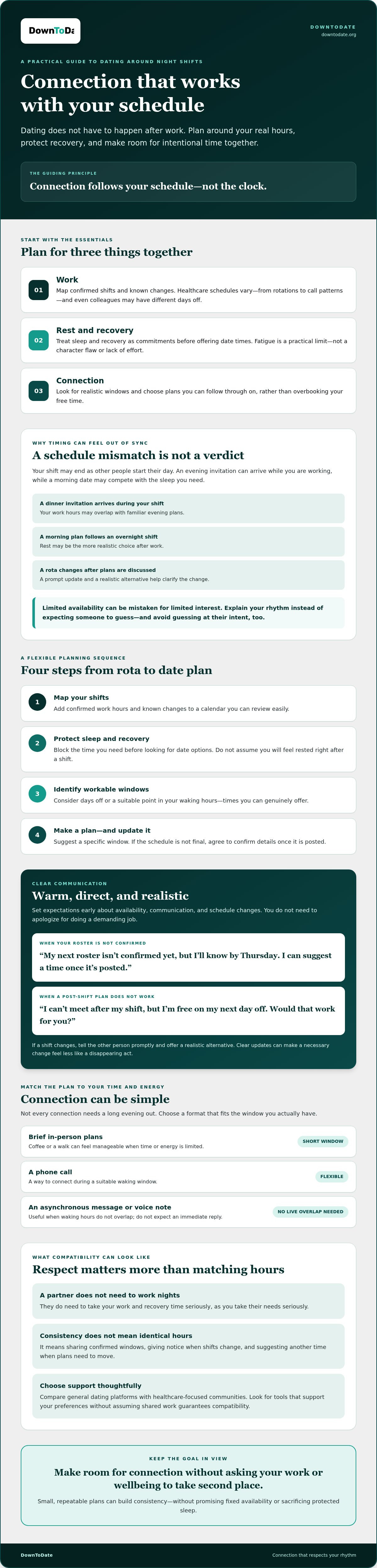
A sustainable connection starts with three things: realistic availability, respectful communication, and dependable expectations. You might not be able to promise the same date night every week, but you can share confirmed windows, give notice when shifts change, and suggest another time if plans need to move. Consistency is about following through, not keeping identical hours.
A compatible partner doesn’t need to work nights or share your exact schedule. They do need to take your work and recovery time seriously, just as you take their needs seriously. Night work doesn’t determine whether a relationship will succeed. Mutual understanding and practical planning give both people room to find a workable rhythm.
How to date on night shift without sacrificing sleep or connection
A sustainable dating routine starts with your real schedule, not the one you wish you had. For dating for night shift healthcare workers, that means treating sleep and recovery as fixed commitments, then finding connection windows around them. You don’t need to promise the same evening every week, but you do need a clear way to make and update plans.
Use this sequence when planning around overnight or rotating shifts:
- Map your shifts. Add confirmed work hours and known changes to a calendar you can review easily.
- Protect sleep and recovery. Block the time you need before looking for date options. Don’t assume you’ll feel rested right after a shift.
- Identify workable windows. Look for times you can genuinely offer, such as days off or a suitable point in your waking hours.
- Make a plan. Suggest a specific window. If your schedule isn’t final, agree to confirm the details once it’s posted.
With a rotating schedule, offer possibilities instead of guarantees: “My next roster isn’t confirmed yet, but I’ll know by Thursday. I can suggest a time once it’s posted.” If a shift changes, tell the other person promptly and offer a realistic alternative. Clear updates help a necessary change feel less like a disappearing act.
Set availability boundaries before plans become stressful
Decide which hours are protected for sleep and recovery before agreeing to meet. Then share the windows that are genuinely workable, rather than saying yes to a plan you may need to cancel. A simple response can be warm and direct: “I can’t meet after my shift, but I’m free on my next day off. Would that work for you?”
Choose dates that fit different energy levels
Not every connection needs a long evening out. A brief coffee, a walk, or a phone call during a suitable waking window can feel manageable when your time or energy is limited. If your waking hours don’t overlap, consider an asynchronous message or voice note without expecting an immediate reply. Save in-person plans for a time when you can be present, not immediately after a shift when you need rest.
Sleep protection and consistent communication can coexist: protect your recovery, share realistic availability, and follow through on the plans you make. If you’d prefer to meet people with healthcare context, a healthcare-focused dating community is one option to explore alongside a routine that works for your schedule.
What to discuss with a potential partner about night-shift dating
A demanding schedule doesn’t automatically rule out a relationship. Dating for night shift healthcare workers can work when both people understand what availability looks like and make room for each other’s needs. The goal isn’t to prove you can always adapt. It’s to find out whether you can build a rhythm together, with flexibility on both sides.
Raise practical topics before missed calls or rescheduled dates begin to feel personal:
- What does your work pattern usually look like, and how often can it change?
- When are you generally available for dates or conversation?
- How much contact feels reassuring when one of you is asleep or working?
- How would you prefer to handle a changed shift, missed call, or canceled plan?
- What pace of dating feels comfortable for each of you?
These questions aren’t a contract. They make expectations visible before either person starts filling gaps with assumptions.
Explain your schedule clearly without over-apologizing
Describe your typical shifts, what may change, and when you need to rest in plain language. Then name what you can offer: “My days off rotate, but I can usually suggest a date once my schedule is confirmed.” That gives a potential partner something concrete to work with. You don’t need to share your workplace or confidential details about patients. Keep professional privacy intact while being open about the parts of your schedule that affect dating.
Compare expectations for communication and time together
Talk about what happens when messages arrive during work or sleep. One person may be comfortable with a reply when the other wakes; another may prefer a brief check-in before a shift. Agreeing on a general approach can prevent silence from being mistaken for rejection. Discuss how you’ll reschedule, whether a quick message is enough when plans change, and how often you’d both like to meet. Be honest if frequent dates aren’t realistic, and ask what helps the other person feel connected.
Flexibility should go both ways. A partner may adjust plans around your shifts, while you make an effort to protect agreed time together or suggest an alternative when work intervenes. If one person is always accommodating and the other never makes space, that’s not schedule alignment. It’s an imbalance worth discussing.
Another healthcare professional may understand the demands of clinical work, but shared professional context doesn’t guarantee compatible communication styles, priorities, or relationship goals. Look for mutual respect, not just matching job descriptions.
How to build a repeatable dating routine around changing shifts
A routine doesn’t have to mean dating on the same day every week. For dating for night shift healthcare workers, repeatability comes from using the same planning process, even when your available days change. Start with confirmed shifts, protect recovery time, and only then look for room to connect.
Create a schedule-first plan for dates and communication
Once your schedule is available, mark work hours and sleep first. Next, note flexible windows when you’d have the energy to meet or talk. Share those windows with the person you’re dating, and agree on a check-in rhythm that works for both of you. That might mean a message before a shift or catching up after you wake, rather than expecting an immediate reply.
Build in a backup when making a plan. If an unexpected shift change makes the original time unworkable, let the other person know as soon as you can and suggest another window if one is realistic. A cancellation caused by work isn’t automatically rejection. Review the plan together instead of relying on assumptions or leaving the other person to guess.
For more ideas on maintaining connection when availability shifts, read this guide to dating with an unpredictable schedule.
Use dating tools to make limited time more intentional
Your profile can set useful expectations before a conversation begins. Describe your schedule broadly, such as working nights or having rotating days off, and state what kind of relationship you’re seeking. You don’t need to list every shift or disclose private workplace details. A clear overview can help someone understand your availability without mistaking it for a lack of interest.
Search tools can help you focus on preferences that matter to you, rather than spending limited time on conversations that aren’t a fit. DownToDate’s Premium Membership includes advanced search filters and unlimited messaging, according to the platform’s stated features. Check current membership details before relying on a particular feature. For broader guidance on comparing platforms, see this medical dating app evaluation guide.
Keep the routine modest: a planned date when schedules align, a brief check-in when they don’t, and a review when work changes. To explore a healthcare-focused dating community, consider DownToDate. Shared professional context may help people understand the demands of healthcare work, while compatibility still depends on the individuals involved.
Find healthcare-aware dating support that respects night-shift life
The right dating platform won’t remove schedule constraints, but it can shape who you meet and how you connect. General platforms offer access to a broad pool of people with varied backgrounds. A healthcare-focused community centers on people who may already understand demanding medical work, though shared professional context alone doesn’t guarantee compatible values, communication styles, or relationship goals.
Compare the environment, not just the size of the audience. Ask whether the platform’s filters can narrow your search to preferences and priorities that matter to you, and whether its communication tools suit the hours you’re awake. For dating for night shift healthcare workers, useful tools make limited browsing time more intentional without creating pressure to respond while you’re working or sleeping.
Choose a dating environment that fits your priorities
A broad dating pool may give you more variety, while a community for healthcare professionals can offer a shared understanding of the work. Neither is automatically better. Consider which setting aligns with your priorities, how clearly profiles communicate intentions, and whether search options help you focus. For a closer look at profession-specific considerations, read this guide to dating for doctors.
DownToDate is a dating platform for healthcare professionals, founded and operated by medical professionals Dr. Shadi Rezai and Dr. Sasan Rezai. It provides tailored matching tools for connecting within the medical community. That context may make demanding healthcare work more familiar, but compatibility still comes down to the people involved. Don’t assume a healthcare background means someone will automatically respect your boundaries or understand your preferred pace.
Make the next step manageable and intentional
Start with a profile that reflects what you’re seeking and describes your schedule in broad, comfortable terms. You can state that you work nights or have changing days off without sharing private workplace details. Then begin conversations at a pace you can sustain. A thoughtful exchange is more useful than trying to keep up with more messages than your energy allows.
Before choosing a paid option, review the platform’s current Premium Membership details and confirm which features are available. DownToDate’s Premium Membership is described as including advanced search filters and unlimited messaging, but check current information before relying on those features. They may support a more focused experience; they can’t promise a particular match or outcome.
If a healthcare-focused community feels like a suitable next step, explore DownToDate and decide whether its approach fits your priorities. Look for a platform that respects your time, supports your preferences, and leaves room for connection on a schedule that’s genuinely yours.
Build a dating rhythm that works for you
Dating for night shift healthcare workers doesn’t require sacrificing sleep or apologizing for a demanding schedule. Start by treating recovery time as essential, communicating your availability clearly, and making plans that can adapt when shifts change. The right partner doesn’t need the same work hours, but mutual respect and dependable communication matter.
Small, sustainable steps can make connection more manageable: share realistic date windows, agree on how to stay in touch, and revisit plans when your schedule shifts. Choose a dating environment that fits your priorities. Shared healthcare experience can offer context, but it can’t guarantee compatibility.
DownToDate is a dating platform for healthcare professionals, founded and operated by medical professionals Dr. Shadi Rezai and Dr. Sasan Rezai. Its Premium Membership is described as offering advanced search filters and unlimited messaging; check current feature availability before deciding what suits you.
Explore DownToDate and connect with healthcare professionals as one possible next step. Your schedule is part of your life, not a barrier to meaningful connection. With clear expectations and a routine that protects your wellbeing, you can make space for dating on terms that work for you.
Frequently Asked Questions
Is it possible to date while working night shifts in healthcare?
Yes, it’s possible to date while working night shifts in healthcare. Build plans around your actual work and recovery schedule instead of assuming you’ll be free during typical evenings or weekends. Dating for night shift healthcare workers can involve flexible date times, clear communication, and realistic expectations. A compatible partner doesn’t need the same hours, but should respect your availability and the time you need to rest.
How can night shift healthcare workers make time for dating?
Start by adding confirmed shifts and protected sleep time to your calendar, then look for windows when you’ll have enough time and energy to connect. Offer realistic options rather than committing before your schedule is settled. A short date, call, or message exchange can help you stay connected without filling every day off. Review plans when your shifts change, and keep enough flexibility to avoid turning dating into another demanding obligation.
Should I tell someone I’m dating that I work night shifts?
Yes, share that you work nights early enough for the other person to understand your availability. Explain your usual shift pattern, whether it changes, and when you’re generally free to talk or meet. You don’t need to apologize for your work or disclose your specific workplace. Keep patient and professional information private. Clear context helps a potential partner understand your schedule without assuming a delayed reply means you’re not interested.
Can a relationship work if one person works nights and the other works days?
Yes, a relationship can work even when partners keep different schedules. Talk about when each person is available, how you’ll stay in touch, and what to do when work disrupts a plan. You might not share every evening or weekend, but you can still create dependable time together. The important measure isn’t whether your shifts match exactly. It’s whether both people communicate, make mutual adjustments, and respect each other’s needs.
Are dating apps useful for night shift healthcare workers?
They can help you meet people beyond your immediate social circle and connect at a pace that suits your waking hours. Compare platforms by audience, search options, and messaging features. DownToDate is a dating platform for healthcare professionals with tailored matching tools. Its Premium Membership is described as including advanced search filters and unlimited messaging; check current feature availability before relying on those tools. Shared work context can help, but doesn’t guarantee compatibility.
How do I handle canceled dates when my healthcare schedule changes?
Let the other person know as soon as you can, briefly explain that your schedule changed, and suggest another time if you can offer one. You don’t need to over-apologize for a genuine work conflict, but clear communication shows consideration. If your schedule isn’t confirmed, say so before making firm plans. A canceled date isn’t automatically a sign of rejection. Discuss how each of you prefers to handle changes so neither person is left guessing.


