

What if the clearest way to explain your residency schedule isn’t to promise more time, but to be honest about what you can protect? Learning how to explain a resident's schedule to a new partner can feel delicate when long shifts, nights, and call make plans uncertain. A cancelled date or delayed reply may look like disinterest, even when your interest is genuine.
You don’t need to apologize for the demands of residency or share more than you’re comfortable with. You do need to give a new partner a realistic picture of your schedule: what’s fixed, what may change, and how you’ll communicate if plans are affected. Clear expectations help you plan without turning every shift into a test of commitment.
This guide offers practical language for describing your work in plain terms, responding to schedule changes, and finding flexible ways to stay connected. The goal isn’t to guarantee time you can’t control. It’s to show genuine interest, make plans around what’s predictable, and build understanding as you get to know each other.
Key Takeaways
- Describe residency in plain language so your partner understands the mix of supervised training, clinical duties, and structured learning.
- Separate your schedule into known commitments, likely demands, and genuine unknowns, without presenting one rotation as typical for everyone.
- Explain that demanding work can limit your availability while making clear that communication still matters.
- Use a simple conversation plan to explain your schedule, state what you need, and invite questions without promising time you can’t protect.
- Keep the conversation going: check in about upcoming shifts, shared plans, and each person’s needs as rotations change.
Start by explaining what residency actually means for your availability
Talking about your schedule can feel vulnerable when a relationship is new. You want to show interest without making promises your work could disrupt. Start by explaining the structure behind your availability, not just listing the hours you’re working this week.
Residency is supervised postgraduate medical training that combines clinical duties with structured learning. For a concise overview of what residency actually means, you can point to the training context, then describe how your own program affects your routine. Rotations, shifts, nights, and call can make one week look very different from the next. Your partner doesn’t need every professional detail to understand the practical effect: some plans are easier to make in advance than others.
A published schedule shows when you’re expected to work. It doesn’t guarantee that every unlisted hour will be free. Making that distinction helps set honest expectations without over-apologizing.
Describe the main parts of a resident’s schedule
Explain the terms in plain language. A rotation is a clinical assignment or training block that can change your duties and daily routine. A shift is a scheduled period of work. Call means being assigned responsibility for patient care during designated times; timing and frequency vary by program. These patterns can affect when you’re available, how much energy you have afterward, and how far ahead you can plan.
Distinguish scheduled work from possible changes. Your posted shifts are useful for planning, but a demanding clinical day may not unfold exactly as expected. That doesn’t mean every shift will change. It means you can share the schedule you know and update your partner if something shifts.
Separate work demands from relationship intentions
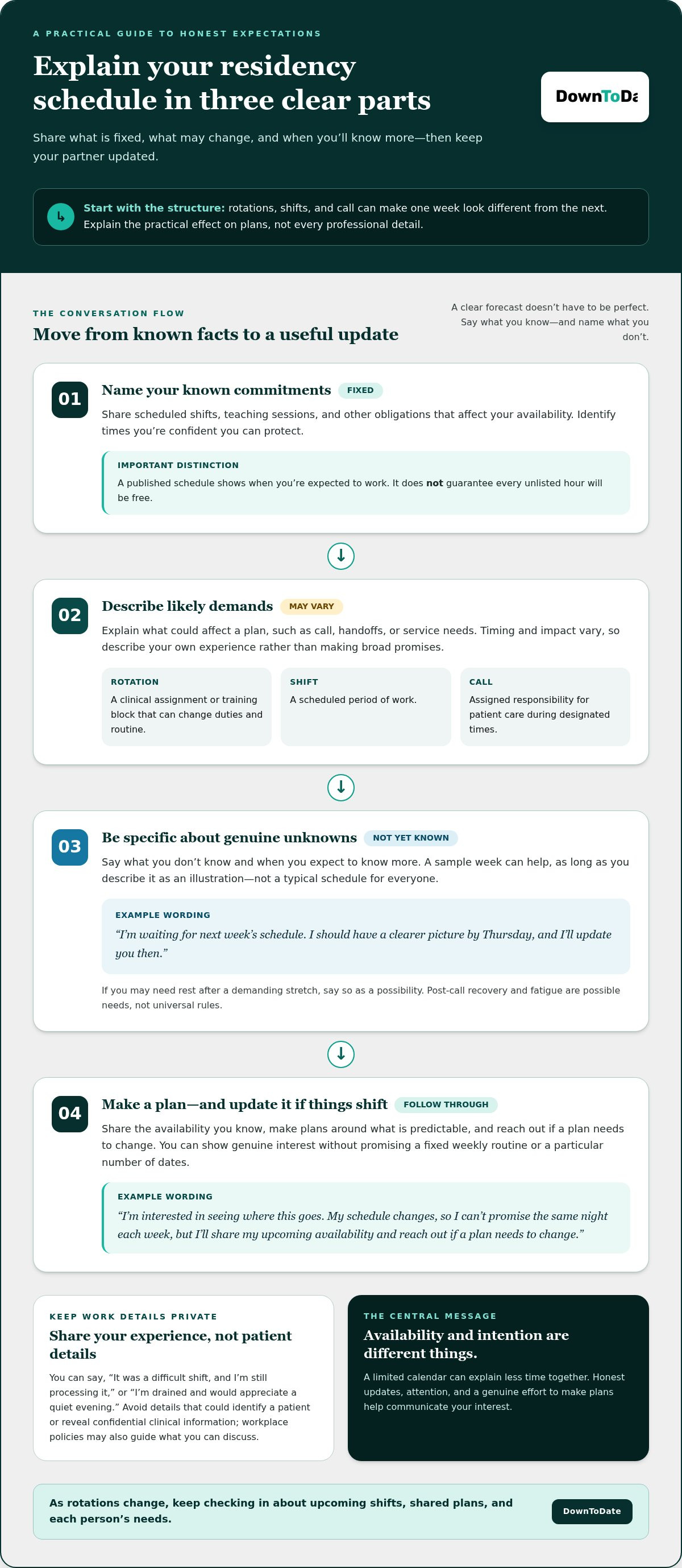
A limited calendar doesn’t automatically mean limited care. Be direct about what you can offer: attention, honest updates, and a genuine effort to make plans. Make those intentions concrete without guaranteeing a particular number of dates or a fixed weekly routine. For example: “I’m interested in seeing where this goes. My schedule changes, so I can’t promise the same night each week, but I’ll share my upcoming availability and reach out if a plan needs to change.”
This explanation makes room for both realities: residency can constrain your time, and considerate communication still matters. For broader guidance on dating with an unpredictable medical schedule, consider how flexibility and follow-through can work together. Explain the pattern honestly, then show your interest through what you can reliably offer.
Explain what is predictable, what may change, and what you cannot promise
A helpful schedule conversation doesn’t require a perfect forecast. It requires clarity about what you know, what tends to vary, and when you’ll have a better answer. This three-part framework makes how to explain a resident's schedule to a new partner more practical without presenting one rotation as everyone’s experience.
Use a three-part schedule explanation
- Known commitments: Share scheduled shifts, teaching sessions, or other fixed obligations that affect your availability. Name the times you’re confident you can protect, but don’t label every unassigned hour as free.
- Likely demands: Explain what could affect a plan, such as call, handoffs, or service needs. The timing and impact vary, so describe your own experience rather than making broad promises about residency.
- Genuine unknowns: Be specific about what you don’t know yet and when you expect to know more. For example: “I’m waiting for next week’s schedule. I should have a clearer picture by Thursday, and I’ll update you then.”
A sample week can make the explanation tangible, as long as you frame it as an illustration. You might say, “This week I have scheduled work on these days, and I may have call on another. If I’m coming off a demanding stretch, I may need time to rest before making plans.” Post-call recovery and fatigue are possible needs, not universal rules. Avoid assuming every post-call day will look the same.
Set privacy-conscious boundaries around work details
You can explain how work affected you without describing a patient. Say, “It was a difficult shift, and I’m still processing it,” rather than sharing details that could identify someone or reveal confidential clinical information. HIPAA protects patient health information; this is a practical reminder, not a legal interpretation. Your workplace policies may also guide what you can discuss.
Decide how much of your own emotional response feels appropriate to share at this stage of the relationship. You can be honest without giving a full account. “I’m drained and would appreciate a quiet evening” tells your partner what they need to know while keeping professional details private.
Clear expectations can help address whether a demanding schedule will look like disinterest. A busy calendar may explain limited availability, but updates and follow-through still communicate care. Shared professional context can also make these conversations easier. Meet healthcare professionals who understand medical work.
Address the biggest concern: will a demanding schedule look like disinterest?
A demanding schedule can explain why you have limited time, but it can’t communicate your intentions on your behalf. A partner may understand that residency is intense and still feel disappointed when plans fall through. What happens next matters: do you let them know, acknowledge the impact, and make an effort to reconnect?
One cancellation because a shift changed is different from repeated cancellations with no explanation or attempt to reschedule. The first calls for flexibility and an update. The second can leave someone unsure where they stand. Learning how to explain a resident's schedule to a new partner means being honest about work demands while staying accountable for how you communicate around them.
Show interest through specific, realistic communication
Skip promises you can’t control. Offer a next step you can follow through on. If a shift disrupts dinner, try: “I’m sorry, work changed and I can’t make tonight. I’d still like to see you. I’ll check my next schedule tomorrow and suggest another time.” A brief check-in when you have a moment can show care too. Constant messaging isn’t the only measure of interest.
Be clear about what you value. You might say, “Consistency matters to me, even if we can’t meet on the same day every week,” or, “I’d like us to protect time together when my schedule allows.” Specific intentions give the relationship something solid to work with, even when your calendar shifts.
Make room for the partner’s perspective
Communication should go both ways. Ask how uncertainty or last-minute changes affect your partner, then listen before explaining the work constraint. “I can see why that was disappointing” acknowledges their experience without suggesting you could have controlled the shift. Understanding medical work doesn’t mean they must accept every disappointment silently, just as their needs don’t mean you can guarantee availability.
Agree on practical expectations together. You might decide to update each other as soon as plans change, suggest a new time when possible, or talk about what kind of check-in feels reassuring. If a pattern is becoming difficult for either of you, name it directly rather than relying on assumptions. For more communication ideas tailored to medical professionals, read this guide to relationship advice for doctors.
Use a simple conversation plan to explain your schedule and make plans
Choose a calm moment, not the minutes before a shift or right after a cancelled date. You’ll both have more space to listen when neither person is rushed, exhausted, or already upset. The aim isn’t to negotiate every future hour. It’s to give your partner a useful picture of your routine and agree on how you’ll handle uncertainty together.
Use this five-step sequence to guide the conversation:
- Choose a calm moment. Ask if you can talk about how to plan time together.
- Explain the pattern. Briefly describe your current rotation, shifts, or other regular commitments.
- Name uncertainty. Clarify what may change and when you expect to know more.
- State your needs. Share what helps you stay connected, such as flexibility or advance notice.
- Invite questions. Make room for your partner to explain what would help them feel considered, too.
Adapt a script to your own training schedule
When explaining your schedule, keep the wording direct and personal. For example: “I want to make time for this relationship. On my current rotation, I’m usually scheduled on these days, but call or service needs can affect plans. I should know more about next week by Thursday. Could we choose a date after that, and check in if anything changes?” Replace the details with your actual schedule. This is a template, not a universal residency pattern.
A script should open a conversation, not close it. Pause for your partner’s response and adjust the plan together. They may prefer to schedule once your shifts are clearer; you may find it useful to hold a tentative time and confirm it later.
Create a workable plan for schedule changes
Agree on a simple update process before a change happens. Decide how soon you’ll send a message when you learn a commitment has shifted, and what you’ll do if you can’t confirm a new date right away. One option is to send a brief update as soon as you can, then suggest rescheduling once your schedule is clearer. A backup plan keeps a work disruption from becoming silence.
Keep the message considerate and concise: “My shift changed, so I can’t make our plan. I’m sorry for the late notice. I’ll check my schedule tomorrow and suggest another time.” For more ideas on communicating after a demanding medical shift, consider how to share an update while making space for your partner’s feelings. DownToDate brings healthcare professionals together in a community designed for making romantic connections. Explore DownToDate.
Keep the conversation going as rotations and relationship needs change
The first schedule conversation is a starting point, not a permanent agreement. A new rotation, workload shift, or change in the relationship can alter what feels manageable. A brief recurring check-in gives you both a chance to compare upcoming commitments with the time and connection you need before a misunderstanding builds.
Keep it practical. Look at what’s coming up, identify plans that may need flexibility, and ask each other, “Does the way we’re staying in touch feel workable?” As commitments grow and partners begin sharing domestic responsibilities, centralising routines with tools like haevn.co.uk can help streamline household management around unpredictable medical shifts. Protect realistic personal time where you can, but don’t treat a tentative opening in your calendar as guaranteed. The goal is to make room for the relationship without promising control over work demands.
Revisit expectations when the rotation or workload changes
Share meaningful changes early, especially if they affect a plan you’ve already made. You don’t need to provide a running account of every shift. A concise update helps: “My rotation changed, and next week looks busier than expected. Can we review our plans tonight?” Then ask whether your communication rhythm still works for both of you. Adjust together rather than assuming one conversation covers every new rotation.
This ongoing dialogue is part of explaining your schedule to a new partner. The schedule may change, and so may each person’s needs. Revisiting expectations lets you address those shifts directly instead of relying on assumptions about what the other person can accommodate.
Find connection with someone who understands medical life
A partner familiar with healthcare may already understand why a rotation can affect your routine or why a difficult workday takes energy beyond the hours on the schedule. That shared context can reduce the need to explain every basic pressure. It doesn’t guarantee compatibility, consideration, or strong communication, though. Those still depend on the people involved and the expectations they build together.
DownToDate is a dating community for healthcare professionals seeking meaningful connections with peers who understand medical work. If that shared professional context feels valuable, DownToDate offers a way to meet people who understand the demands of medical life. Shared experience can be a helpful beginning; mutual respect and honest communication are what help a relationship grow.
Make room for connection with honest expectations
Residency can make availability difficult to predict, but it doesn’t have to leave a new partner guessing about your intentions. Explain what’s scheduled, what may change, and when you’ll know more. Then keep the conversation open as rotations and relationship needs evolve.
That’s the heart of how to explain a resident's schedule to a new partner: be clear about your limits, communicate changes with care, and make realistic efforts to spend time together. A shared understanding of medical work can help, while compatibility and mutual respect still grow through how you treat each other.
For healthcare professionals seeking meaningful connections with peers who understand medical life, DownToDate offers a dedicated dating community. The platform’s Premium Membership includes advanced search filters and unlimited messaging. Explore DownToDate and connect with healthcare professionals who understand medical life.
You don’t need a perfect schedule to build a meaningful relationship. Start with honesty, follow through where you can, and let connection develop one conversation at a time.
Frequently Asked Questions
How do I explain residency hours to someone I just started dating?
Explain residency as supervised postgraduate medical training that combines clinical work with structured learning. Then describe how your current rotation affects your usual days, nights, or call, and distinguish firm commitments from plans that may shift. You don’t need to provide every detail. Keep it concrete: share when you’re generally available, when you’ll know more, and how you’ll communicate if plans change.
Should I tell a new partner my full residency schedule?
No, share the details that help you plan together, not necessarily your full calendar. You might explain your current shift pattern, known commitments, and when you expect your schedule to be clearer. Keep patient information and confidential clinical details private. As trust develops, you can decide what else feels comfortable to share. The aim is a realistic picture of your availability, not complete access to every part of your work life.
How can I explain call shifts without sounding like I am making excuses?
Describe call plainly and explain its practical effect on your plans. For example: “I’m assigned clinical responsibilities during call, and the timing can vary by program. I’ll know more about my availability closer to that date.” Be specific about what you know, and don’t present uncertainty as a certainty. If call affects a plan, acknowledge the impact and discuss what you can realistically do next.
What should I say if my residency schedule changes at the last minute?
Send an update as soon as you reasonably can. Acknowledge the change’s effect, explain briefly, and offer a next step without promising a time you haven’t confirmed. For example: “My shift changed, so I can’t make dinner tonight. I’m sorry for the late notice. I’ll check my schedule tomorrow and suggest another time.” If you don’t know when you’ll be free, say when you expect to know more.
Can a relationship work when one partner is a medical resident?
Yes, a relationship can work, though the schedule may require flexibility and clear communication from both people. Residency can limit availability, but it doesn’t remove the need to follow up, make realistic plans, and discuss disappointment openly. A partner’s understanding of medical work may help, but it doesn’t replace compatibility or mutual respect. Talk about what each of you needs and revisit those expectations when work or the relationship changes.
How do we plan dates when a resident’s schedule is unpredictable?
Start with commitments you know, then choose a plan that can adapt if your schedule changes. You might wait until your shifts are clearer before setting a date, or agree on a tentative plan and confirm it later. Decide together how you’ll update each other if work interferes and how you’ll reschedule. Avoid treating every unscheduled hour as guaranteed free time, especially if you may need rest after work.
How often should I update a new partner about my residency schedule?
Share updates when you receive useful scheduling information and when a change affects a plan you’ve made. You don’t need to send constant messages or report every shift. Agree on a check-in rhythm that works for both of you, such as reviewing the upcoming schedule when it becomes available. If you’re unsure about a date, say when you expect to know more, then follow up as promised.


