

Does finding a partner in medicine make it easier to build a relationship with someone who understands your life? Finding love in the medical field can offer shared context: fewer explanations about demanding schedules, high-pressure work, and the emotional weight of caring for others.
That understanding matters, but it doesn’t guarantee compatibility. Two healthcare professionals may recognize each other’s pressures and still differ in communication, priorities, or the kind of life they want to build. A partner outside medicine can also be deeply supportive when both people make room for honest conversations and mutual respect.
This article looks at the benefits and limits of dating within healthcare, and how to assess a connection beyond a job title. You’ll find practical ways to create opportunities to meet, whether through shared professional circles or a healthcare-focused community. The goal isn’t simply to find someone who understands your work. It’s to find someone whose values and everyday life fit with yours.
Key Takeaways
- Finding love in the medical field can begin with shared context, but lasting compatibility depends on how two people communicate and what they value.
- Assess potential partners by their approach to connection, priorities, and everyday life, not simply by whether they work in healthcare.
- Use clear intentions and small, respectful steps to make room for connection without adding pressure to an already demanding schedule.
- A healthcare-focused community can help you meet people who recognize the professional context, while personal compatibility develops between individuals.
- DownToDate Premium Membership includes search and messaging tools to support intentional connections with healthcare professionals.
Finding love in the medical field: why connection can feel different
Wanting closeness doesn’t conflict with caring deeply about your work. A demanding career can make time and energy feel limited, but romance doesn’t have to wait for a quieter chapter. Finding love in the medical field means building a relationship where both people are valued beyond their professional roles, with room for ambition, personal needs, and life outside work.
Shared professional context can make some conversations easier. A partner who knows what clinical responsibility can involve may understand why a difficult day stays with you or why plans sometimes shift. Healthcare spans many roles, as the broad definition of a health professional illustrates. Even within the same field, people can have very different responsibilities and experiences.
Professional understanding can help a relationship, but it can’t replace mutual care. Familiarity with the work may mean less explanation of certain pressures. It doesn’t automatically create trust, affection, compatible priorities, or a willingness to show up for each other.
Why healthcare work can shape the dating experience
Healthcare work can involve significant responsibility, emotionally demanding encounters, and changing or unpredictable demands. Those realities may shape what someone seeks in a partner: steadiness, flexibility, direct communication, or respect for time away from work. They can also affect how much energy someone has for dating at a particular time.
There is no single healthcare schedule or experience. A person’s role, workplace, career stage, and personal circumstances all shape daily life. Rather than assuming someone will understand your needs because they work in medicine, explain what matters to you. For example, describe how you like to reconnect after a difficult shift or how much notice helps when plans need to change. Then notice whether the other person listens and responds with consideration.
Connection is larger than a shared job
Romantic partnership is one meaningful form of connection, not the only one. AAMC has shared a medical student’s account that frames love more broadly, including the importance of friendship and family. Professional camaraderie can offer belonging, while close friendships and family relationships bring their own forms of care. These bonds don’t need to be ranked against romance. Each has its own place in a person’s life.
That wider view doesn’t diminish the desire for a partner. It can help put dating in perspective. Being single during medical training or practice doesn’t mean you’ve missed a required milestone or fallen behind. Your career timeline is not a relationship deadline. You can value the connections already in your life and still make space for romantic possibility.
Instead of asking whether a potential partner has the right job title, consider whether you can communicate honestly, respect each other’s lives, and build care through everyday actions. Shared context may open the conversation. What follows depends on the people in it.
What shared medical experience can, and cannot, bring to a relationship
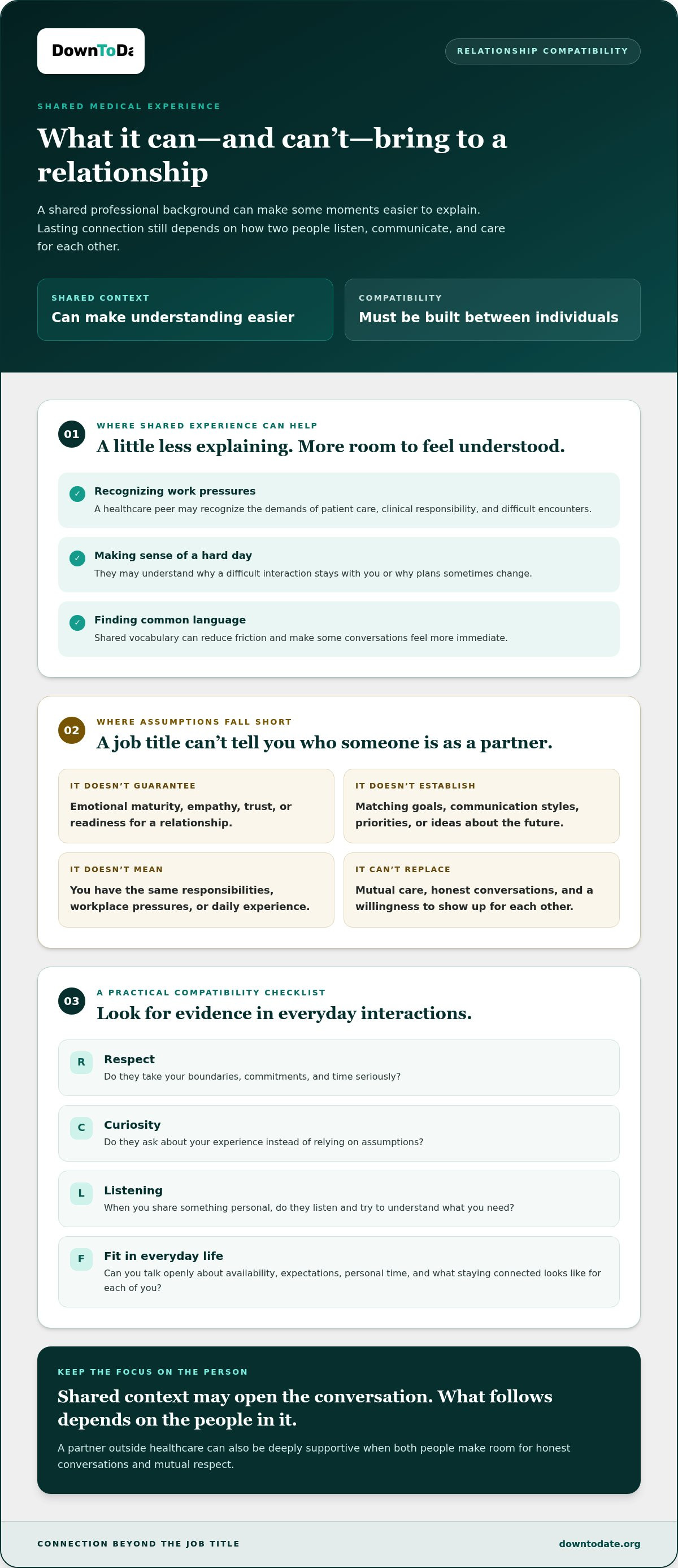
A shared medical background can provide context, but it can’t tell you who someone is as a partner. A person may recognize the demands of patient care or the responsibility involved in clinical decisions. That familiarity can make certain conversations feel more immediate. It doesn’t establish emotional maturity, empathy, or readiness for a relationship.
The value of being understood without explaining everything
With a healthcare peer, you may not need to explain every professional reference before describing a challenging moment. They might understand why a difficult interaction stayed with you or why a change in plans affected more than your calendar. Shared vocabulary can reduce friction and help you feel seen.
Still, don’t assume someone understands your experience simply because they work in medicine. People have different responsibilities, workplace cultures, and pressures. Notice how they respond when you share something personal. Do they listen, ask what you need, and respect your perspective? Or do they compare your experience with their own before understanding what you’re saying? The quality of their attention matters more than presumed common ground.
The limits of a shared professional identity
A matching job title doesn’t guarantee matching goals. One person may want a committed partnership while the other is unsure what they’re looking for. You may share professional interests but differ in how you handle conflict, spend free time, or imagine the future. Those differences aren’t automatic deal-breakers. They are reasons to learn about each other directly.
Two demanding careers can also create coordination challenges. Both people may have periods when work takes considerable attention, or different ideas about how to protect personal time. That doesn’t predict failure. It does make clear conversations about availability, expectations, and support especially useful. Ask what staying connected looks like for each of you, then look for a workable balance instead of assuming one person will simply adapt.
As you explore Finding love in the medical field, assess the person, not just the professional overlap. Look for evidence in small interactions:
- Respect: They take your boundaries and commitments seriously.
- Curiosity: They ask about your experience instead of relying on assumptions.
- Reciprocity: Both of you make room for each other’s needs and interests.
- Clarity: You can discuss intentions and expectations without pressure or evasion.
These signs can turn a general sense of familiarity into a clearer picture of whether a connection has room to grow. They matter whether someone works in your specialty, another area of healthcare, or an entirely different field.
Shared experience offers context; consistent respect and communication build trust. Keep that distinction in mind. If meeting healthcare peers feels like a natural way to begin, a healthcare professional dating community offers a shared starting point. Compatibility still develops through the choices and conversations you build together.
Dating someone in medicine versus outside the field: how to assess fit
A partner in healthcare may recognize parts of your work without much explanation. A partner outside the field may bring a different perspective and help keep conversations connected to life beyond work. Neither background makes someone a better match by default. For Finding love in the medical field, consider how a person treats you and approaches a relationship, not just how familiar they are with your profession.
Use these areas to start a balanced assessment:
| Area | Partner in healthcare | Partner outside healthcare |
|---|---|---|
| Work context | May recognize clinical pressures and professional commitments. | May need some context, but can learn what matters to you. |
| Shared interests | May share workplace references, though interests beyond work still need to be discovered. | May introduce different interests and routines, which you can explore together. |
| Communication needs | May understand some shorthand, but shouldn’t be expected to read your mind. | May benefit from clear explanations, alongside curiosity and active listening. |
When a partner also works in healthcare
Shared reference points can make it easier to discuss demanding patient care or the weight of professional responsibility. You may also recognize why work commitments matter to each other. But familiarity isn’t automatic understanding. Make room for interests unrelated to medicine, and agree on respectful boundaries around patient privacy and workplace conduct. Your relationship deserves its own space.
When a partner works outside healthcare
Explain the personal impact of your work rather than expecting a partner to learn every clinical detail. For instance, say what kind of support you’d welcome after a taxing day. In return, show curiosity about their work and priorities. Different professional worlds can invite thoughtful questions and new perspectives. Difference alone doesn’t signal incompatibility.
In either situation, assess the person through consistent behavior. Do they respect a boundary when you set one? Can you discuss what each of you wants from dating without dismissing or pressuring the other? Is interest mutual, and does conversation include more than work? These questions offer a clearer basis for judging fit than a shared badge, specialty, or professional identity.
For a doctor-specific perspective on balancing professional life and dating, explore dating for doctors and modern medical life. Use it as context, then focus on the person in front of you. A good match may understand your work or come from another field. Either way, look for curiosity, respect for boundaries, and aligned intentions.
Practical ways to create room for a meaningful medical-field connection
Connection doesn’t require a perfect schedule or a dramatic gesture. A few deliberate choices can help you move from interest to a real conversation while respecting your energy and the other person’s boundaries. For Finding love in the medical field, focus on four steps: clarify what you want, create opportunities to meet, communicate interest directly, and notice whether effort is mutual.
Make your intentions and priorities easier to understand
Start with an honest sense of what you hope to build. You don’t need to make a commitment sound bigger than it is. You might say you’re dating with the hope of finding a lasting partnership, or that you’re open to getting to know someone and seeing whether your goals align. Clear language gives the other person a fair chance to respond honestly.
Let people meet more than your professional identity. Mention an interest, a subject you enjoy discussing, or how you like to spend time away from work. These details offer natural openings for conversation without turning your introduction into a formula or résumé.
Move from interest to a respectful conversation
If you’re interested, make a specific invitation that leaves room for a comfortable yes or no. For example: “I’ve enjoyed talking with you. Would you like to get coffee sometime?” If the person declines or doesn’t show interest, accept the answer graciously. If they’re receptive, follow through and let the connection develop through continued conversation, not assumptions based on one interaction.
Consistency matters more than constant access. Talk about communication preferences as they become relevant. Perhaps you prefer a short message when plans change, or you’re not always able to reply during work. Ask what works for the other person, too. The aim is a reasonable understanding, not immediate replies or rigid expectations.
If you meet through work, take extra care. Consider workplace policies and professional boundaries before expressing interest, especially where a reporting relationship or another power imbalance may exist. Keep patient information private, and don’t use clinical interactions as a way to pursue someone. If the interest isn’t mutual, step back and preserve a respectful professional environment.
Keep dating manageable. Choose opportunities that fit naturally into your life, such as accepting a social invitation or starting a conversation in a setting where personal interaction is appropriate. You don’t need to add a packed dating routine to an already full week. For more focused guidance on availability and planning, see dating with an unpredictable schedule.
If meeting healthcare professionals is one way you’d like to create those opportunities, explore DownToDate’s healthcare-focused dating community. Shared professional context can help start a conversation; your communication and mutual interest shape what happens next.
How DownToDate helps healthcare professionals meet with shared context
Finding love in the medical field can begin with meeting someone who recognizes the broad professional context. DownToDate is a dating platform designed for healthcare professionals seeking meaningful connections. Founded and operated by medical professionals Dr. Shadi Rezai and Dr. Sasan Rezai, it provides a focused community where members can discover peers connected to healthcare work.
That focus can make an introduction feel relevant, but it doesn’t mean every member shares the same role, schedule, values, or relationship goals. A shared professional setting is a starting point, not a shortcut to knowing someone. Personal compatibility takes shape through honest conversation, mutual respect, and the interest both people show in each other beyond work.
A focused community for healthcare professionals
In a healthcare-focused dating community, you can meet people who may understand some of the language and pressures connected with medical work. That context can reduce the need to explain every professional reference at the outset. Familiarity still varies from person to person. Ask questions, share what your own experience is like, and stay curious about the other parts of someone’s life. Shared context starts discovery; people build compatibility.
Use discovery tools to start a more intentional search
Premium Membership provides tools for searching and communicating. Advanced search filters let you narrow your discovery according to member preferences, while unlimited messaging gives you room to continue conversations. Enhanced profile visibility and community features offer additional ways to engage with the platform.
These are practical features, not promises of replies, a particular match, or relationship success. Use filters to guide your search, then look beyond selected preferences as you get to know someone. Messaging gives you a way to explore shared interests and intentions, but a genuine connection depends on the exchange between two people. Be clear about what you hope to find, and give conversations time to show whether interest and effort are mutual.
- Search: Use advanced filters to narrow discovery around member preferences.
- Communicate: Use unlimited messaging to continue conversations without a message limit.
- Be visible: Premium Membership includes enhanced profile visibility.
- Participate: Access community features as another way to engage.
If a healthcare-focused setting fits how you’d like to meet people, Explore DownToDate. Take it at a pace that feels right. Shared professional context can open the door; the connection itself grows through the care, communication, and choices you bring to it.
Take one thoughtful step toward connection
Finding love in the medical field doesn’t require you to have every detail of your future figured out. Start by being open, expressing what matters to you, and giving a promising conversation room to develop. Choose a small, intentional next step: make time to meet someone, ask a question that goes beyond work, or be clear about the kind of relationship you hope to build.
Keep your standards grounded in how a person treats you, not in assumptions attached to their profession. Shared context may make an introduction easier, but a strong connection grows through genuine interest and care. You can move at a pace that respects your life while staying open to possibility.
If you’d like to meet people who work in healthcare, Explore DownToDate and connect with healthcare professionals. The platform was founded and is operated by medical professionals Dr. Shadi Rezai and Dr. Sasan Rezai. Your next meaningful conversation can begin with one clear, considered step.
Frequently Asked Questions
Is it easier to date someone in the medical field?
It can be easier to communicate about some work pressures, but that doesn’t automatically make dating simpler. A medical peer may understand why you can’t discuss certain cases or why a workday affected your energy. You’ll still need to learn how they handle disagreement, make plans, and show consideration. Finding love in the medical field may feel more familiar at first, but a lasting connection depends on how both people treat each other.
Can a relationship work if one partner is not in healthcare?
Yes. A relationship can thrive across different professions when both partners respect each other’s commitments and stay interested in each other’s lives. For example, agree on a simple way to update each other if plans shift, then make space to talk about something enjoyable unrelated to work. A partner doesn’t need clinical expertise to be supportive. They do need to take your experience seriously and communicate their own needs clearly.
Do medical professionals usually prefer dating other medical professionals?
There isn’t one preference shared by all medical professionals. Some value the familiarity of dating someone who knows healthcare from the inside; others appreciate a partner with a different career and perspective. Personal priorities, attraction, timing, and relationship goals all influence what someone seeks. Rather than trying to predict a general preference, ask the person you’re dating what kind of relationship they want and notice whether your expectations align.
How can you meet someone who understands a medical career?
Try settings where healthcare professionals naturally connect, such as alumni gatherings, social events organized around professional interests, or a dating platform created for healthcare workers. Keep the goal modest: start a conversation, not an immediate search for certainty. You can also explain what understanding looks like to you, such as respecting your privacy around work or being flexible if plans change. Shared context may make an introduction easier, but take time to learn about the person.
What should you discuss early when dating another healthcare professional?
Talk about relationship intentions, how each of you prefers to stay in touch, and what privacy around work means to you. It can also help to ask how you each like to decompress after a demanding day. One person may want to talk things through, while the other prefers quiet before reconnecting. These conversations aren’t tests. They help you understand each other’s preferences instead of treating assumptions as agreements.
Can dating a coworker in healthcare create boundary challenges?
Yes. A workplace connection can affect collaboration, privacy, or comfort if one person feels pressured or the interest isn’t mutual. Before expressing interest, consider relevant workplace policies and any supervisory relationship. Keep personal conversations separate from patient care, and don’t share confidential information as a way to build closeness. If the other person declines, respond respectfully and return interactions to a professional footing. Clear boundaries protect both people and the working environment.
Is a healthcare-focused dating platform useful if you are open to dating outside medicine?
It can be useful as one part of your approach. A healthcare-focused platform gives you a way to meet peers, while other social connections can introduce you to people outside medicine. You don’t have to treat the choice as a firm rule about whom you’ll date. Consider what you hope to find, and assess each person by their character and relationship intentions rather than assuming their profession determines compatibility.


