

A lasting relationship doesn’t require two people to work the same hours. It needs clear agreements about how to stay connected when shifts run late, call schedules change, or work stress comes home. Long-term relationships for medical staff are built on that understanding, not on perfectly aligned calendars.
If you work in healthcare, you know how easily demanding schedules can squeeze good intentions. A partner may care deeply and still feel overlooked when plans change without warning. Rather than promising more time than you can give, communicate early, set realistic expectations, and make the time you share feel intentional.
This article offers practical ways to protect connection during busy or unpredictable work periods. You’ll learn how to discuss needs without blame, manage changing plans, and assess compatibility beyond a shared medical career. Professional understanding can help, but lasting alignment also depends on how you handle conflict, support each other, and imagine your future together.
Key Takeaways
- Build Long-term relationships for medical staff around adaptable routines and realistic expectations, not identical schedules.
- When plans change, share clear updates and talk about what helps each partner feel connected and considered.
- Shared medical experience can create understanding, but compatibility also depends on values, identity, and goals beyond work.
- Try repeatable habits such as a weekly schedule check-in and protected time together, adjusting them as work demands shift.
- Look beyond job titles when considering a partner. Focus on communication, mutual respect, and the future you want to build.
Why Long-Term Relationships for Medical Staff Need Realistic Expectations
Long-term relationships for medical staff aren’t built around a perfect shared calendar. They depend on staying connected while routines adapt to work and life. That can mean planning around shifts, updating each other when call responsibilities change, and making time together even when every week looks different.
Medical work can bring demanding hours and emotional pressure, but it affects people differently. Schedules and intensity vary by specialty, workplace, and career stage. While organizations increasingly look to workforce intelligence and wellbeing platforms like elli to address staff burnout, day-to-day balance also requires proactive communication at home. One partner may work nights or weekends; another may have more predictable hours but still face periods of high demand. Exhaustion and conflict aren’t inevitable. Honest expectations help couples respond to work pressures without treating every disruption as a relationship failure.
How medical work can shape relationship routines
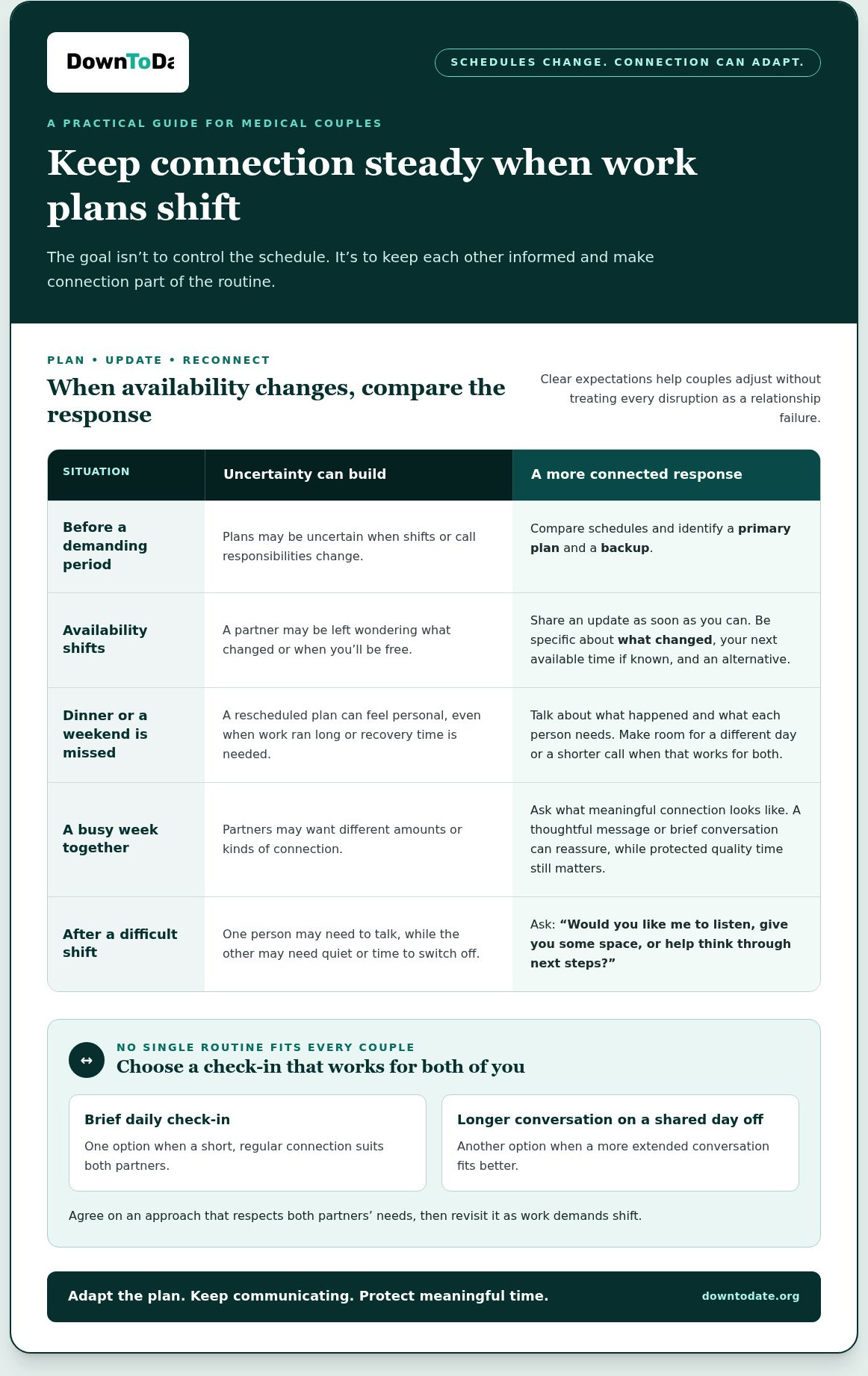
Shifts, nights, weekends, and call periods can make plans uncertain. Dinner may need to move, or time together may fall on a weekday instead of a weekend. Make changes easier by agreeing that plans can be flexible, communicating as soon as availability shifts, and deciding on alternatives when possible. The goal isn’t to control the schedule. It’s to keep each other informed and make connection part of the routine.
Realistic expectations help couples plan for changing medical schedules instead of letting every disruption become a source of friction.
What shared understanding can, and cannot, provide
A partner familiar with healthcare may understand why a shift ran late or why a difficult day takes time to process. That shared context can make some conversations easier, but it can’t replace curiosity or clear communication. Explain what support looks like, listen without assuming, and make room for needs that may differ from your own.
Shared work is a starting point, not a complete measure of compatibility. Values, mutual respect, communication, and long-term goals matter beyond a job title or specialty. A helpful overview of the impact of social relationships on health underscores why the quality of a connection matters. For more on the particular considerations of dating for doctors, consider how shared professional context can support understanding while leaving room to learn who someone is outside work.
In practice, realistic expectations mean discussing availability without blame, making plans with room for change, and protecting time that feels meaningful to both people. A strong relationship doesn’t require identical schedules. It requires a shared commitment to adapt, communicate, and keep choosing each other amid changing demands.
How Medical Schedules, Stress, and Communication Affect Lasting Relationships
Changing work demands can make planning difficult, but a missed dinner or rescheduled weekend doesn’t automatically mean a partner cares less. A shift may run long, call responsibilities may change, or you may need recovery time after an intense stretch. Talk about what happened and what each person needs instead of letting uncertainty become a verdict on commitment.
Long-term relationships for medical staff benefit from practical conversations about availability, boundaries, and recovery. There’s no single ideal routine. One couple may prefer a brief daily check-in; another may find that a longer conversation on a shared day off works better. Agree on an approach that respects both partners’ needs and can flex when work changes.
Make time together when availability changes
Before a demanding work period, compare schedules and identify a primary plan and a backup. If dinner after a shift becomes uncertain, for example, agree in advance whether to reschedule or have a shorter call instead. Ask what meaningful connection looks like during a busy week. A thoughtful message or brief conversation can reassure you both, but it shouldn’t replace the quality time you want to protect.
Advance communication reduces avoidable uncertainty by giving both partners a chance to adjust when plans change. Share updates as soon as you can, and be specific: explain what changed, whether you know your next available time, and what alternative you can offer. That clarity helps a partner understand the change rather than wonder what’s happening.
Discuss work stress without letting it dominate
After a difficult day, don’t assume your partner wants to talk or is ready to switch off immediately. Ask, “Would you like me to listen, give you some space, or help think through next steps?” This makes support collaborative and gives each person room to express their limits.
Couples can create a transition between work and personal time without turning it into a rigid rule. One person might need quiet before sharing; another may appreciate a short check-in before moving on to everyday plans. Agree on signals that help, and revisit them as schedules shift. For practical ideas on listening and expressing feelings, see Effective communication for couples.
If stress feels difficult to manage or is persistently affecting the relationship, consider seeking appropriate professional support. That’s a constructive step, not a judgment. Healthcare professionals hoping to meet peers who may understand the demands of medical work can also start purposeful conversations through DownToDate’s medical community.
Does Dating Another Medical Professional Make a Relationship Stronger?
Dating someone in healthcare can offer a useful point of connection, but sharing a profession doesn’t automatically create a stronger relationship. It may make some parts of medical life easier to understand, but it can’t replace the qualities that sustain a partnership over time.
Where a shared medical background may help
A partner who knows healthcare may need less explanation when a shift changes, a demanding period affects availability, or work brings difficult decisions. That familiarity can help both people approach these moments with patience instead of assuming the other is disengaged. It may also make conversations about professional responsibilities feel more natural.
Still, experience varies. A clinician in one specialty or workplace may have a very different schedule and set of pressures from someone in another role. Shared context can reduce some misunderstandings, but it doesn’t mean partners will interpret every situation alike. Curiosity matters, even when both people work in medicine.
Why compatibility requires more than a shared career
Career similarity is one compatibility factor, not a reliable predictor of relationship success. Long-term relationships for medical staff still depend on values, emotional availability, communication, mutual respect, and goals for the future. Consider whether you can handle disagreements constructively, support each other’s ambitions, and make decisions as a team. Those answers reveal more than a matching job title.
It also helps to protect parts of life that aren’t defined by work. Partners can agree when they want to discuss a difficult day and when they’d rather focus on other interests. That boundary keeps professional identity from taking over every conversation while leaving room for genuine support when it’s needed.
A partner outside healthcare can also be a strong match. They may not recognize every workplace detail, but they can learn what your responsibilities mean in practice. They also bring their own perspective and priorities. The important question isn’t whether both careers look alike; it’s whether each person respects the other’s commitments and can negotiate shared expectations.
For a closer look at the dating challenges doctors may encounter, explore relationship advice for doctors. Use shared professional experience as a starting point for conversation, then look beyond it. Lasting compatibility grows through how two people listen, adapt, and make room for each other’s lives.
Five Practical Habits That Help Medical Couples Build Lasting Connection
Strong routines support connection, but they shouldn’t become another standard to fail. These habits are flexible starting points for Long-term relationships for medical staff. Adapt them as work patterns and relationship needs change.
- Hold a brief weekly schedule check-in. Compare upcoming shifts, call periods, personal commitments, and likely recovery time. Identify when you’re both available and decide which plans are realistic. Keep the conversation practical rather than turning it into a negotiation over who has the busier week.
- Agree on how to communicate a change of plan. Decide what information helps when work disrupts a plan: a quick message, an updated estimate, or a suggestion for another time. Send updates as soon as you reasonably can. Clear communication helps a partner adjust without guessing what’s happening.
- Name what connection looks like during busy periods. Ask each other directly, “What would help you feel close this week?” One person may value a short call; another may prefer a proper meal together when schedules allow. Brief check-ins can offer reassurance, while protected shared time keeps the relationship from relying on messages alone.
- Make direct requests for support and recovery. Instead of hoping your partner will infer what you need, say whether you’d appreciate affection, quiet, listening, or practical help. Balance recovery time with intentional couple time. A small ritual, such as sharing breakfast after a shift or taking a walk on a day off, can fit varied schedules without requiring daily availability.
- Revisit your agreements as life changes. A new role, different responsibilities, or a shift in what either person needs may call for a fresh conversation. Ask what’s working, what feels strained, and what you’d like to adjust. Treat the agreement as something you build together, not a fixed rulebook.
Keep the habits manageable. If a weekly check-in becomes difficult during a demanding stretch, agree on another time rather than dropping the conversation altogether. For more schedule-specific ideas, read dating with an unpredictable schedule.
Thoughtful connection begins with shared effort and clear communication. Healthcare professionals can also meet peers who may understand the demands of medical work through DownToDate’s medical community.
Finding a Partner Who Understands the Realities of Medical Life
Understanding a demanding career can make the early stages of dating feel more straightforward. But a partner’s job title or specialty can’t tell you whether you share priorities, communicate well, or want a similar future. For Long-term relationships for medical staff, look for professional understanding alongside the personal qualities that make a partnership respectful and sustainable.
Look for shared values alongside career understanding
Before deciding what kind of partner you’re seeking, get specific about what matters to you. Consider your expectations around commitment, communication, family or lifestyle plans, and how much space work should take in everyday life. These priorities are a more useful starting point than searching for a particular role or specialty.
As conversations develop, talk about schedules as one part of a broader picture. Ask how someone likes to make plans, what support they appreciate during a demanding stretch, or what they hope to build outside work. Notice whether the exchange feels mutual. Respect, genuine interest, and consistency become clearer through ongoing interaction, not a single answer about career demands.
Use a medical-focused dating community with intention
A dedicated community can make it easier to meet people who already have some familiarity with healthcare careers. DownToDate is a dating platform for healthcare professionals seeking meaningful connections. That shared context can help start a conversation, while compatibility still depends on learning about each person’s values, character, and goals.
DownToDate’s Premium Membership includes advanced search filters to support purposeful discovery, along with unlimited messaging for continuing conversations. Premium Membership also includes enhanced profile visibility. These tools can help you explore and communicate, but they don’t promise a particular relationship outcome. Take time to express what you’re looking for and understand what matters to the person you’re speaking with.
You don’t need to have every preference settled before you begin. Know the values you want to protect, and stay open to learning about someone beyond their professional identity. A medical-focused community can be a useful place to start. Explore DownToDate and connect with healthcare professionals.
Build a Connection That Fits the Life You Lead
Long-term relationships for medical staff grow through clear communication, adaptable expectations, and consistent effort, not perfectly matched schedules. Talk openly about availability, work boundaries, and what helps you feel connected. Shared healthcare experience can offer understanding, but lasting compatibility also depends on values, mutual respect, and the future you want to build together.
Small, repeatable habits make that commitment practical: check in about upcoming schedules, communicate changes early, protect meaningful time together, and revisit agreements as life shifts. The aim isn’t to create a rigid routine. It’s to keep making room for connection.
DownToDate is a dating platform designed for healthcare professionals, with a verified medical community. Founded and operated by medical professionals Dr. Shadi Rezai and Dr. Sasan Rezai, it offers a Premium Membership with advanced search filters and unlimited messaging to support purposeful discovery and conversation.
Explore DownToDate and connect with healthcare professionals. Your schedule may change, but shared intention and honest communication can help meaningful connection grow alongside your career.
Frequently Asked Questions
Can medical professionals maintain a healthy long-term relationship with an unpredictable schedule?
Yes. Long-term relationships for medical staff can thrive when partners communicate openly and stay flexible about plans. A changing schedule may require rescheduling, but it doesn’t have to undermine commitment. Share updates as soon as possible, agree on backup plans, and talk about what helps each of you feel connected. The goal isn’t to control work demands; it’s to respond to them as a team.
How do healthcare workers make time for a serious relationship?
Start by identifying realistic opportunities for connection instead of waiting for a perfect stretch of free time. Compare schedules regularly, protect time you can share, and choose flexible plans that can move if a shift changes. A short, intentional check-in may help during a busy period, but make room for more focused time together too. Discuss what feels meaningful to both of you instead of assuming you want the same routine.
Is it easier to date someone who also works in healthcare?
It can be easier in some ways, since a healthcare partner may understand changing schedules, call responsibilities, or work pressure without needing every detail explained. But healthcare roles differ, and shared experience doesn’t guarantee compatibility. Pay attention to communication, values, emotional availability, and future goals. A partner outside the field can also be a strong match if both people respect each other’s commitments and discuss expectations with care.
What should medical staff discuss before making a relationship long-term?
Talk about commitment, communication, work boundaries, and the lifestyle you hope to build together. Be specific about how you’ll handle schedule changes, recovery time, and plans that need to move. Discuss practical priorities too, such as where you want your careers and personal lives to go. These conversations don’t need to settle everything at once. They help you see whether you can make decisions collaboratively and respect each other’s needs.
How can couples handle night shifts and missed plans without growing apart?
Agree in advance on how you’ll communicate if a night shift or call responsibility disrupts a plan. Send a clear update when you can, acknowledge the impact on your partner, and suggest another time if possible. Avoid treating every missed plan as evidence of low commitment, but make space to discuss repeated disappointment. A small ritual, such as a check-in after a shift, can help you stay connected while protecting time for rest.
Can a dating app help medical professionals find a serious relationship?
A dating app can help healthcare professionals meet people with a shared understanding of medical careers, but it can’t guarantee a serious relationship. DownToDate is a dating platform for healthcare professionals seeking meaningful connections. Its Premium Membership offers advanced search filters, unlimited messaging, enhanced profile visibility, and community features to support discovery and communication. Use those tools to start purposeful conversations, then assess compatibility through the way you communicate and treat each other.
What matters most in a long-term relationship with a healthcare professional?
Mutual respect, honest communication, shared values, and compatible long-term goals matter more than a partner’s job title. A supportive relationship makes room for career demands without allowing work to define every part of the partnership. Discuss what each of you needs during busy periods, how you’ll address conflict, and what future you’re working toward. Understanding the realities of healthcare helps, but sustained care and willingness to adapt matter too. Couples looking for practical strategies to deepen their bond can explore LiefdeFM Methode to develop stronger communication and lasting partnership skills.


