

What if the right partner for a medical career doesn’t need to work in medicine? Long shifts, unpredictable hours, and limited energy can make dating feel difficult, especially when plans change at short notice. Finding compatible partners in medicine isn’t about matching job titles. It’s about finding someone who respects your work and can build a relationship around its realities.
A shared profession may bring valuable understanding, but it isn’t the only foundation for compatibility. Aligned values, clear communication, and mutual respect for each other’s time and boundaries matter just as much. This guide will help you identify the qualities that matter beyond a career, discuss schedules and expectations, and make room for meaningful connection. You’ll also learn how a medical-focused community can help you meet people who understand healthcare work, whether they share your profession or respect what it asks of you.
Key Takeaways
- Finding compatible partners in medicine starts with defining what you need in a relationship, not simply choosing someone with a similar job.
- Look for values and intentions reflected in everyday choices, not just in profile descriptions.
- Discuss schedule flexibility and personal boundaries through open-ended, reciprocal questions.
- Notice whether someone’s actions stay consistent with their stated priorities over time.
- A medical-focused dating community can help you meet people with relevant insight into healthcare work.
Finding Compatible Partners in Medicine Starts Beyond the Job Title
Healthcare work can make dating harder to plan. A shift may run late, recovery time may take priority, and emotional energy can vary after a demanding day. These realities affect when you’re available and what you can offer a relationship. They don’t make a meaningful partnership out of reach, but they do make it important to discuss what daily life together could look like, beyond attraction or professional credentials.
In medicine, relationship compatibility means sharing enough values, respect, and communication to build expectations that work for both people. A partner’s understanding of clinical work can help, but it’s only one part of fit. Sociologists use Homogamy in relationships to describe a tendency to form partnerships with people who share characteristics, including profession. Similarity can offer common ground, but it doesn’t automatically mean you share life goals, emotional maturity, or a considerate approach to conflict.
Finding compatible partners in medicine starts with asking whether your priorities and ways of relating can work together, not whether your biographies match. Compatibility is mutual and specific, and it develops over time. Notice how each of you responds to changing plans, protects personal time, and makes decisions as a couple. Look for a consistent pattern, not just a promising first conversation.
What compatibility means when you work in healthcare
Career demands can shape availability, energy, and expectations for time together. One person may want a planned date night; another may need flexibility when work changes. Neither preference is automatically a problem. Talk about what feels manageable, then agree on routines that respect both people’s needs.
Professional familiarity is different from deeper alignment. A shared understanding of clinical pressures may help, while agreement on family goals, finances, communication, or where to live may matter just as much. Look for consideration in everyday choices: does each person follow through, speak directly, and make room for the other’s priorities?
Does a partner need to work in medicine?
No. A partner in healthcare may recognize some workplace pressures without lengthy explanation, but the same profession doesn’t guarantee compatible schedules or expectations. Clinical roles and routines differ, as do people’s relationship needs. Shared context can help, but it can’t replace mutual respect and clear communication.
Someone outside healthcare can learn what your work asks of you and respond with consideration. Explain what schedule changes mean, what support looks like, and which boundaries matter to you. Then notice whether they listen and adapt, while also sharing their own needs. A strong fit leaves room for both careers and the relationship, without making either person’s profession the whole story.
The Compatibility Factors That Matter in Medical Relationships
Compatibility becomes clearer in ordinary decisions: how you handle a changed plan, make time for one another, and talk about what you each want. For healthcare professionals, the useful question isn’t whether a potential partner can recite the demands of your role. It’s whether both of you can shape a relationship that respects work and personal needs.
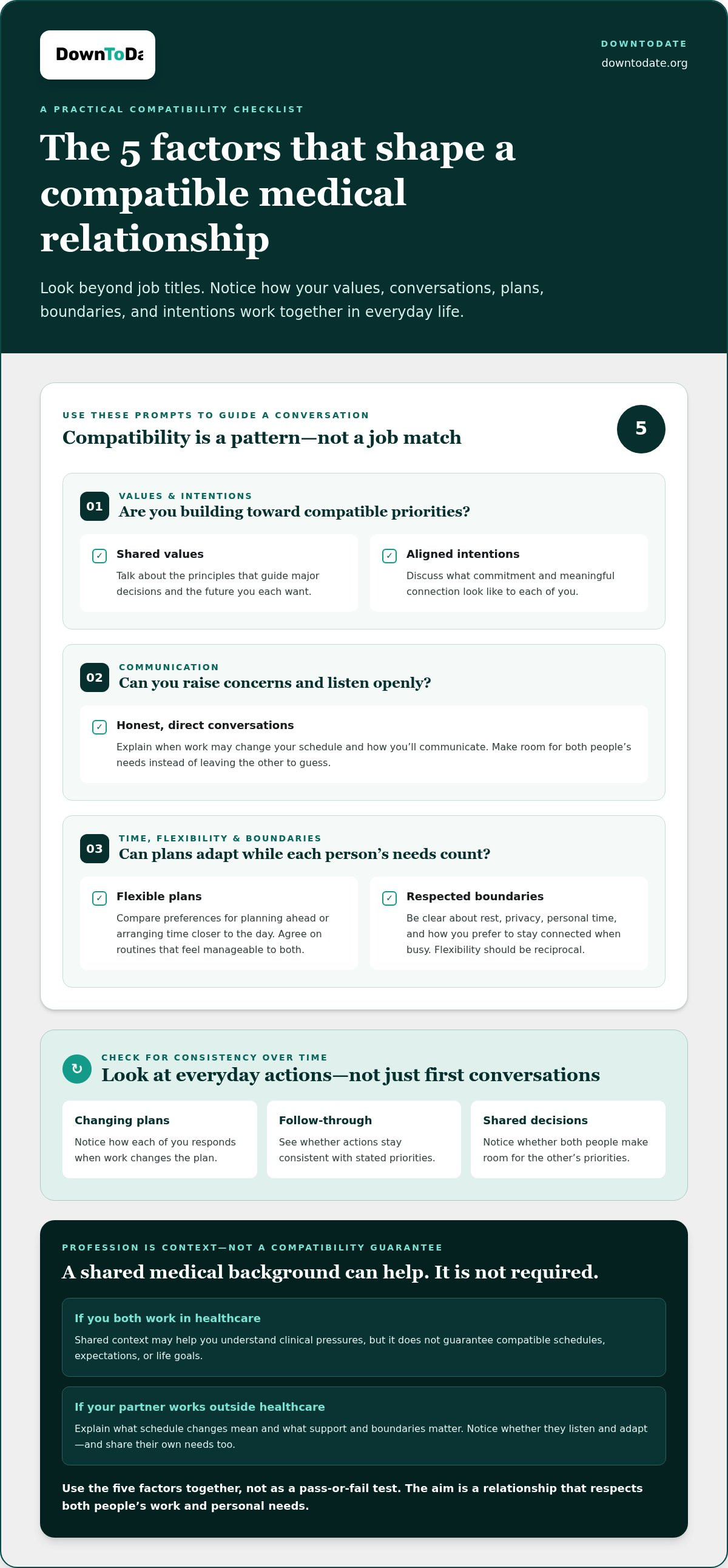
A practical compatibility check: shared values, honest communication, flexible plans, respected boundaries, and aligned intentions. The American Medical Association’s discussion of a successful medical marriage also emphasizes foundations such as mutual support and shared values. Use these factors to guide conversations, then look for them in actions.
Shared values, communication, and relationship intentions
Separate essentials from preferences. Respect, trust, and a compatible vision for the future may be non-negotiable; preferred date activities or how far ahead to make plans may be open to compromise. Ask yourself what you need to feel secure and what you’re willing to discuss together.
Direct communication helps prevent work pressures from turning into unspoken resentment. Explain when your schedule might change and how you’ll let the other person know, rather than leaving them to guess. Discuss what commitment means to each of you, how much time together feels meaningful, and which personal priorities need room. The goal isn’t identical preferences. It’s a shared understanding you can revisit.
Schedule realities, boundaries, and personal capacity
Shifts, call duties, and changing availability can affect plans, but no specialty or schedule tells the whole story about someone’s capacity for a relationship. One person may prefer advance planning; another may be comfortable arranging time closer to the day. Talk about your actual routines instead of relying on assumptions about medical work.
Understanding a demanding schedule doesn’t mean one partner must accommodate every change. Flexibility should be reciprocal. Be clear about rest, privacy, and how you prefer to stay connected when you’re busy. A dependable check-in may matter more than an elaborate plan, but the right rhythm is personal. Pay attention to whether both people adjust and whether those arrangements continue to feel fair.
- Values: What principles guide major decisions?
- Communication: Can you raise concerns clearly and listen without defensiveness?
- Flexibility and boundaries: Can plans adapt while protecting each person’s time and recovery?
- Intentions: Are you seeking a similar level of commitment and connection?
Finding compatible partners in medicine means weighing these factors together, not treating any one of them as a pass-or-fail test. If meeting people with healthcare context matters to you, DownToDate’s medical-focused dating community connects healthcare professionals looking for meaningful relationships.
How to Assess Compatibility Without Making Medicine the Whole Relationship
A shared profession can offer useful context, but it isn’t a complete measure of relationship fit. Consider what someone understands about your work, then look beyond work to how they communicate, make plans, and respond when circumstances change. Finding compatible partners in medicine means noticing whether stated priorities show up consistently in real interactions.
Shared profession versus shared relationship priorities
A partner in medicine may recognize why a shift can run late or why plans sometimes need to change. That familiarity can reduce explanation, but it can’t guarantee patience, reliability, or aligned goals. Someone in another field may understand those realities through curiosity and consideration. Neither background is an automatic advantage. What matters is whether you respect each other’s responsibilities and make decisions together.
| What you’re assessing | What familiarity may offer | What to observe for compatibility |
|---|---|---|
| Professional context | A shared vocabulary for some workplace pressures | Whether they’re interested in you beyond your role |
| Values and priorities | Potential common ground around service or career demands | How your views on commitment and life goals align |
| Communication | Less background explanation about medical work | Whether each of you listens, speaks honestly, and follows up |
| Daily-life fit | Possible familiarity with variable schedules | How you handle plans, personal time, and changing needs together |
Green flags that show genuine understanding
Understanding is visible in behavior. A considerate person listens when you explain a work constraint, makes plans with room for change, and respects your need to rest without treating it as rejection. They show curiosity about your experience while making room for your interests, opinions, and life outside healthcare.
Look for reciprocity, not perfect schedule alignment. If plans shift, notice whether both of you communicate and work toward a reasonable alternative. If one person’s needs repeatedly take precedence, shared professional experience won’t resolve the imbalance. Pay attention across different situations: a reassuring conversation matters, but consistent follow-through tells you more.
- Listen: Do they remember what you’ve explained and ask thoughtful questions?
- Plan honestly: Can you discuss availability without guilt or vague promises?
- Respect recovery: Do they accept that rest and privacy are legitimate needs?
- Show reciprocity: Do both people adapt, initiate, and make room for one another?
If unpredictable hours are a key part of your dating experience, explore this guide to dating with an unpredictable schedule for practical ways to approach plans and connection.
Questions That Help You Discover Relationship Fit Early
Early conversations can reveal whether your expectations have room to fit together. Keep them open and mutual, not a checklist someone has to pass. A useful approach is to clarify what matters to you, explain the realities of your work, listen to the other person’s needs, and revisit expectations as the relationship develops.
Questions about values, time, and support
Start with priorities rather than trying to predict every future scheduling conflict. Ask questions that invite both people to share:
- “What does a supportive relationship look like for you during a demanding period at work?”
- “How do you like to plan time together, and what works if plans need to change?”
- “What helps you feel connected when life gets busy?”
- “Which personal or professional priorities do you want a relationship to make room for?”
Listen for the substance behind the answer. You don’t need identical routines to share a priority such as quality time or independence. You do need to understand what those priorities mean in practice and be willing to discuss adjustments. Share your own answers, too. That turns a question into a conversation, not an interview.
How to talk about healthcare work with respect
Describe the parts of your schedule that affect dating, such as variable availability or needing recovery time after a demanding shift. Explain the impact without sharing confidential or identifying details about patients or workplace situations. Then ask, “What would help you feel considered if plans changed?” and “What kind of support feels useful to you?”
Be clear and considerate. If you need to reschedule, communicate as soon as you reasonably can and, where possible, suggest another time. Your partner can share what they need, too. Notice whether both of you make room for each other’s time, boundaries, and capacity. Compatibility isn’t one person accommodating everything; it’s an ongoing conversation that can be revisited when circumstances change.
Finding compatible partners in medicine involves more than asking the right questions once. Pay attention to whether conversations lead to practical, mutual understanding. For more guidance on communicating through common dating challenges, read this advice on relationship advice for doctors.
Ready to meet healthcare professionals who understand the work? Explore DownToDate’s medical-focused dating community.
Finding Compatible Partners in Medicine Through a Purpose-Built Community
Compatibility still comes down to the relationship you build: aligned values, clear communication, respected boundaries, and understanding that goes both ways. A shared medical background can provide useful context, but it can’t establish personal fit on its own. Keep those criteria in view as you meet people, and assess each connection through conversation and consistent behavior.
What a medical-focused dating community can offer
A community designed for healthcare professionals makes it easier to meet people with relevant insight into medical work. DownToDate provides tailored matching tools within a verified medical community, giving members professional context in common from the outset. That shared context can make some conversations more familiar. It’s a starting point, not evidence that two people share values, intentions, or relationship needs.
Let professional familiarity open the door, then get to know the person beyond their role. Ask what they value, how they like to communicate, and what kind of connection they’re looking for. Their answers, and whether their actions align over time, are central to judging compatibility.
A practical next step toward meaningful connection
Before exploring potential matches, identify what matters most to you. Consider which values and intentions you hope to share, what boundaries support your wellbeing, and how you want to communicate when work affects your plans. A short list of priorities can help you use your time purposefully without treating dating like a checklist.
DownToDate Premium Membership includes advanced search filters and unlimited messaging. Members also receive enhanced profile visibility and access to community features designed to foster romantic connections. These tools help you explore potential connections and communicate within the platform, while the same principles of mutual respect and compatibility still apply.
Finding compatible partners in medicine isn’t about finding a perfect professional match. It’s about making room for connection with someone who respects your work and meets you with mutual care. Explore DownToDate Premium Membership to use advanced search filters and unlimited messaging as you meet healthcare professionals.
Make Space for a Connection That Fits
Finding compatible partners in medicine is less about matching résumés and more about building mutual understanding. Look for aligned values, honest communication, and respect for each other’s boundaries. Then notice whether those qualities hold up in everyday choices, including how you handle changing plans and make time for one another.
A shared healthcare background can offer useful context, but it doesn’t guarantee personal compatibility. The right questions and consistent actions help you discover whether your priorities and relationship intentions fit. A medical-focused community helps you meet people who understand the professional environment. DownToDate was founded and is operated by medical professionals Dr. Shadi Rezai and Dr. Sasan Rezai, with tailored matching tools for a verified medical community.
Ready to meet healthcare professionals through a dating community built for them? Explore DownToDate and connect with healthcare professionals. Keep your priorities clear, stay open to learning about each person, and let meaningful connection grow through mutual respect and effort.
Frequently Asked Questions
Is it better to date someone in the medical field?
Not necessarily. A shared healthcare background may make some work pressures easier to understand, but it doesn’t guarantee compatible values, communication styles, boundaries, or relationship intentions. A partner outside medicine can also be supportive by listening, respecting schedule demands, and discussing needs openly. Focus on how each person responds in everyday situations, such as a changed plan or a need for rest, rather than treating occupation as the deciding factor.
Can a relationship work when both partners have demanding medical schedules?
Yes, if both partners communicate honestly and make flexible, mutual plans. Similar schedules may provide shared understanding, but they can also leave limited time together. Discuss how you’ll stay connected, what you’ll do when plans change, and how each of you can protect time for rest and the relationship. Look for a routine that feels dependable to both people, rather than expecting professional similarity to solve every scheduling challenge.
How do you find a compatible partner as a healthcare professional?
Start by identifying the values, relationship intentions, and boundaries that matter most to you. Consider how your availability and communication preferences might fit with someone else’s, without assuming every healthcare role has the same demands. Meet people in settings that reflect your interests or community, then use open conversations to explore mutual expectations. Finding compatible partners in medicine takes attention to how a connection develops, not simply where you meet.
What should healthcare professionals discuss early in dating?
Discuss what kind of relationship you’re seeking, how you prefer to communicate, and what support looks like during demanding periods. Explain how work may affect availability, while protecting private patient information and appropriate workplace confidentiality. Keep the conversation reciprocal: ask about the other person’s needs, boundaries, and priorities as well. Early clarity can help you understand whether expectations are workable without turning a date into an interview.
Do you need to date another doctor to feel understood?
No. Another doctor or healthcare professional may recognize some aspects of medical work from experience, but understanding also comes from listening, respect, and a willingness to learn. A partner outside medicine can take your schedule and boundaries seriously without sharing your profession. Notice whether they’re curious about you as a person, communicate thoughtfully, and make space for your needs, rather than using job title as the only measure of connection.
How can you tell whether someone understands the demands of medical work?
Look for consistent, considerate behavior. They listen without minimizing your experience, communicate clearly if plans need to change, and respect your need for rest or privacy. Understanding doesn’t mean they must agree to every schedule change or set aside their own needs. Strong compatibility is reciprocal: both people can explain what matters to them, listen to each other, and work toward arrangements that feel fair.
Can a medical-focused dating app help you find a compatible partner?
It can help you meet people with relevant professional context, but shared occupation alone doesn’t establish personal compatibility. DownToDate offers tailored matching tools within a verified medical community. Its Premium Membership includes advanced search filters, unlimited messaging, enhanced profile visibility, and access to community features designed to foster romantic connections. Use these features to explore potential connections, then assess values, intentions, communication, and daily-life fit through conversation. The platform supports discovery, while compatibility develops between the people involved.


